Eufy E21 vs Hubble GoBaby Plus 5.0: Which Baby Monitor Is Worth Buying?
The Eufy E21 costs £100 more but pairs 4K video and a reliable, subscription-free app with strong range. Hubble counters with longer parent-unit battery life.
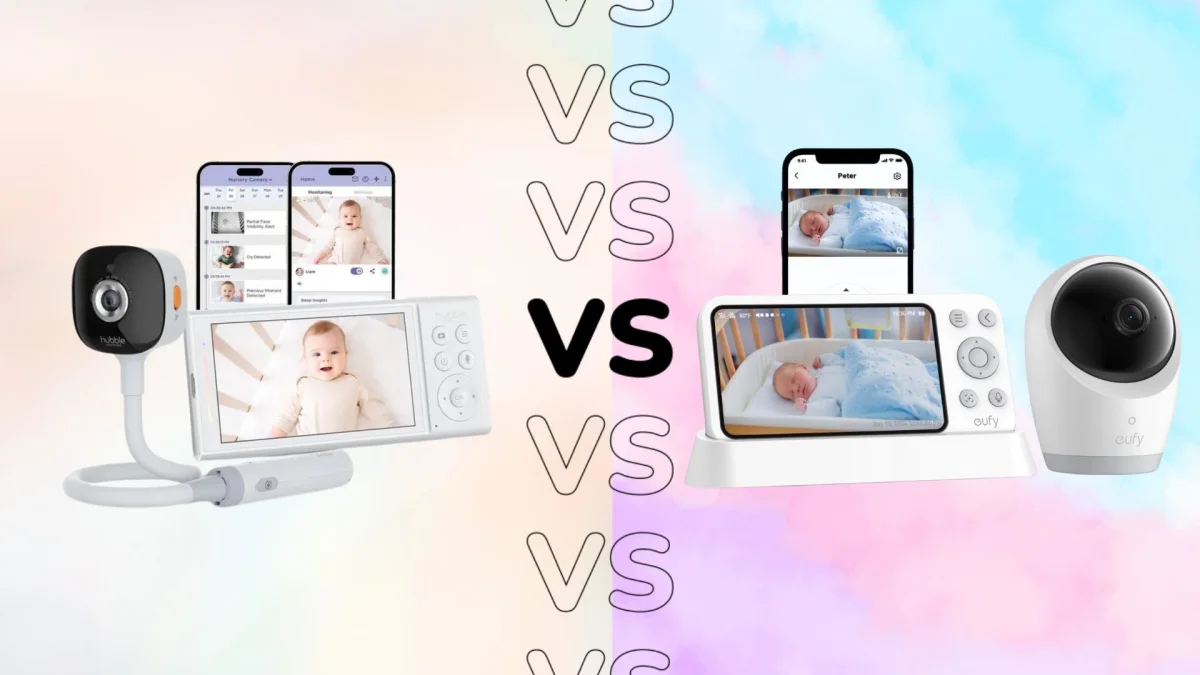
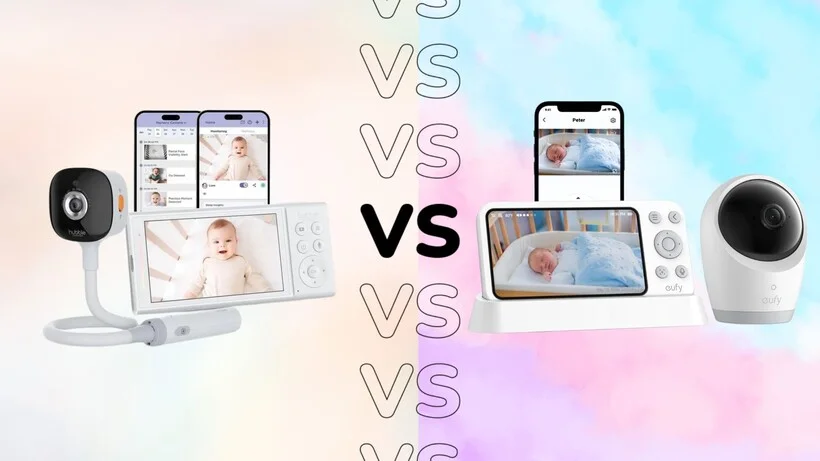
The Eufy E21 makes the stronger case for most families: it combines 4K video, motorised camera movement, dependable connectivity and an app whose features don’t require a subscription. The Hubble GoBaby Plus 5.0 costs £100 less at the listed prices and has some useful privacy controls, but its less reliable app and paid AI features make the lower price less straightforward than it first appears.
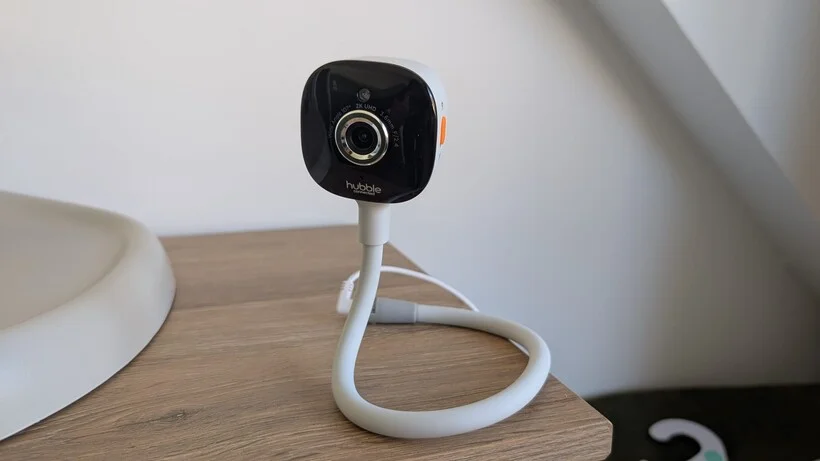
Here’s how the two monitors compare on setup, camera performance, connectivity, privacy and battery life—and where each one has a practical advantage.
Price and subscription costs
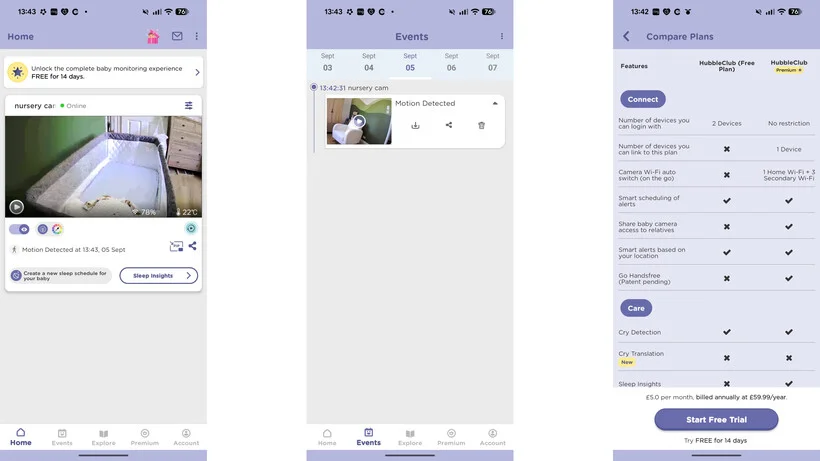
The Hubble GoBaby Plus 5.0 has a recommended retail price of £149. The Eufy E21 is listed at £249, a £100 difference. Hubble’s Premium plan is optional, but it unlocks AI-powered tools such as rollover alerts, covered-face detection and sleep insights. The listed price is £5.99 per month or £60 for the first year, dropping to £30 for the second year.
That makes the Eufy’s higher upfront price easier to assess: its app features are available without a subscription. With Hubble, buyers who want the extra monitoring tools need to account for recurring costs. Families who only need the camera’s basic functions may care less about the plan, but it’s central to the comparison if those AI features are part of the appeal.
Camera design and everyday controls
The GoBaby Plus 5.0 is the smaller unit, with its camera mounted on a flexible coil. It doesn’t pan or tilt; instead, it offers bird’s-eye and close-up views, with up to 6x zoom through the parent unit or app. The fixed camera has one quiet advantage: it makes no movement noise at night, which could matter if a baby is a light sleeper.
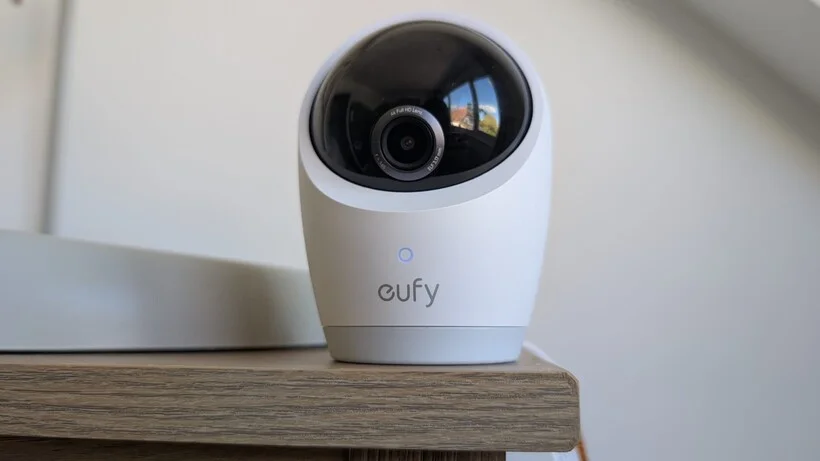
Eufy’s larger E21 has a 4K camera with 330° pan, 60° tilt and up to 8x zoom. Its shell can feel slippery to hold, but it offers more control over the view as a baby moves around the cot. The camera’s movement isn’t silent, though reviewers found it wasn’t especially loud.
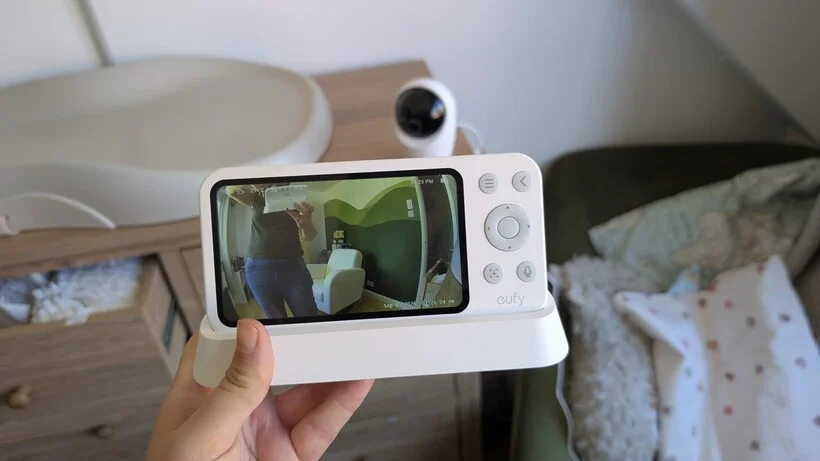
Both packages include mounting equipment and a parent unit. Eufy also lets you check signal strength before settling on a camera position. Hubble doesn’t offer that check, so it’s sensible to confirm placement and reception during setup before fixing the camera in place.
Setup is manageable on both systems: connect the hardware to power, switch on the parent unit, then install the app and create an account. Eufy’s process took under five minutes in testing. Hubble required more steps: the parent unit had to be switched off while the camera was paired using Wi-Fi details and a QR code. A firmware update followed, though the camera continued detecting audio during the update.
Parent units, sounds and alerts
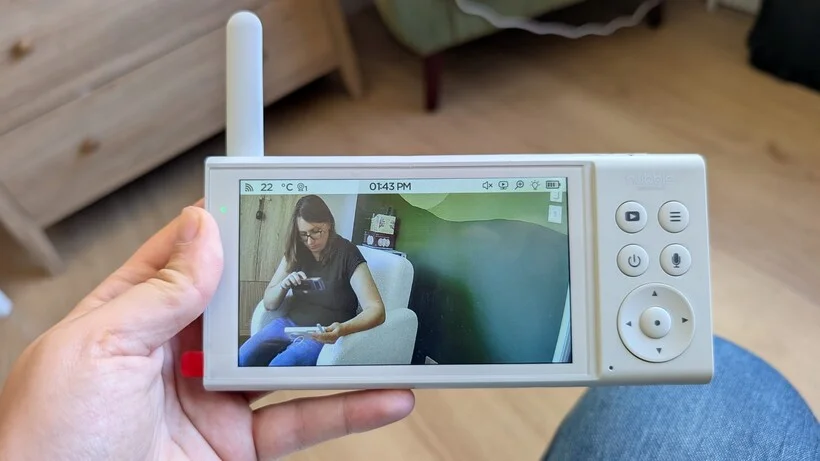
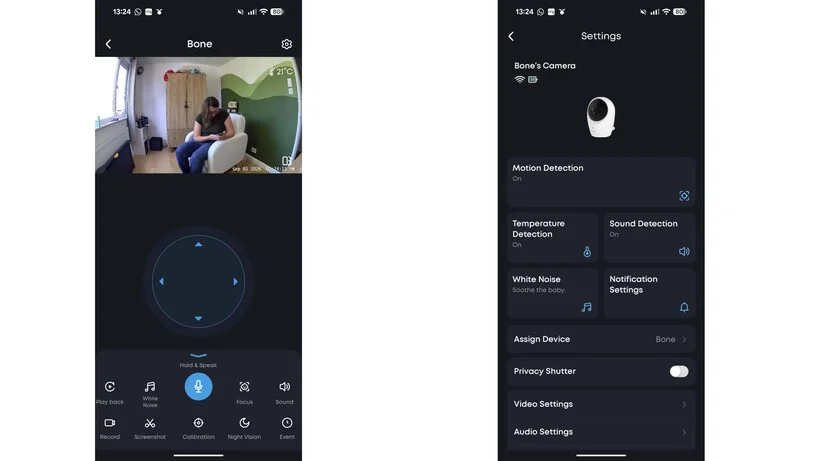
Both parent units have five-inch, 720p displays. The Eufy unit’s speaker sits in the middle, so a hand holding the monitor is less likely to block the sound. Its app includes camera controls, settings and access to microSD recordings, although it doesn’t show a volume indicator for sounds in the nursery.
Each camera includes sounds intended to soothe a baby, but neither collection is a clear strength. Hubble offers ten options, including white noise, audiobooks and nursery rhymes; the tested audio sounded tinny. Eufy’s selection includes forest, cricket, rain, streams and alpaca bells, an unusual mix that may or may not suit a family’s preferences.
Eufy can detect motion, crying, temperature and sound, then send alerts to the parent unit and app. Hubble has similar capabilities, many of them AI-powered, but those tools sit behind its Premium plan. That distinction matters in day-to-day use: Eufy includes its alert features without an extra monthly charge.
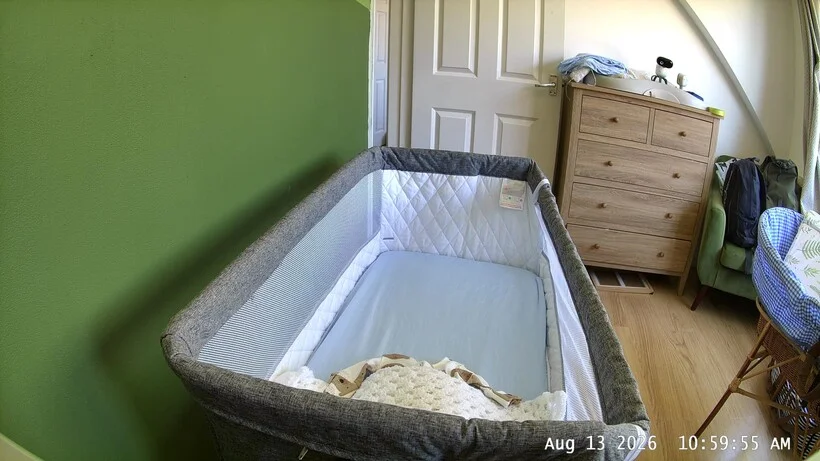
Design and features winner: Eufy E21. Its pan and tilt, broader camera controls and included alerts make it the more flexible setup for most homes. Hubble’s quiet fixed camera and longer list of built-in sounds may still appeal to particular households.
Video and audio performance
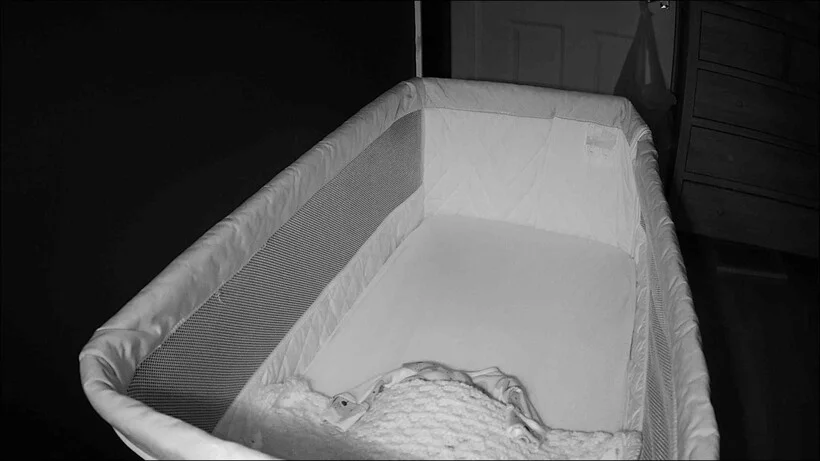
Both parent-unit screens are limited to 720p, but the phone apps can show more detail: up to 2K UHD for Hubble and up to 4K for Eufy. The E21’s 4K feed delivered strong daytime detail and a wide view in testing. Infrared night footage lost some quality, but still showed key details. Its active noise cancellation also supports clearer audio.
Hubble’s 2K camera produced a sharp daytime picture at distances up to 2m, and its night vision was a particular strength. The trade-off showed up in responsiveness. Reviewers noticed a delay when enabling the parent unit’s microphone, and movement on the parent app appeared about 1.5 seconds after real time, rising to around two seconds in the app.
Eufy’s feed was quicker: testing found less than a one-second delay on the parent unit and less than two seconds in the app. Two-way talk on Hubble transmitted in under half a second between the parent unit and camera; Eufy’s app was a little slower, though not by much.
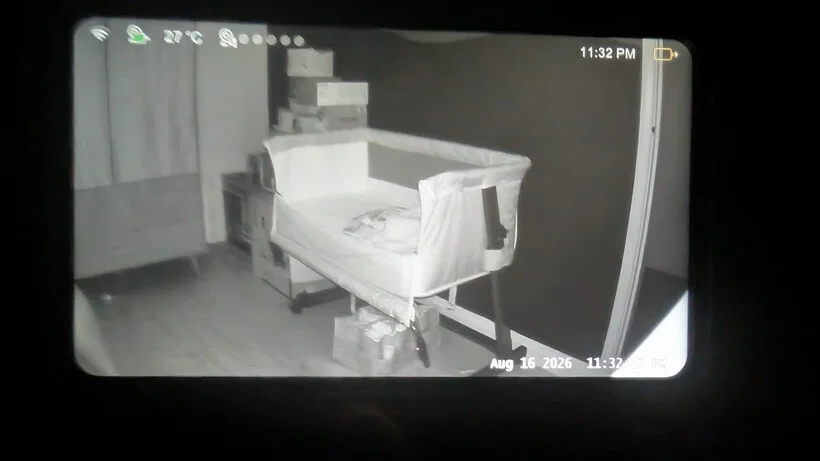
Video and audio winner: Eufy E21. Hubble still delivers strong image quality, especially at night, but Eufy combines higher resolution with a wider view and quicker monitoring in the tested setup.
Apps, Wi-Fi and range
The biggest concern with Hubble was connection reliability. During testing, the app said an update needed at least 70% Wi-Fi signal even with the router next to the camera. The camera feed also disconnected repeatedly. Restarting usually restored it, but the app sometimes continued to show the device as offline despite an active Wi-Fi connection. Hubble’s app also repeatedly promoted Premium, and its notifications couldn’t be switched off without risking missing camera alerts.
Eufy’s Baby app was easier to use and sent fewer, more focused notifications. Live recording and sending videos to a phone were included at no extra cost. Reviewers didn’t report server-latency problems with the E21, and found it remained connected 200m from the house. Hubble’s signal reached 100m with clear audio and video, but the recurring Wi-Fi drops made that range less reassuring in practice.
App and connectivity winner: Eufy E21. Its range and subscription-free app proved more dependable in testing. Hubble’s reported connection problems are a significant drawback for anyone who expects to check the feed over Wi-Fi throughout the day.
Privacy and battery life
Hubble requires a QR-code scan on the camera to link it to the app, adding a step that reviewers considered a useful layer of security. Its parent unit can also switch off Wi-Fi, a control the Eufy parent unit lacks. Hubble requires a subscription to add a second user, however, and only one smartphone can be connected at a time under that arrangement.
Eufy offers family sharing at no extra cost. Each additional user needs a Eufy Baby account, and access can be removed in the app settings. The camera also has a microSD slot, allowing local storage without relying on the app, and a Privacy Shutter. Reviewers did encounter an issue with the parent unit; Anker Support helped and said it was an anomaly.
Privacy winner: Hubble GoBaby Plus 5.0. Its ability to disable Wi-Fi from the parent unit and its QR-code pairing give it an edge in the tested comparison. Eufy’s free family sharing and local storage are useful counterpoints.
Hubble includes a portable battery rated for eight hours of extra power; recharging it takes about an hour. Eufy’s camera has a 5000mAh backup battery, which lasted over ten hours in daytime use and just under five hours at night. Both cameras normally run on mains power, so these batteries are most useful for travel or a power interruption.
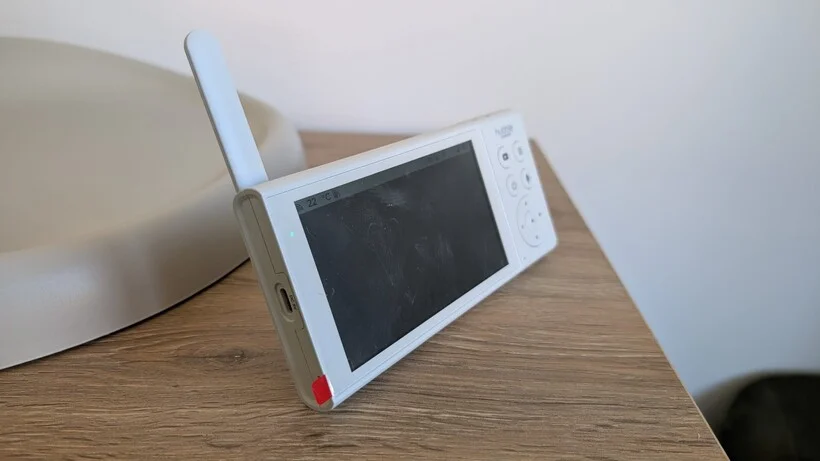
The parent units give Hubble another advantage: reviewers recorded around 18 hours of use, compared with roughly 12 hours for Eufy. Battery-life winner: Hubble GoBaby Plus 5.0.
Which monitor should you buy?
For most families, the Eufy E21 is the more convincing purchase. It costs £249, but brings a 4K camera with pan and tilt, quicker video response in testing, a straightforward app, reliable range and features that don’t require a subscription. The main compromises are its higher upfront price, shorter parent-unit battery life and the lack of a parent-unit control for switching off Wi-Fi.
The £149 Hubble GoBaby Plus 5.0 has a strong 2K picture, capable night vision, a quiet fixed camera and longer parent-unit runtime. Its pairing process is more involved, its Wi-Fi and app caused repeated problems in testing, and several of its AI tools require a paid plan. It makes most sense for buyers who prioritise those specific hardware advantages; for a more dependable app-based monitor, Eufy is the safer choice based on these results.