Bose QuietComfort vs. QuietComfort Ultra (2nd Gen): Why I’d Save $90
The regular QuietComfort headphones offer comfort, physical controls and near Ultra level noise canceling for $90 less.
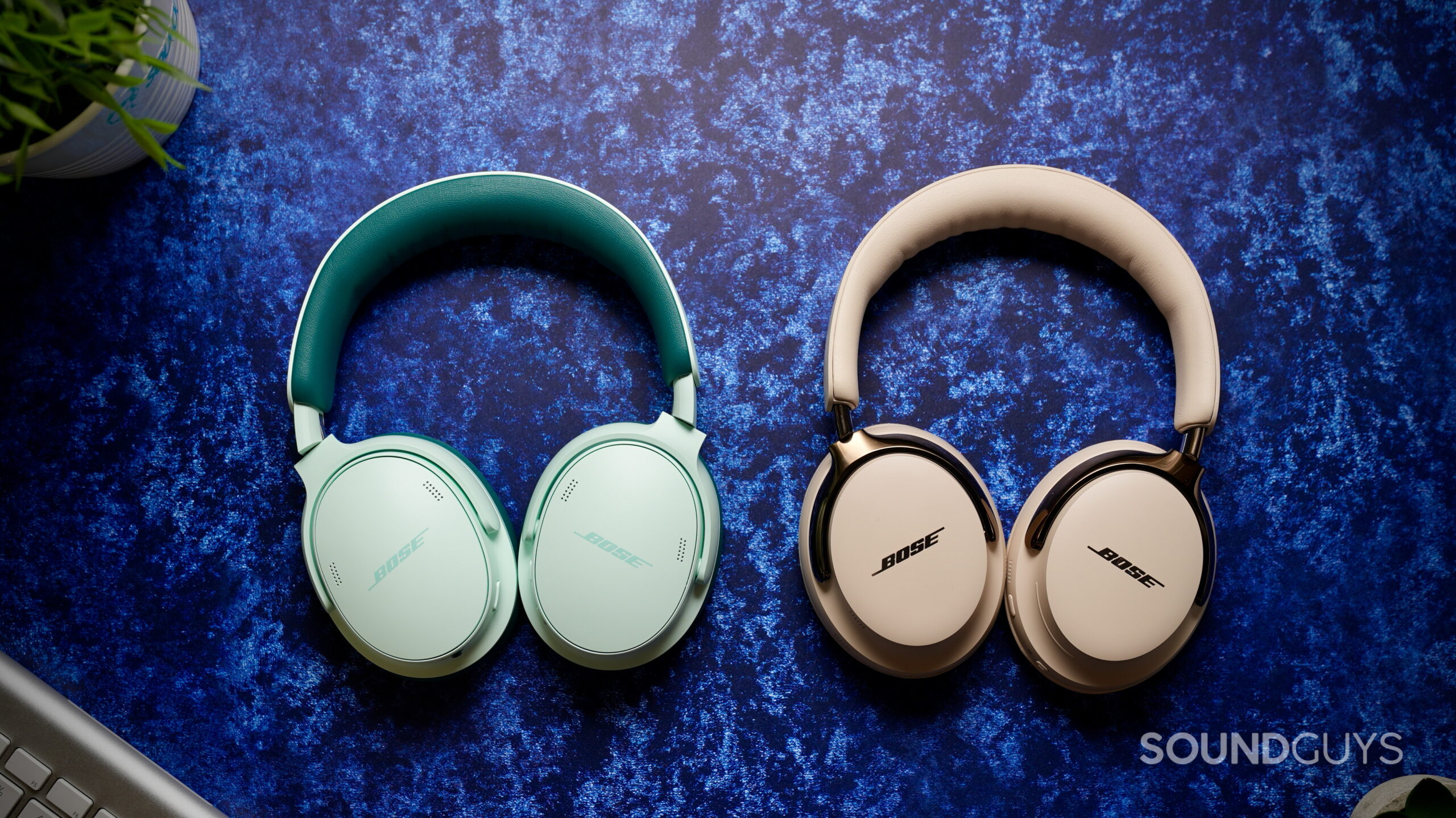
After using both pairs, I’d buy the Bose QuietComfort Headphones (2nd Gen) and keep the $90 difference. The QuietComfort Ultra Headphones (2nd Gen) have a small edge in noise canceling and extra Bluetooth audio support, but the regular QCs suit my ears and listening habits better. For many buyers, that’s the more useful distinction than the flagship label.
Physical controls and a roomier fit
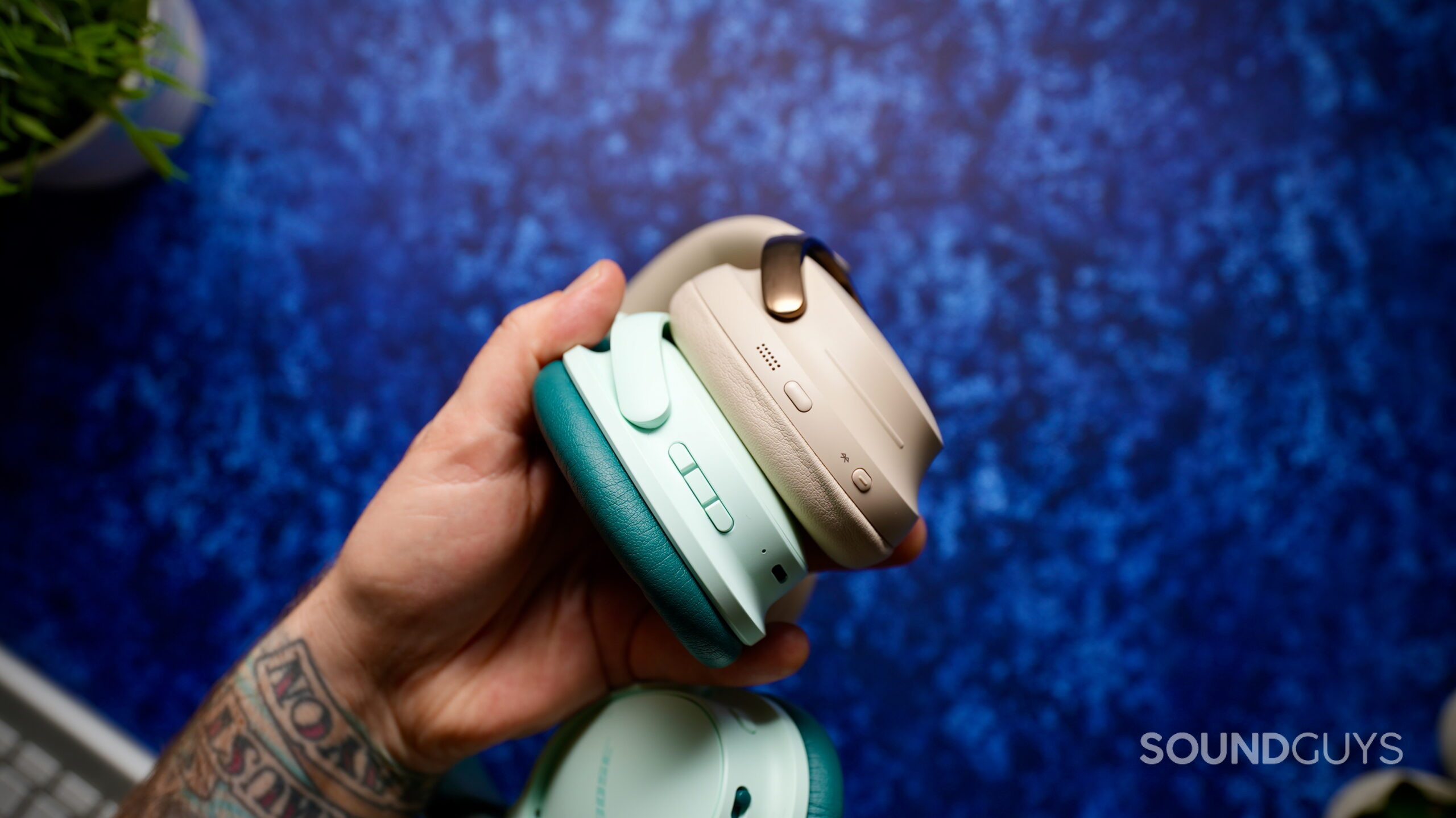
The regular QuietComfort headphones keep dedicated physical buttons for volume and playback. I can find them by touch and make a quick adjustment without looking. The Ultras put volume on a touch-sensitive strip, which I find less predictable when I’m moving around. It can take more care to nudge the level up without raising it too far.
Comfort also favors the less expensive pair for me. The regular QCs weigh 230 grams, compared with 260 grams for the Ultras, and their padded headband and earcups work well for long listening sessions.
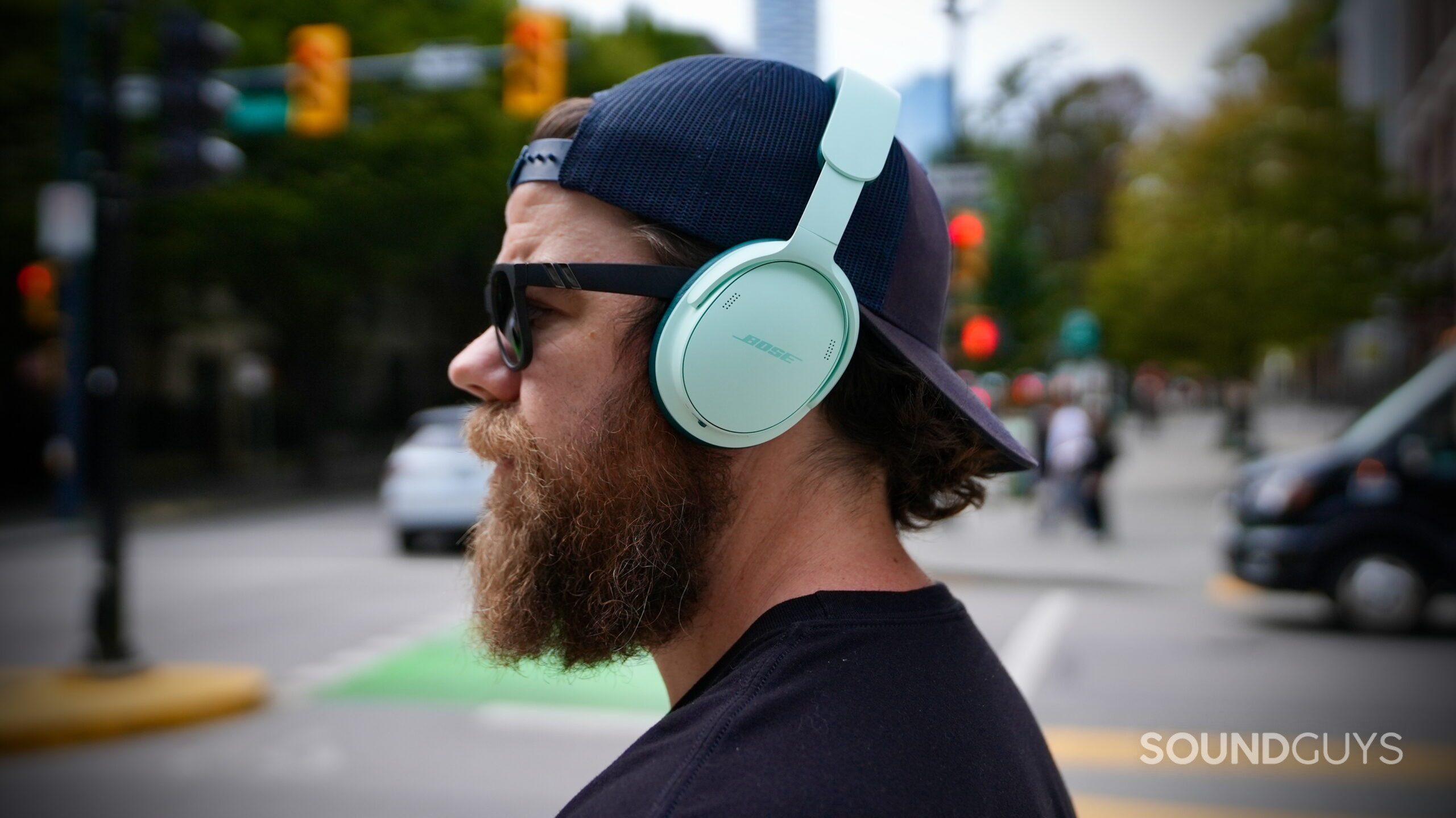

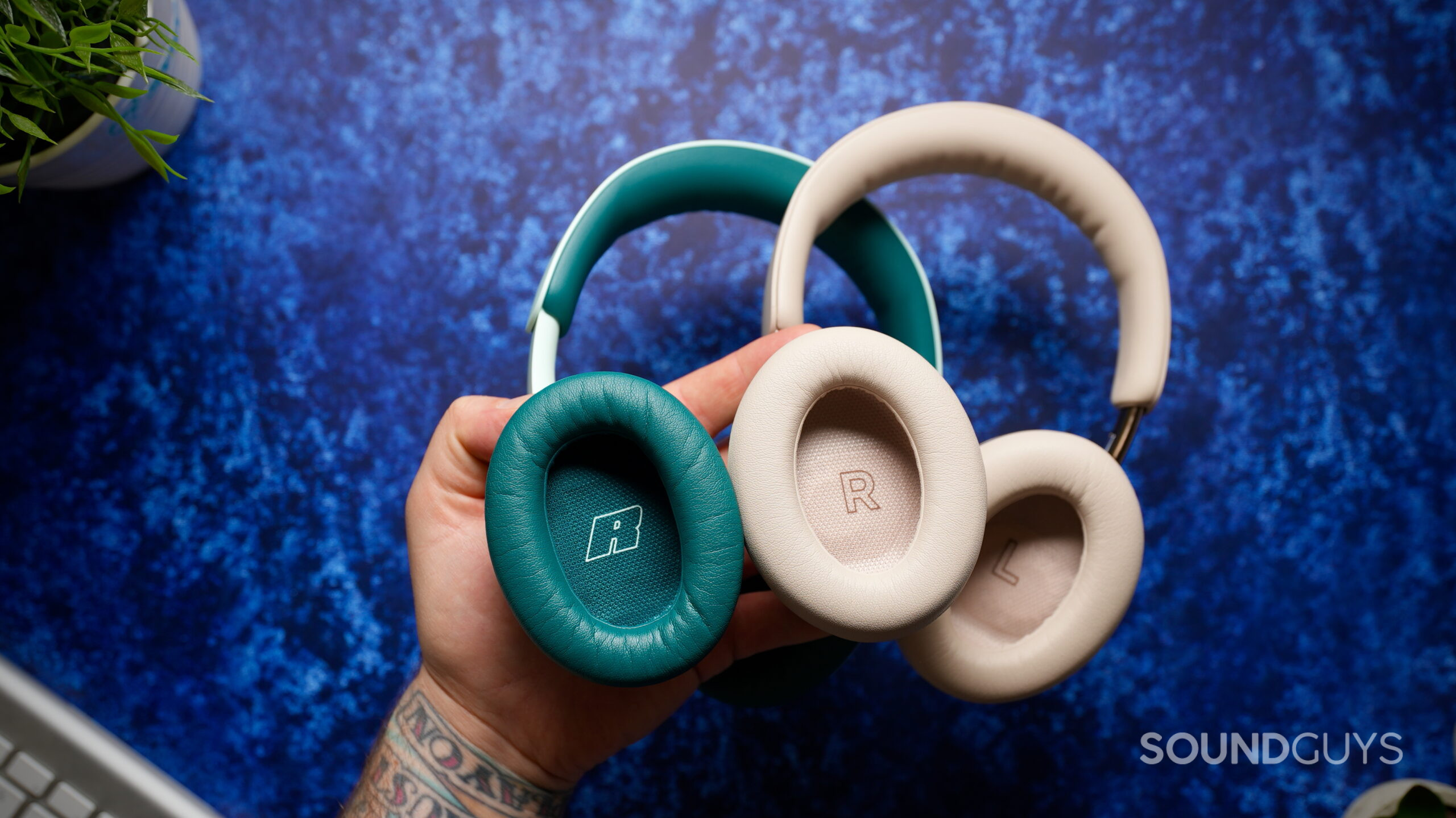
The earcup openings make a bigger difference than I expected. My ears are fairly large, and the backs touch the pads inside the Ultras. That isn’t painful, but I notice it over time. The regular QCs leave more room, so they’re the pair I’d choose for a long trip or an extended workday. Both fold into compact travel cases; the Ultras have a more premium-looking finish, but I prefer the regular model’s fit and controls.
Similar sound, with more bass from the Ultras
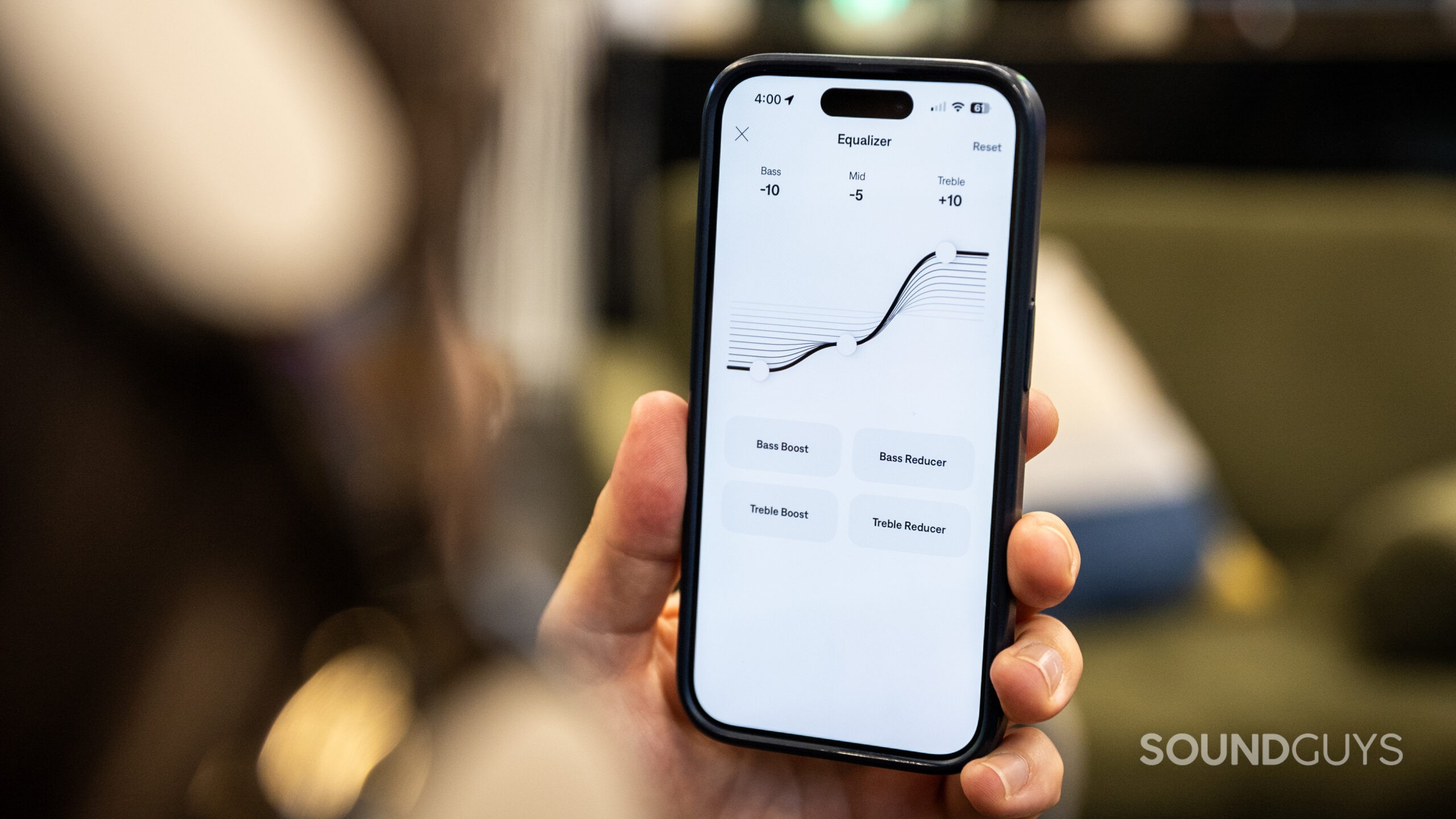
3-band is better than no bands, I guess?
Bose’s app provides a three-band EQ, a limited set of controls I’ve criticized in other reviews. With the regular QCs, I didn’t feel a need to use it. Their out-of-box tuning sounded balanced to me across progressive metal and pop: kick drums had punch, cymbals had enough sparkle, and vocals came through clearly.
SoundGuys preference curve measurements show the two models tracking similarly across much of the audible range, particularly through the midrange where vocals and instruments sit. The clearest difference is at the low end: the Ultras deliver roughly 3–4dB more bass. Treble response varies too, though the overall resemblance is stronger than the price gap might imply.
If you like extra bass, the Ultras may sound more appealing straight away. Both headphones offer the same basic EQ in Bose’s app, though, so you can adjust bass to taste on either one. My own preference is to leave the regular QCs as they are.
Extra features have to earn the price gap

Bose includes a USB-C to 3.5mm cable for wired listening.
The Ultras support aptX Adaptive and aptX Lossless, but using those Bluetooth codecs depends on having a compatible device. Support is limited to select Android phones, including models from ASUS, Motorola and Xiaomi; iPhones don’t support them, and Android ownership alone doesn’t guarantee aptX Lossless compatibility.
That may make the feature valuable to some buyers, but plenty of people may never use it. Both models support lossless audio over USB-C, which avoids that Bluetooth compatibility question. The regular QCs also include a USB-C-to-3.5mm cable, so they can connect to an airplane entertainment system or another source with a headphone jack. The Ultras have a dedicated analog input, but I haven’t missed it.
The Ultras have real advantages, but the extra $90 makes sense only if you’ll use them.
Bose includes Immersive Audio and Cinema mode on the regular QuietComfort headphones as well. I’ve tried both. They’re entertaining to test, but most of my listening is music at home or while out, so they don’t change which pair I’d buy.
Noise canceling is close in everyday use

The Ultras have slightly thicker earcups, though the regular QCs give my ears more room.
The Ultras remain the better pick if you want Bose’s strongest noise canceling. In SoundGuys testing, they reduced the perceived loudness of outside noise by 87% on average. The regular QCs reached 85.1%. That gives the flagship a measurable lead, but it didn’t feel like a dramatic gap in my use.
The difference depends on frequency, too. The Ultras cancel a few extra decibels between roughly 100Hz and 500Hz, while results get closer higher up, with the regular QCs ahead in some spots. A headphone’s fit and seal also affect how much noise gets through. On bus rides and around the office, the regular model kept distractions down well enough that I didn’t feel I needed more.
My pick: the regular QuietComfort

The new QuietComfort Headphones keep a familiar Bose design.
The QuietComfort Ultra Headphones (2nd Gen) bring slightly stronger noise canceling, more Bluetooth codec options and a more premium design. Those advantages may be worth paying for if they match how you listen. My priorities are a comfortable fit, physical controls, sound I like without EQ adjustments and reliable noise canceling. The regular QCs cover those needs, along with USB-C audio.
At $359, they still cost a lot. The $449 Ultras are $90 more, and based on my time with both, I’d put that money toward something else. If the regular QuietComfort headphones drop to $299, they’ll be an even easier recommendation.
- Decent sound
- Good ANC
- USB-C lossless
- Price