Apple’s HomeView Plan Connects Its Smart Home Around Siri AI
HomeView, a refreshed HomePod mini, Apple TV 4K and coordinated accessories put Apple’s smart home strategy into sharper focus.

Apple’s latest smart home push is built around a simple idea: the devices in a house should work like parts of one system. HomeView is the new centrepiece, but a refreshed HomePod mini, a more capable Apple TV 4K and a coordinated range of accessories are meant to fill out the experience. The plan depends heavily on Siri AI, which will need to prove itself in real homes before the hardware’s promise becomes practical.
Apple has added pieces to its home ecosystem for years, from Apple TV and HomeKit to the Home app, HomePod, Matter and Thread support. Those tools let people control lights, adjust heating, play music around the house and check cameras remotely. Yet the experience could still feel like a set of separate features. At its Welcome Home event, Apple presented a broader attempt to tie those interactions together.
Smart displays, connected cameras and voice controlled speakers are familiar products. Apple’s bet is that its advantage comes from linking them with the phones, tablets and services people already use. That could make daily tasks feel more consistent. It could also mean that the quality of the whole system rests on whether its assistant can understand what people want without demanding exact phrasing.
HomeView gives the home a shared screen
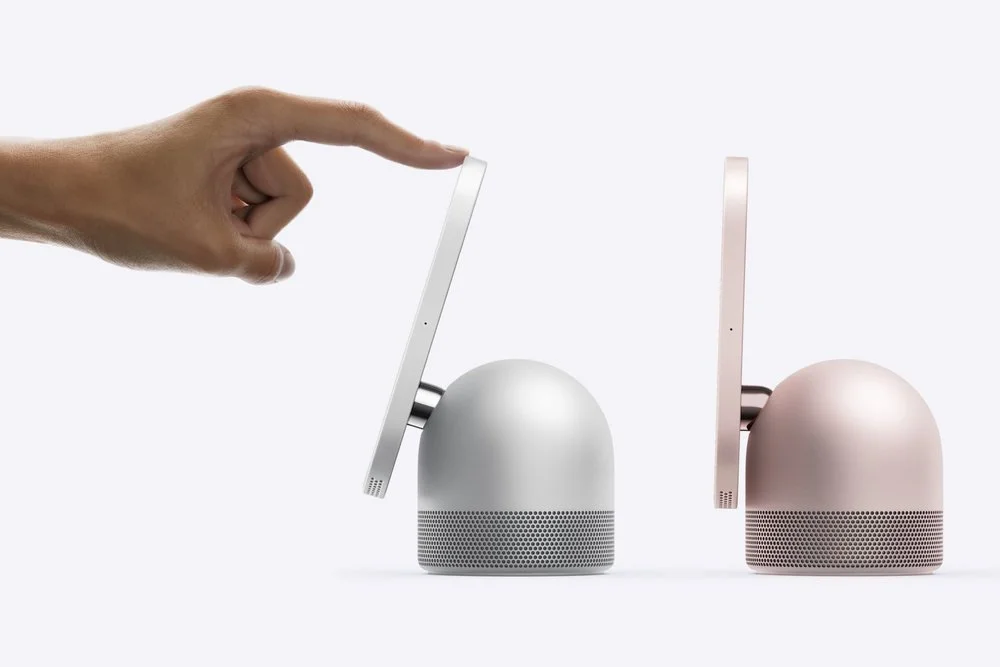
HomeView is the clearest expression of Apple’s new approach. It has a 7 inch Liquid Retina display above a rounded speaker base, with a stainless steel hinge for adjusting the screen angle. The aluminium design comes in silver, starlight, rose pink and space grey. Apple is also making a wall mounted version for places such as hallways and entrances, where a fixed panel may suit the space better than a countertop device.
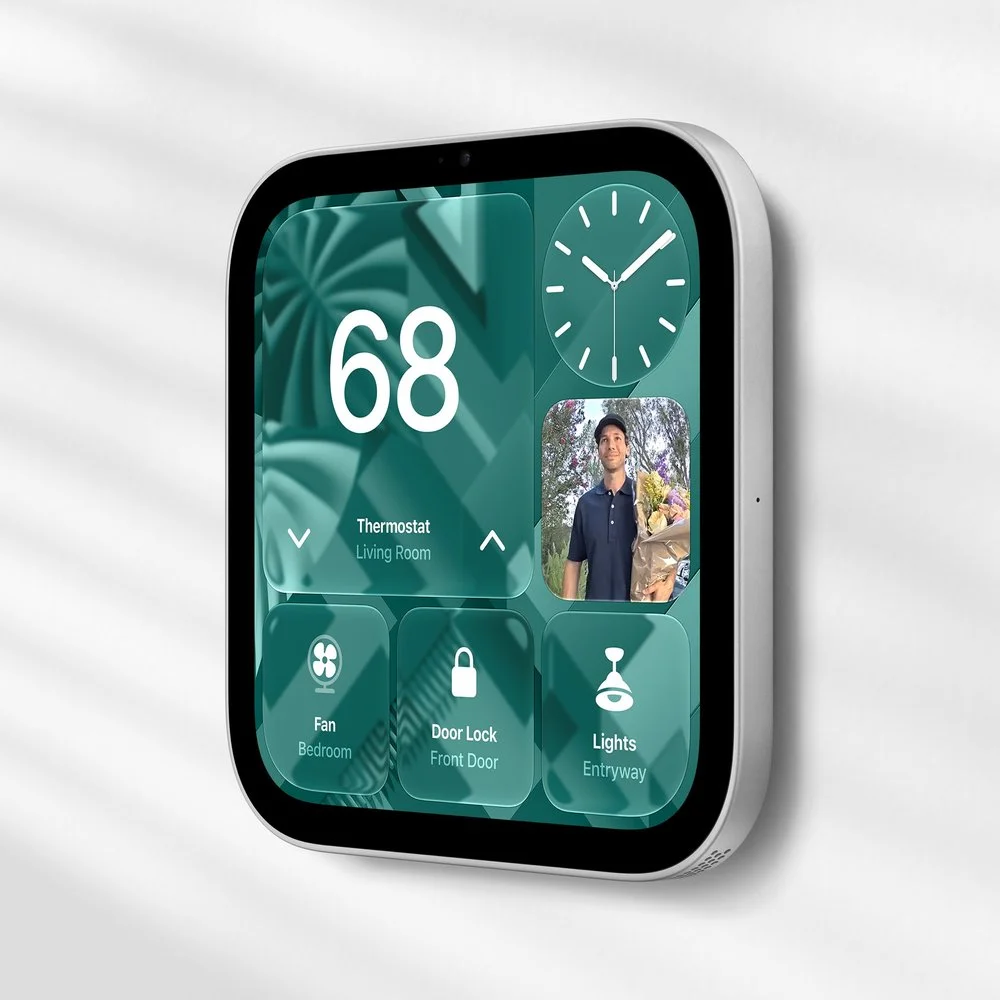
The more meaningful choice is how the screen behaves. HomeView is designed to show useful information without requiring someone to pick it up, unlock it and open an app. Its display adapts to the room’s lighting, and the interface changes with the viewer’s distance. From across a kitchen, it can show the time, weather and upcoming appointments; a person who walks closer can access more detail and controls.
That distinction matters in a shared space. A tablet is usually a personal device that someone actively uses. A household display needs to be useful at a glance and ready for interaction when needed. HomeView’s approach could make it a more natural fixture in a kitchen or hallway, provided the information remains easy to read and the controls respond reliably.
Apple says HomeView can recognise up to six household members through facial recognition and show each person a personalised screen. Calendars, reminders and messages can appear for the recognised user, while shared photographs, music and home controls remain available to everyone. Access to personal information also depends on security checks involving a paired iPhone or iPad.
Personalisation could solve one of the persistent problems with shared displays: the assumption that everyone in a home wants the same information. A device that switches between household members could be more useful than a standard tablet left on a counter. But its success will depend on how accurately and quickly it recognises people, and how well it handles visitors or family members who don’t want personal details displayed in a shared room.
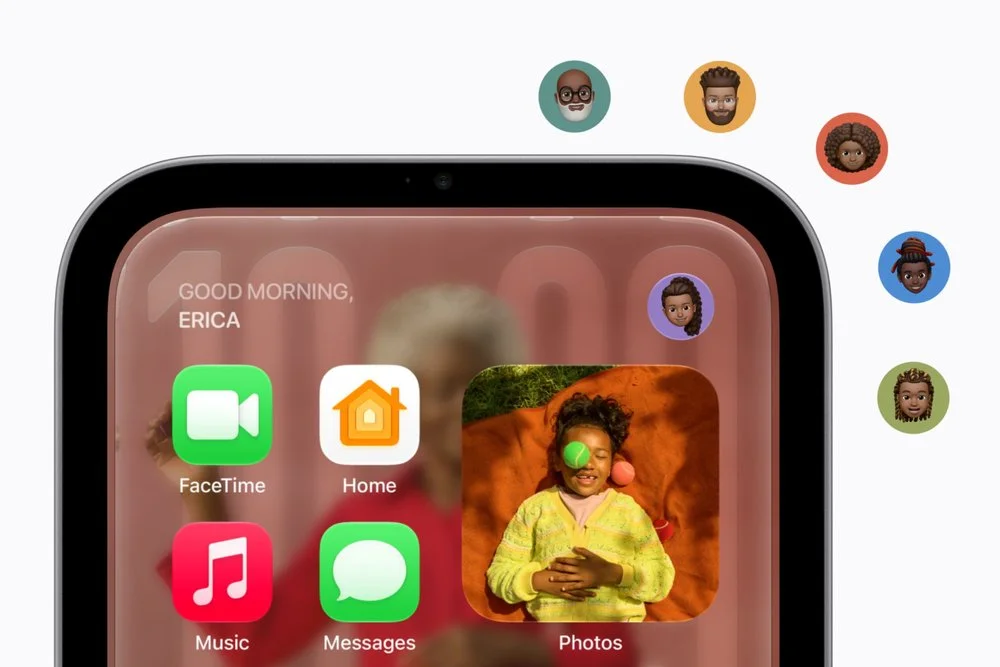
HomeView also combines communications, household controls and entertainment. It supports FaceTime with Center Stage, Messages, Find My and Intercom, along with Apple Music, Podcasts and Apple TV. Its audio system places drivers in the display and a downward firing woofer with passive radiators in the base. Apple says computational audio adjusts playback automatically.
In a kitchen, HomeView can turn online recipes into step by step instructions, help track ingredients and set timers. It can also display family photographs or animated faces, including Snoopy. That lighter touch gives the screen a more domestic feel than a panel devoted only to switches, camera feeds and status indicators.
Siri AI is the key test
The bigger question is whether Siri AI can make those features easier to use. Apple describes it as a reworked assistant powered by the next generation of Apple Intelligence. It promises broader knowledge, awareness of what’s on screen and more natural conversations. With a compatible Apple Intelligence enabled iPhone or iPad, Siri can draw on relevant context from supported apps.
Apple’s examples connect information across everyday tasks. A user could ask Siri to find a recipe that arrived by email, identify its ingredients and add them to a shopping list. Someone could also look for music recommended in a message without first remembering which conversation contained the suggestion.
Those are useful ambitions, but they remain promises until the system is used in ordinary homes. Background television, several people speaking at once and imprecise requests are harder conditions than a quiet product demonstration. Siri has long handled straightforward tasks such as setting timers and playing a named song; requests that require context or follow up questions have been less dependable. Apple needs to show that this version can understand intent without making users learn a new set of commands.
The assistant is also designed to move between devices. A conversation started on HomeView can continue in the Siri app on iPhone, iPad, Mac, Apple Watch or Vision Pro. Apple says conversation history syncs privately through iCloud. That continuity could be useful when someone starts a task in one room and finishes it elsewhere.
HomeView runs on Apple’s A18 chip. Apple says Secure Exclaves isolate sensitive camera and microphone data, and personal content is shown only after the appropriate household member is recognised and the paired device passes its security requirements. Siri requests can be handled on device or through Private Cloud Compute.
Those protections address a real concern: a shared home device may capture conversations and display personal information around family members and visitors. Apple’s design choices sound reassuring, but they need to withstand independent scrutiny and everyday use. A home display carries different privacy questions from a phone that belongs to one person.
HomePod mini adds audio and visual touches
The second generation HomePod mini keeps the compact spherical shape and adds the S10 chip, improved computational audio and support for Siri AI. It comes in pink, green, blue, white and midnight. As before, owners can use a single speaker, pair matching units for stereo or play audio across multiple rooms.
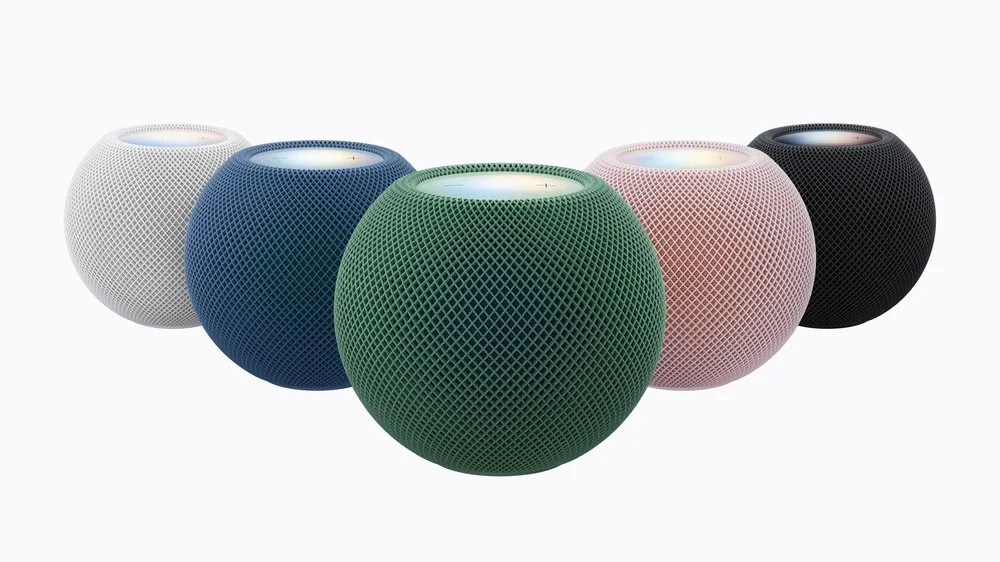
Its new Sound Glow feature makes the illuminated top respond to music, pulsing with bass and treble and showing colours based on the artwork for the track. Environmental soundscapes can produce their own visual effects. It’s an ornamental feature, but a small flourish can make a speaker feel less like another piece of home equipment.
The more substantial change is support for a four speaker surround setup with compatible HomePod speakers and the new Apple TV 4K. Two speakers can sit at the front of the room and a matching pair behind the listening position. Apple says the system measures placement and adjusts audio timing and levels.
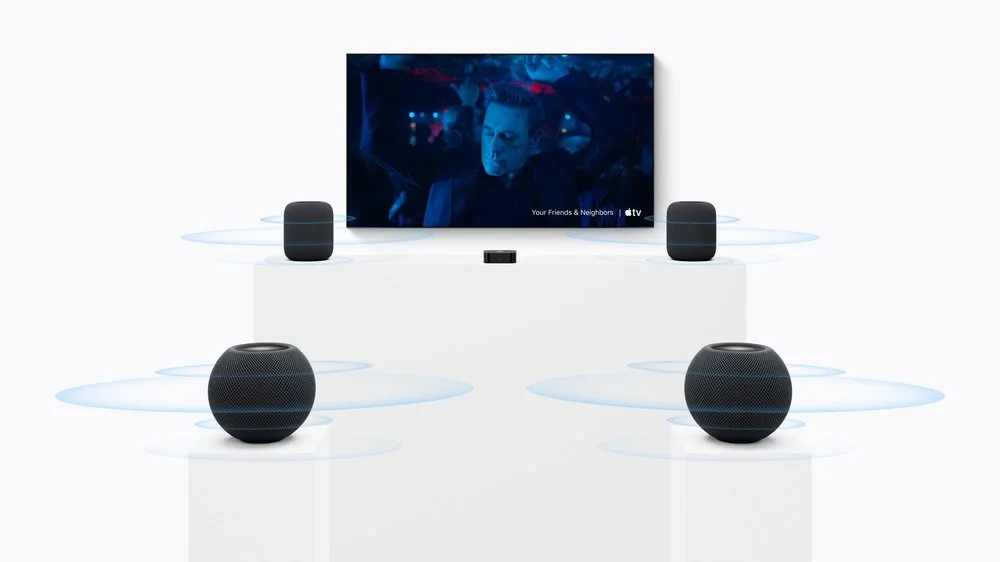
This could appeal to people who want more immersive TV sound without a receiver and speaker wiring. Four compact HomePods won’t automatically replace a dedicated home cinema system, but a simpler setup may suit households that care about sound quality and a tidy room more than extensive tuning options.
The new mini can also serve as a speaker for compatible Macs. A stereo pair could make for a neat desktop setup, though the source doesn’t specify how the wireless connection performs during work, calls or video playback. That practical detail will matter to anyone considering the speakers for more than music around the house.

In the UK, HomePod mini 2 costs £149 and becomes available on 30 October. Siri AI won’t arrive on it at launch; Apple says the feature will come in a later software update. Some personal context features will require a compatible iPhone or iPad, so buyers interested mainly in the new assistant will need to wait for that update and check device compatibility.
Apple TV becomes a home control point
The fourth generation Apple TV 4K adds Apple’s A19 chip and dedicated AV1 decoding, which Apple says enables more efficient streaming. The faster processor and graphics hardware should give it more headroom, while the new model’s broader role reaches beyond streaming and games.
Three far field microphones let people speak to the television without reaching for the remote. Siri AI is intended to support more conversational searches for programmes and recommendations. That could help with a common frustration: finding something to watch across several services and large catalogues. If the assistant can interpret a description or a mood instead of requiring an exact title, it may make discovery less of a chore.
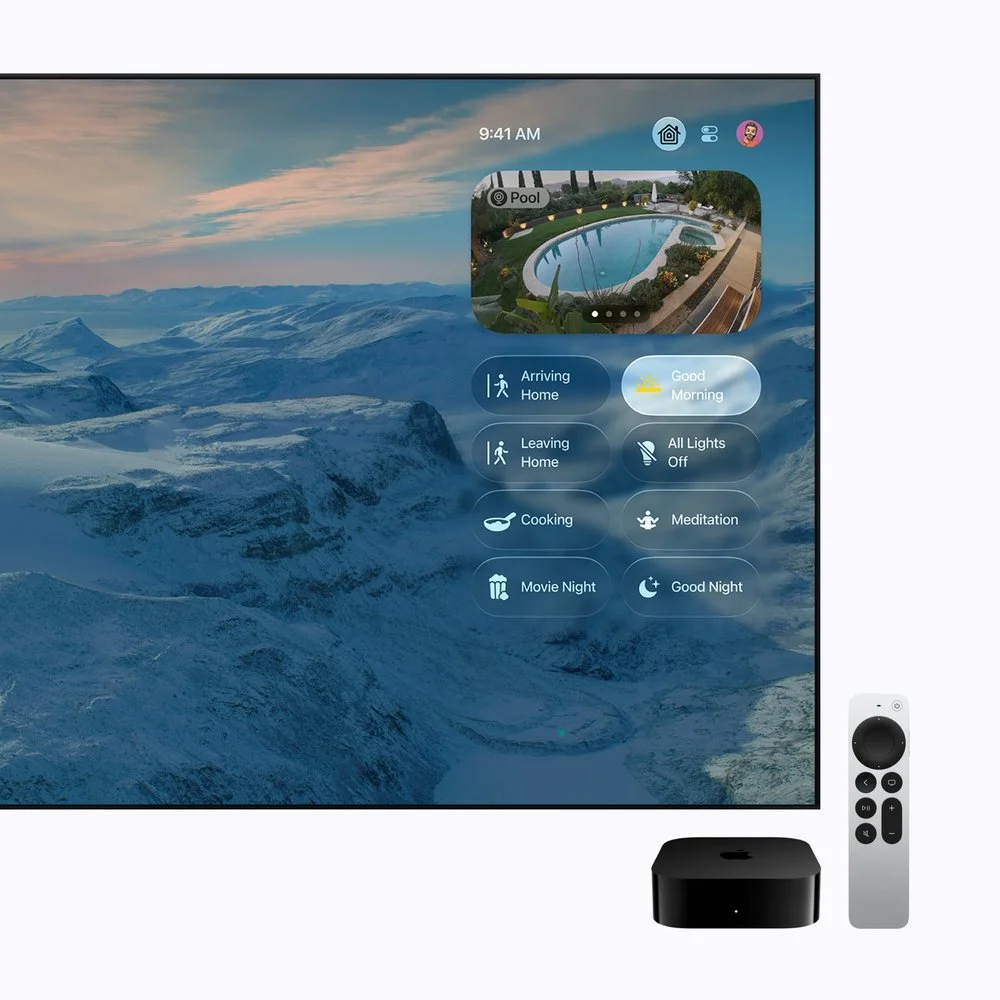
Apple is also bringing home controls into the TV experience. Camera alerts, video doorbell activity and smart lock controls can appear in the living room, while HomeKit Secure Video can provide descriptions of recorded activity. That makes Apple TV another way to check what’s happening at home, as well as a device for watching programmes.
The Siri Remote gains Precision Finding and a sound that can help locate it when misplaced. These are modest additions, but they address a familiar irritation for anyone who has searched sofa cushions for a remote.
The new Apple TV 4K is available to pre order, with UK availability starting on 13 November at £299. That’s a considerable price beside basic streaming sticks. Apple is positioning it as an entertainment device, gaming platform, assistant and home control point, so the value depends on whether buyers will use those connected features as well as streaming.
Apple says Siri AI is available in beta for second generation and later Apple TV 4K models, subject to compatibility requirements. That gives some existing owners a route to the new assistant without buying the latest box.

Apple Home Collection fills out the system
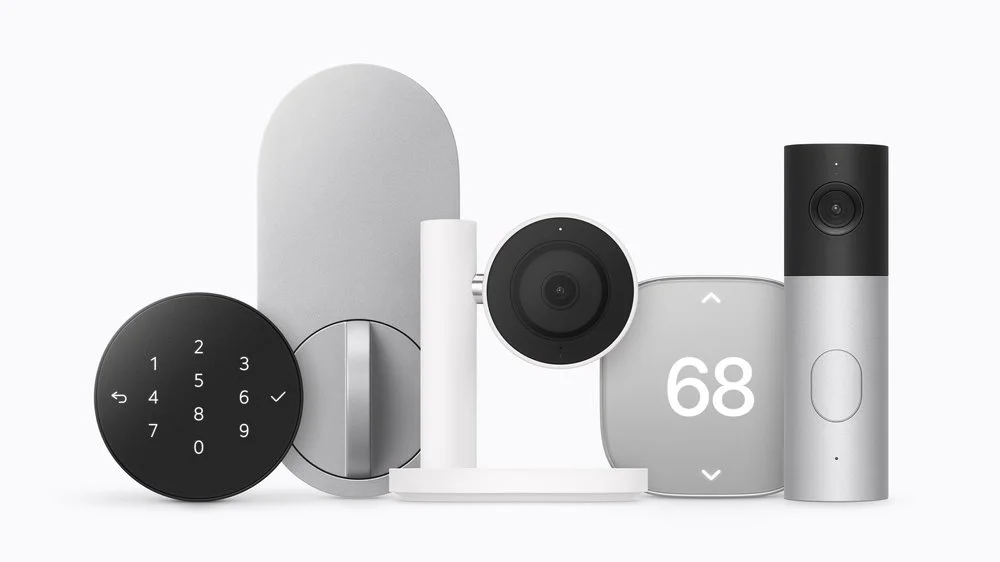
HomeView and the updated Apple devices need useful accessories around the house to make the broader strategy work. Apple Home Collection is a coordinated set of cameras, a video doorbell, a connected lock, thermostats and environmental sensors developed with LG Electronics and Schneider Electric. Apple says setup and management run through the Home app.
Smart home equipment often brings its own app, account and subscription choices. A household might use one service for heating, another for cameras and a third for its front door. Products that support HomeKit or Matter can still feel fragmented in daily use. Apple’s collection is meant to make setup and control more consistent through the Home app, although the source doesn’t spell out how every accessory will work with existing equipment.
LG’s camera range includes indoor and outdoor cameras, a video doorbell and a floodlight camera. Supported models record video at up to 2.5K. The doorbell uses two cameras to show visitors and packages from separate angles, while outdoor models include colour night vision and activity detection.
The indoor camera can physically tilt down when someone arrives home, so it stops pointing into the room. That visible mechanical action may offer more reassurance than a status light alone, though users will still want clear controls over when recording starts and stops.
With a compatible iCloud+ subscription, Apple’s intelligence features can categorise activity and describe recorded events. The aim is to help users find a relevant moment without scrubbing through hours of footage, and to reduce alerts that don’t merit attention. How well those descriptions work will determine whether the feature saves time or adds another layer to manage.
The connected lock uses Ultra Wideband proximity detection to recognise an authorised person approaching with a compatible iPhone or Apple Watch, then unlock automatically. A PIN and physical key provide other ways in. Hands free entry could be convenient when arriving with bags, but a lock has to work predictably. Apple and LG say key local functions remain available without an internet connection; compatibility with UK doors and reliability in daily use will be important.
Thermostats and environmental sensors extend the system to heating and indoor conditions. Apple’s stated aim is for compatible heating to respond to occupancy and household routines, reducing the need to keep adjusting schedules. There’s an obvious energy saving case for avoiding unnecessary heating, but compatibility with existing UK systems will shape how useful the products are. Some of the more advanced utility features will initially be limited to other markets.
The Home Collection cameras are expected to arrive from December. UK prices start at £179.95 for the LG Indoor Cam, £229.95 for the Video Doorbell, £279.95 for the Outdoor Cam and £349.95 for the Floodlight Cam. The other accessories are due on their own launch schedules.
Cost and compatibility will shape adoption
The prices add up quickly. A HomeView, several HomePod speakers, Apple TV, cameras, a doorbell, a lock and heating controls would represent a significant outlay. Apple tends to compete through design and integration rather than low prices, but outfitting a whole home is a larger commitment than replacing a phone. Existing owners will also want to know whether their compatible devices can keep working with the new features.
HomeView supports Works with Apple Home and Matter accessories, extending Apple’s existing support for interoperability standards. That means the new system isn’t limited to the accessories in Apple Home Collection. It doesn’t mean every existing product will gain the same capabilities as the new range, though, and the source doesn’t list which advanced features will extend to third party devices.
Apple’s intended experience is easy to picture. HomeView could show a person their schedule in the morning while speakers play music and heating follows household routines. When people leave, automations could secure the home. A doorbell could explain that a delivery has arrived, and an approaching resident could use the lock to get inside. Later, Apple TV could help the household choose a programme while HomePods provide surround sound.
That joined up routine is the point of the announcement. Amazon, Google and specialist smart home makers have pursued similar goals for years. Apple now has a coordinated hardware range, a large base of personal devices, its own chips and a renewed assistant strategy. If those parts work together consistently, Apple could make a complicated collection of devices feel easier to manage.
Several questions remain. Siri AI needs to handle natural conversation reliably. HomeView’s face recognition must be fast and dependable, particularly when personal information is involved. Accessories have to keep working when connectivity is poor, and Apple’s privacy protections need to hold up as more household activity flows through its services.
Compatibility across a household will matter too. Matter can help devices from different makers work together, but some of the personalised features depend on compatible Apple hardware. A home is shared by people who may use different phones and services, so a system that works well only for one platform could leave other residents with a less complete experience.
HomeView is the product most likely to show whether Apple has found a useful new interface for the home. The iPhone and HomePod can already control connected devices, but neither provides the same always available shared screen. The refreshed HomePod mini adds audio options and Sound Glow, Apple TV takes on more home controls, and Home Collection supplies cameras, sensors and access hardware.
Siri AI could make the difference between controlling a row of devices individually and asking for a household task in ordinary language. Apple’s plan is clearer than before, but buyers should weigh the announced features against the rollout timing: Siri AI is delayed on HomePod mini 2, some camera intelligence requires iCloud+, and some personal context features depend on compatible Apple devices.
The next measure of success won’t be how neatly the products fit together in a demonstration. It will be whether they make daily routines easier without creating more setup, extra costs or new points of failure. HomeView gives Apple’s smart home strategy a visible centre; the software and accessories now have to make that centre useful.
Apple TV · Mac · Apple Watch