Amazon Echo Time vs Apple HomeView: Which Smart Display Fits Your Home?
Echo Time focuses on sleep and alarms, while Apple HomeView offers a larger screen and video calls. Price and features point to different uses.
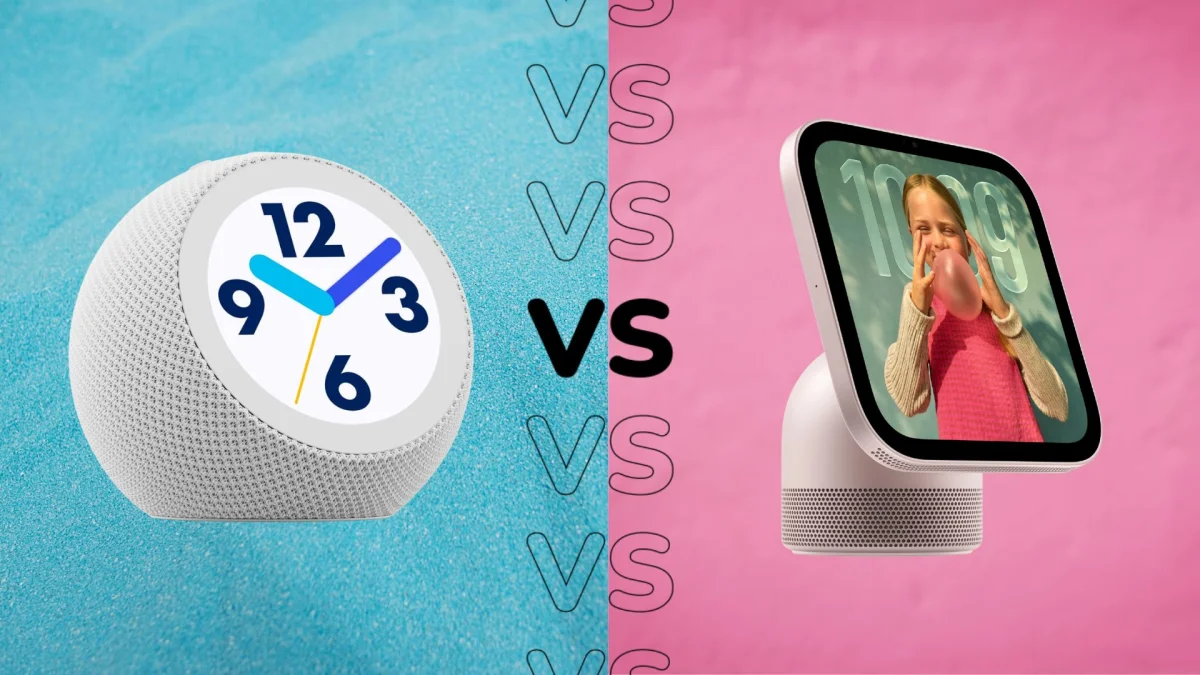
Amazon’s Echo Time and Apple’s HomeView are aimed at different spots in a connected home: Echo Time is built around bedside routines, while HomeView is designed as a larger screen for entertainment and smart home controls. Their prices and feature sets reflect that split. The choice comes down to whether you want a compact alarm clock with Alexa or a more versatile hub with a camera and a seven-inch display.
Neither device has been reviewed yet, so these differences are based on their announced specifications and features. Actual performance, including how well their voice assistants work in everyday use, remains to be tested.
For more options, see our best Amazon Echo and best smart speaker guides.
Price, availability and design
The Amazon Echo Time is available now, with an RRP of £184.99/$199.99. The standard model comes in Graphite, Glacier White and Coral Pink. There’s also an Amazon Kids version in Galactic Grape or Cosmic Lime, though it leaves out one of the standard model’s headline sleep features.
Apple HomeView costs £299/$299. At the time of writing, it’s available for pre-orders in Australia, Canada, India, New Zealand, the UK and US, with a global launch set for November 13th. It costs more than Echo Time, but its larger screen and camera suit a broader set of household tasks.
That difference in purpose is clear in their displays. Echo Time has a circular 3.2-inch touchscreen, a size that makes sense for checking the time and handling simple bedside interactions. HomeView’s seven-inch Liquid Retina screen gives it more room for viewing content and managing connected devices. The larger panel may make it more useful outside the bedroom, too, while Echo Time’s compact shape is better suited to a bedside table.

Sleep and screen features set Echo Time apart
Echo Time’s sleep detection is its most distinctive feature. Amazon says Alexa can detect when you’re in a lighter stage of sleep in the 10 to 60 minutes before your alarm is set, then wake you during that window. The aim is to make waking less abrupt. The feature depends on Omnisense, Amazon’s sensor fusion technology, which combines room temperature sensors and presence detection with ultrasound that detects breathing and proximity.
There’s an important model difference for families: the Amazon Kids Echo Time doesn’t include Omnisense. Buyers who want sleep detection will need to choose the standard device.

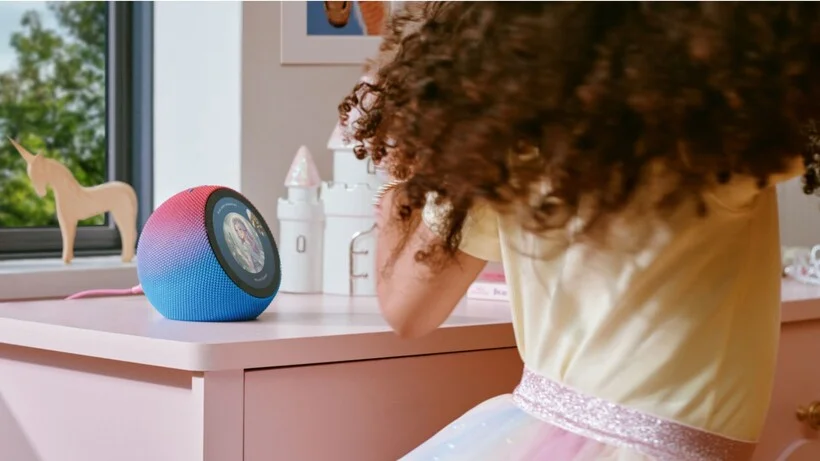
Echo Time also gradually brightens its display to imitate a sunrise as the alarm approaches. After that, the screen adjusts through the day and shifts to night mode in the evening, reducing blue light emission. These features make its screen part of the alarm routine, rather than just a place to read the time.
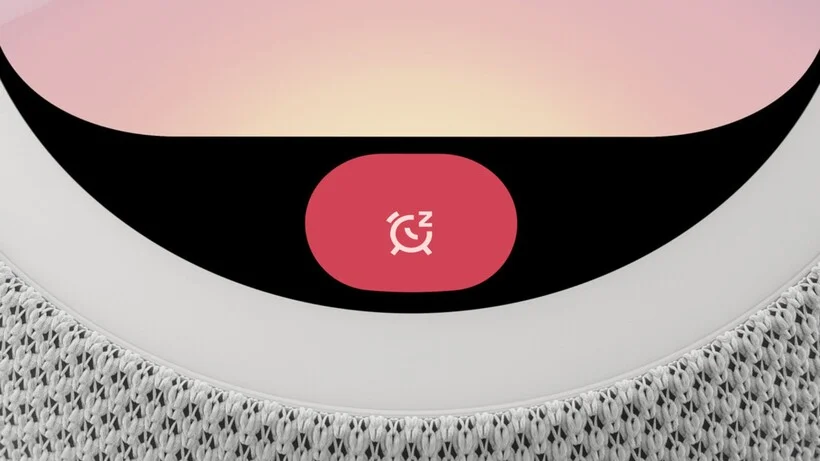
HomeView takes a more general approach to changing light. Its True Tone feature responds to the lighting around it, and automatic brightness can range from 0.3 nits up to 500 nits. That gives it the range to stay dim in a dark room while remaining visible in brighter conditions. It doesn’t offer Echo Time’s described sunrise alarm, but its brightness controls could still make it workable on a bedside table.
Alexa+ and Siri AI bring different ecosystems
Echo Time is built around Alexa+, while HomeView uses Siri AI. Both assistants can set alarms and timers, create reminders and control paired smart home products by voice. Their companion smartphone apps also show conversation history. Those shared capabilities cover routine household tasks, though the devices’ different screens and features may shape how often you interact with them by voice versus touch.
The available impressions aren’t directly comparable. Alexa+ has received a five-star rating from the source publication, which described it as “light years ahead of the competition”. Siri AI hasn’t been conclusively reviewed there, though its Home Tech Editor has said it is showing promise. Neither assessment tells us how the assistants will perform on these specific devices, so that comparison will need to wait for hands-on testing.
Apple’s app support for HomeView also remains partly unclear. Safari, Apple Music and Calendar are among the apps confirmed to work, but Apple hasn’t confirmed which third-party apps the HomeView will support. In particular, native access to Netflix, Prime Video or Apple TV hasn’t been confirmed. That leaves a key question for anyone considering HomeView as an entertainment screen: its display is larger, but the available streaming options still need clarification.
HomeView adds video calls; Echo Time skips the camera
HomeView includes a 12MP front-facing Center Stage camera, which keeps a person in frame during video calls. It can also identify individuals and open a dedicated profile for each, with support for up to six people. That makes HomeView better equipped for shared household use and calls from a fixed spot.
Echo Time has no camera. That keeps it focused on audio, alarms and smart home control, while avoiding camera based calls and profile features. For buyers who want video calling on the hub, HomeView has the clear specification advantage. For anyone who mainly wants an alarm clock and speaker, the camera may not add much.
Which device makes more sense?
Echo Time looks like the more targeted buy: it costs less, is already available and combines Alexa with sleep detection, a sunrise style alarm and a compact display. Its main appeal is a bedroom routine, and the Kids model’s lack of Omnisense is worth checking before choosing a version.
HomeView costs more, but offers the larger screen, a front-facing camera and support for individual profiles. It looks like the stronger fit for a shared smart home hub, especially if video calls matter. Its entertainment role is less certain until Apple confirms its third-party app support.
For now, match the device to where it will sit and what you’ll ask it to do. Echo Time is the more focused bedside option; HomeView has the broader hardware feature set. Reviews of both will show whether their assistants and everyday performance live up to those specifications.
The post Amazon Echo Time vs Apple HomeView: What’s the difference? appeared first on Trusted Reviews.