ESGAMING EDGEFLOW Case Uses Angled Side Intake to Direct Air at the GPU
The EDGEFLOW pairs an angled side intake with three included fan modules, 435mm GPU clearance and a removable fan bracket. Pricing and retail timing are unconfirmed.
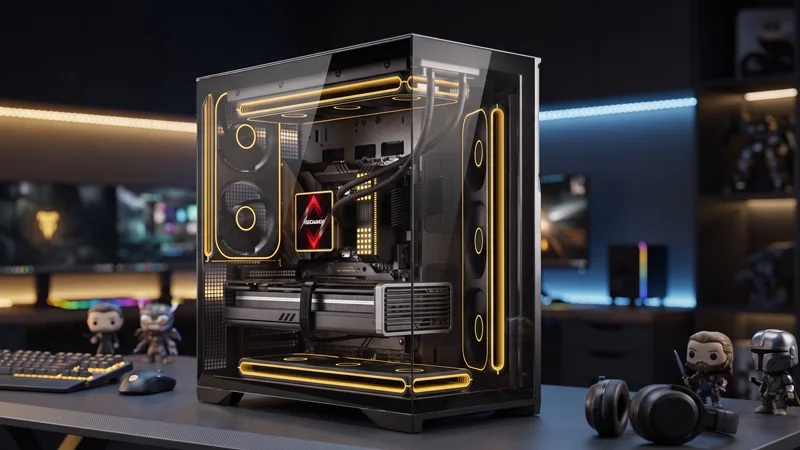
The ESGAMING EDGEFLOW puts its graphics card cooling plan front and center: a mesh intake panel set at a 60-degree angle directs air towards the GPU, while three preinstalled ARGB PWM fan modules provide the case’s starting airflow setup. Its dual-chamber layout, removable fan bracket and 435mm graphics card clearance give builders practical flexibility, though pricing and a retail date have not been provided.
Airflow shaped around the graphics card
The front and left side of the EDGEFLOW use tempered glass to show off the components. Beside the glass, the angled metal mesh panel creates a separate path for incoming air. ESGAMING describes this arrangement as a 3D airflow design: a fan module behind the mesh sends air towards the graphics card, and the rear module exhausts warm air.
That layout is intended to address a familiar challenge in high performance PC builds. A graphics card can occupy a large part of the main chamber and produce substantial heat, so giving it a directed intake may help keep fresh air moving around the card. The design alone doesn’t establish how much temperatures or noise will change under load; those results depend on the hardware, fan speeds and overall system setup. Testing will show whether the angled intake delivers a useful cooling gain in everyday use.
The case includes two 360mm fan modules and one 240mm module at the rear. The larger modules are positioned at the side and bottom. All three support PWM speed control and ARGB lighting, so builders can adjust fan speeds and lighting through compatible controls. For liquid cooling, the roof accepts a 360mm radiator. That gives the EDGEFLOW more than one cooling route, although radiator thickness and clearance details aren’t specified here.
Build access and component clearance
ESGAMING has made the front and side panels removable without tools. More unusually, the bracket behind the angled mesh intake can be taken out of the chassis. Builders can attach fans to the bracket outside the case, where there’s more room to handle screws and cables, then refit it. That should make installation and later fan changes less awkward than reaching into a crowded side chamber.
The motherboard tray supports ATX, Micro-ATX and Mini-ITX boards, plus ATX and Micro-ATX BTF motherboards. BTF boards place their connections on the rear, letting cables run behind the motherboard tray and reducing visible wiring in the main compartment. That option may appeal to builders who want a cleaner view through the glass, provided their chosen board and components are compatible with the layout.
Graphics cards can be up to 435mm long, and ESGAMING includes a support bracket for the card. That’s generous clearance on paper, but buyers assembling a large GPU should still check the dimensions of their particular card and account for any installed fans or radiator hardware. The maximum CPU air cooler height is 175mm, leaving room for a sizeable tower cooler. Builders can weigh that air cooling option against a roof mounted 360mm radiator.
A second chamber for cables and drives
Behind the motherboard tray, the second chamber provides up to 65mm for cable routing. Two rubber grommets and three Velcro straps are supplied to keep wiring organised. The amount of space can help with a tidy build, especially when routing power cables away from the view through the glass, though how much room remains will depend on the cable bundle and installed hardware.
The drive cage swings open to make drives easier to install or replace. That small detail could save some frustration during maintenance, since access doesn’t require working around a fixed cage. Foam pads on the power supply shroud are intended to improve grip between the power supply and the shroud and reduce vibration and noise, according to ESGAMING.
Front panel connections run along the side of the front panel. They include one USB Type-C port rated for speeds up to 20Gbps, one USB 3.0 port and a combined headphone and microphone jack. Power and reset buttons sit alongside them. The stated Type-C speed gives the port a clear role for fast accessories and storage, while the single USB 3.0 port means buyers with several wired peripherals may need to use motherboard connections or a hub.
Price and availability remain open
ESGAMING plans to offer the EDGEFLOW in black and white through its authorised distributors. The company hasn’t supplied pricing or a firm retail availability date, so buyers can’t yet compare its value with other dual chamber cases or work out how the included fan modules affect the total build cost.
The feature list makes the EDGEFLOW look suited to systems where GPU airflow, component visibility and access during assembly all matter. Its included fans and removable bracket give builders a useful starting point, but the key question is how the angled intake performs acoustically and thermally once a powerful graphics card is installed. Price, availability and hands on cooling results will determine whether the design earns a place on a shortlist.