iPad mini 8 gets an OLED display, A20 Pro chip and IP67 protection
The new iPad mini adds an 8.5-inch OLED screen, faster hardware and water resistance, but its $699 starting price is a steep jump.

The eighth-generation iPad mini brings a larger OLED screen, a new speaker design, a faster chip and IP67 water and dust resistance. Those changes make it a much more capable small tablet, but Apple’s $699 starting price is a substantial rise from the previous model’s launch price of $499.
Apple unveiled the new mini ahead of its Pro and Tell experience on Wednesday, October 28, 2026, two years and three days after introducing the iPad mini 8.3-inch (2024). Orders open October 28 at 10:10am PT / 1:10pm ET / 5:10pm GMT, with shipping due to begin November 6, 2026.
A bigger screen in the same footprint
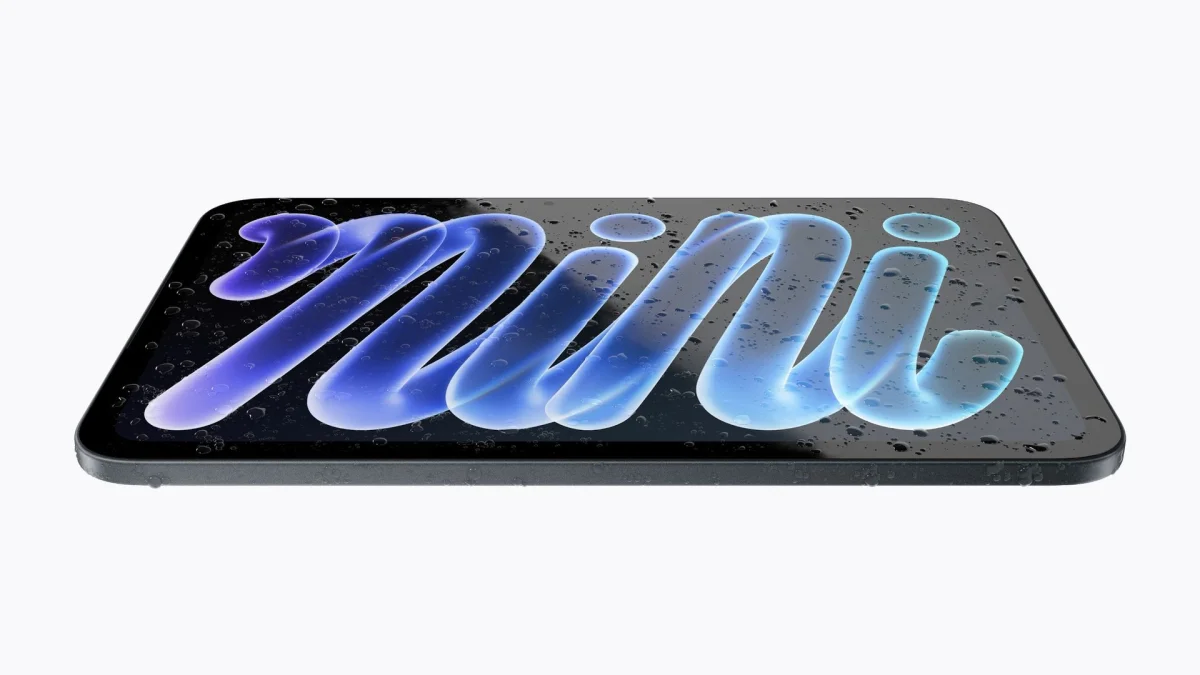
The headline change is an 8.5-inch OLED Super Retina XDR display, up from the previous model’s 8.3-inch Liquid Retina panel. Apple says it made room for the extra screen area by reducing the bezels by 24% around the tablet, while retaining the same overall dimensions.
The display reaches up to 1,200 nits, compared with 500 nits on the previous mini. That brightness should help when using the tablet in strong ambient light, while P3 color and True Tone support remain. True Tone adjusts the screen’s color temperature to suit the surrounding light. The trade-off: the panel still runs at 60Hz, leaving 120Hz support to the iPad Pro.
A Nano-Texture option is also available, using a surface treatment designed to reduce reflections from indoor lighting and daylight. The option is limited to models with at least 256GB of storage. That makes the price $899 for a 256GB mini with Nano Texture, compared with $799 for the standard 256GB configuration.
Apple has also reworked the audio hardware. Its “Acoustic Display” design puts custom woofers in the screen and tweeters between the glass and aluminum, with the aim of increasing peak volume and strengthening bass. The previous mini had stereo speakers, so the new arrangement could make a noticeable difference for watching video and listening without headphones. Listening tests will show how much the design improves sound in practice.
Thinner, lighter and better protected
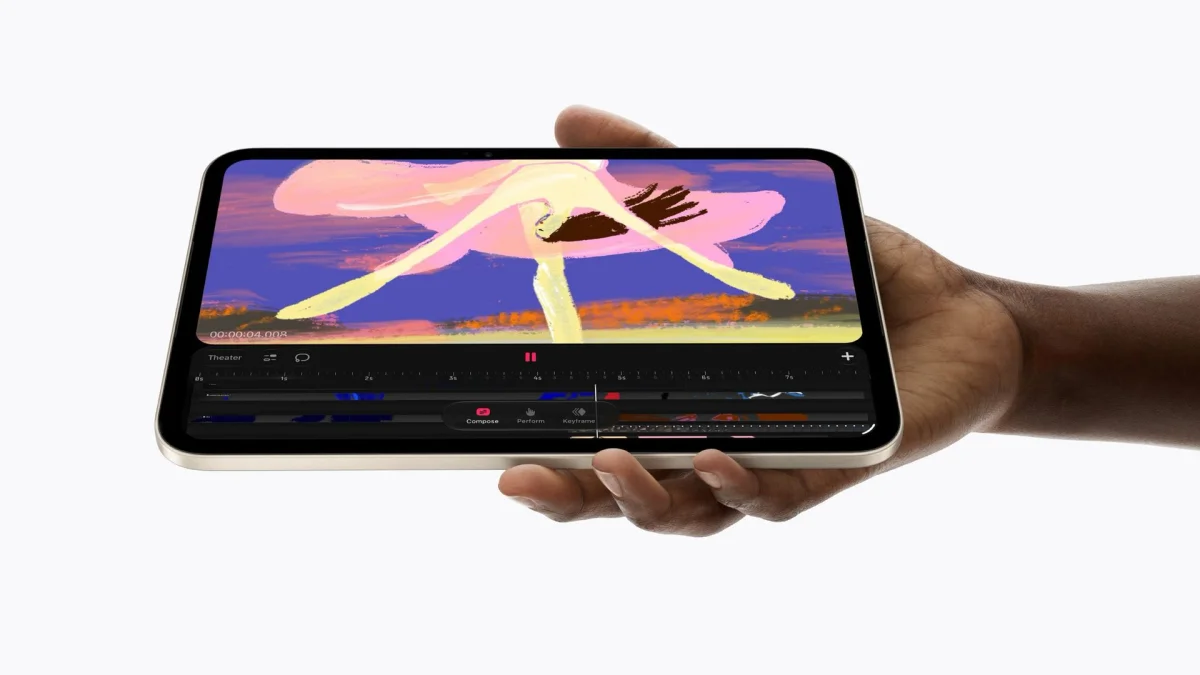
The aluminum body now measures 5.33mm thick and weighs 254g, down from 6.35mm and 295g for its predecessor. For comparison, the iPhone Duo is also 5.33mm thick when unfolded. The mini’s more practical upgrade may be its IP67 rating for water and dust resistance, which could make it a better fit for travel and family use.
Apple is offering two finishes: Starlight and Midnight. Blue, Purple and Space Gray are gone. The front-facing 12MP Center Stage camera remains in the bezel on the tablet’s longer side. Around back, there’s a 12MP camera and an Adaptive True Tone flash.
More speed, with different chip configurations
The new mini uses Apple’s 2nm A20 Pro chip, but the processor configuration varies with storage. The 128GB and 256GB models have a five-core CPU, made up of two super cores and three efficiency cores, alongside a seven-core GPU and 16-core Neural Engine. The 512GB version gets a six-core CPU with two super cores and four efficiency cores, the same seven-core GPU, and a Dual 16-core Neural Engine.
Apple says the A20 Pro delivers up to 60% faster multithreaded CPU performance, 4.5 times faster AI performance and 2.7 times better graphics performance than the A17 Pro. Those are manufacturer comparisons; independent testing will help show what they mean for day-to-day use. Apple hasn’t disclosed the tablet’s memory capacity, though it says unified memory bandwidth has doubled.
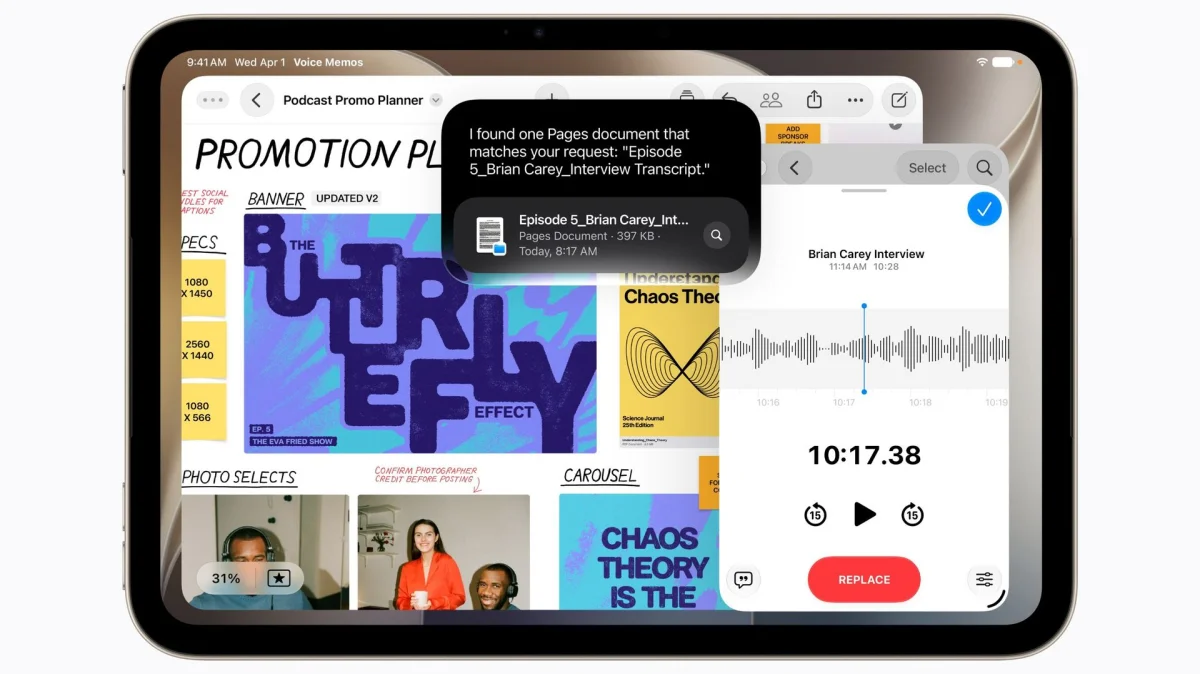
The tablet runs iPadOS 27 and supports full Siri AI features. It also retains the iPad’s multitasking tools, which allow more than basic split-screen use. That flexibility is a useful distinction from the iPhone Duo for anyone who wants to work with multiple apps on a compact screen.
Apple’s N1 chip adds Wi-Fi 7, Bluetooth 6 and Thread. Cellular models use the C2 modem; Apple says it can provide data speeds up to 50% faster than the modem in the seventh-generation mini. The tablet continues to support Apple Pencil Pro and Apple Pencil USB-C. There’s no Apple Magic Keyboard for this model, while a new TechWoven Folio Case comes in navy blue and taupe.

The price of the upgrades
The new iPad mini starts at $699 / £699 / AU$1,099 for Wi-Fi, or $849 / £849 / AU$1,349 for Wi-Fi and Cellular. The previous generation launched at $499 / £499 / AU$799, before its price rose to $599 / £599 / AU$949 in June this year. The new starting configuration still comes with 128GB, while Nano Texture requires stepping up to 256GB and adds $100 to that model’s price.
That increase buys a stronger display, a new audio system, a slimmer and lighter body, updated wireless connections and IP67 protection, as well as the A20 Pro chip. Buyers upgrading from an older mini may have more reason to notice the speed gains; those with a recent model will need to weigh the display and durability changes against the higher cost.
The next useful measure will be hands-on testing, particularly for the screen’s reflections, speaker quality and real-world performance. For now, the new mini looks like a more versatile travel and family tablet, with the price making the 256GB configuration an important comparison before ordering.
The HomePod mini 2 is due October 30, 2026, while HomeView or the Apple TV 4K is expected November 13, 2026. The mini supports the Apple Pencil Pro and Apple Pencil USB-C, and Apple’s new TechWoven Folio Case is offered in navy blue and taupe.