BetterGovPH Publishes 7,465 Changes in the 2027 House Budget Bill
The searchable tracker compares project lines across four programs, while its authors stress that matches are leads, not proof of wrongdoing.
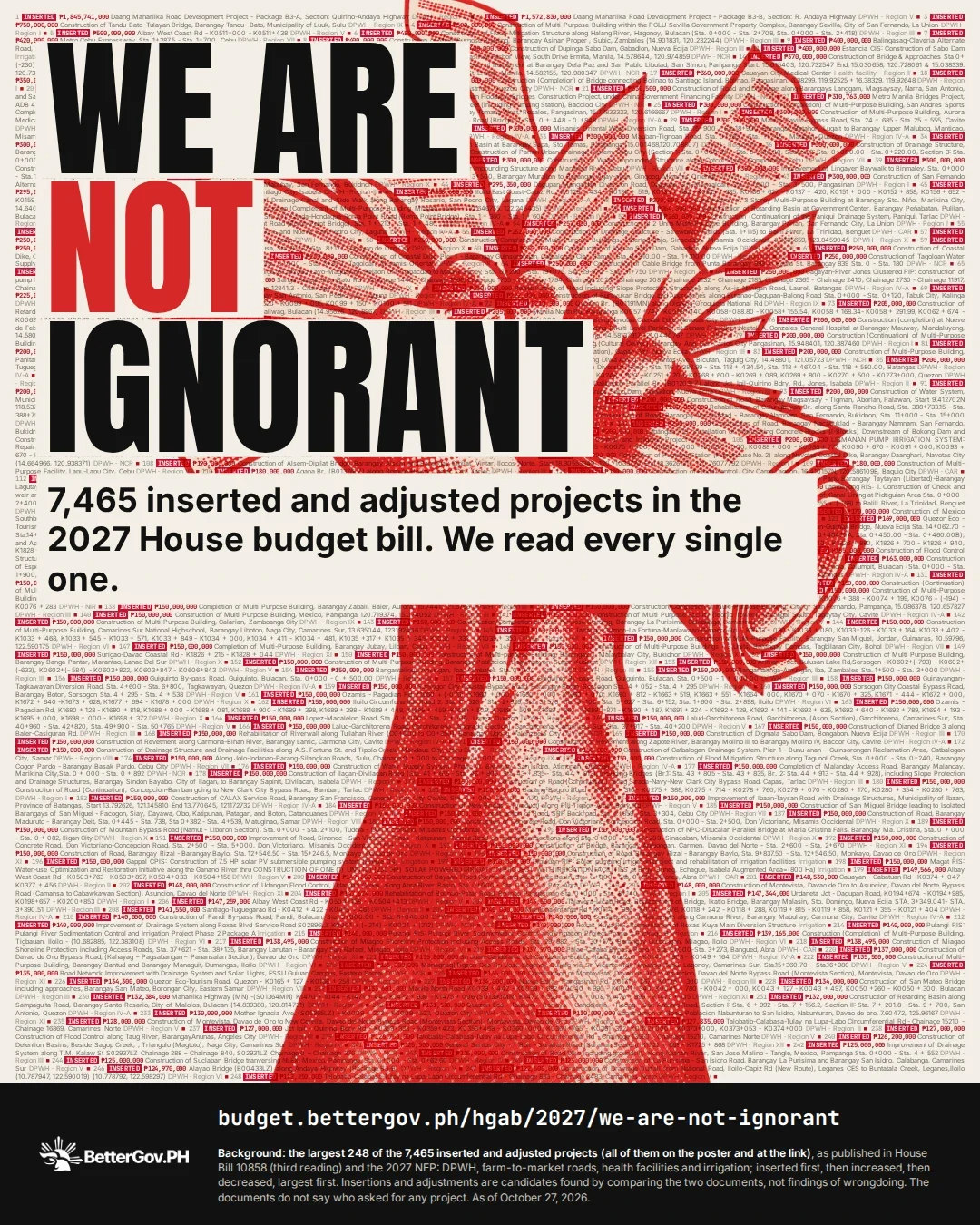
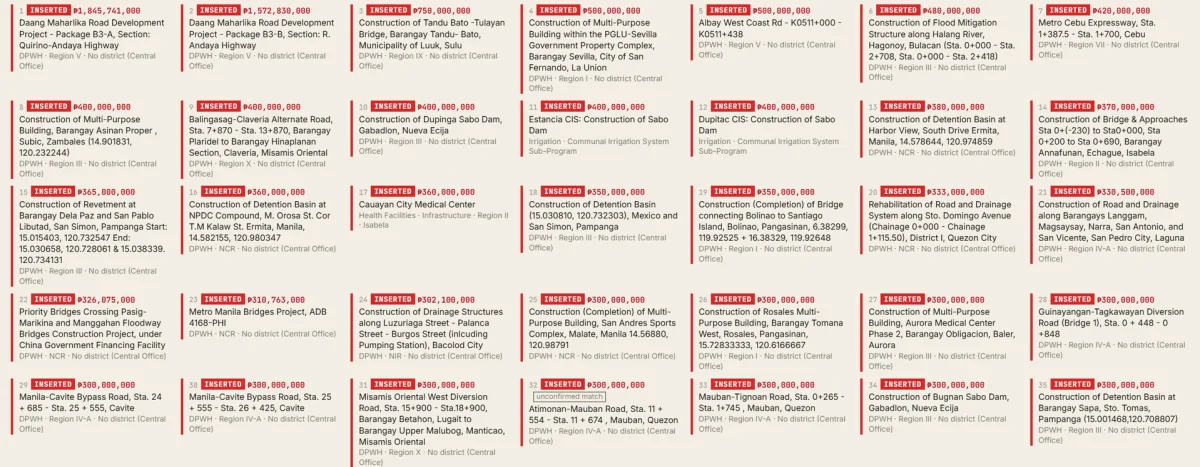
BetterGovPH has put its budget criticism into a searchable dataset: 7,465 projects it identifies as inserted or adjusted in the 2027 House budget bill. The tracker lets readers sort and download the records, while spelling out a limit that matters: a match between budget documents is a lead to examine, not a finding of wrongdoing.
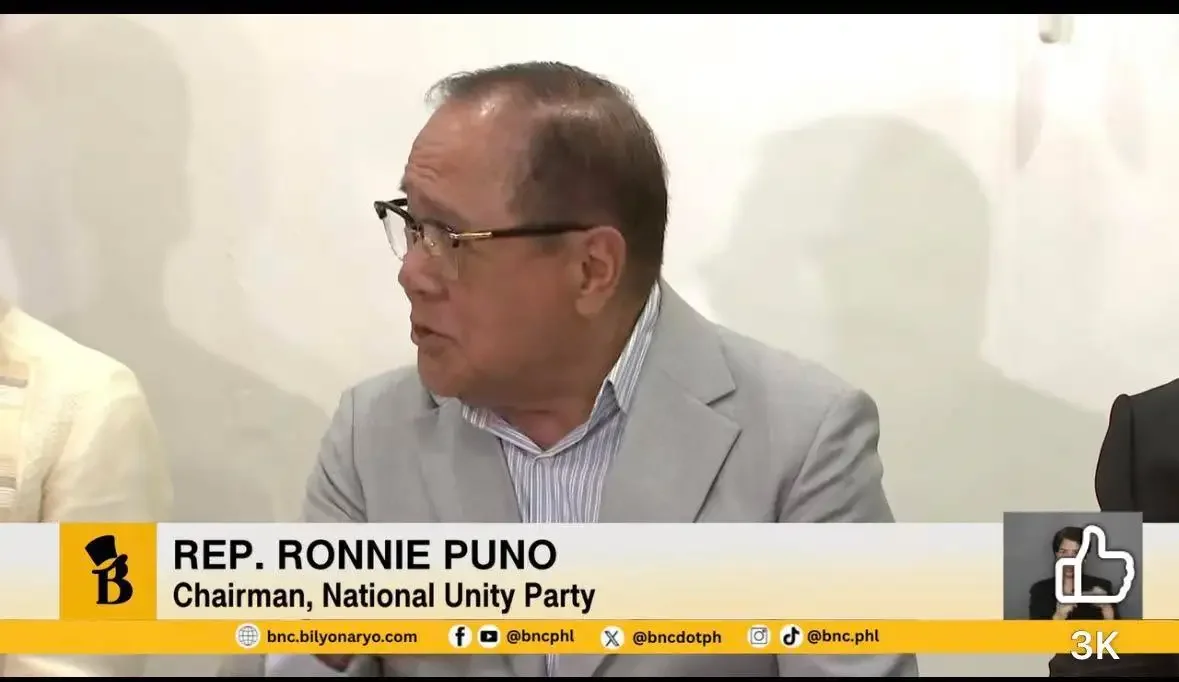
The response followed a remark by Antipolo City Representative and House Deputy Speaker Ronaldo Puno. At a press briefing on October 26, he said critics had misunderstood how the budget is prepared, arguing that agencies submit it and the House reviews it. He described the group’s claims as showing “ignorance,” NewsKo reported.
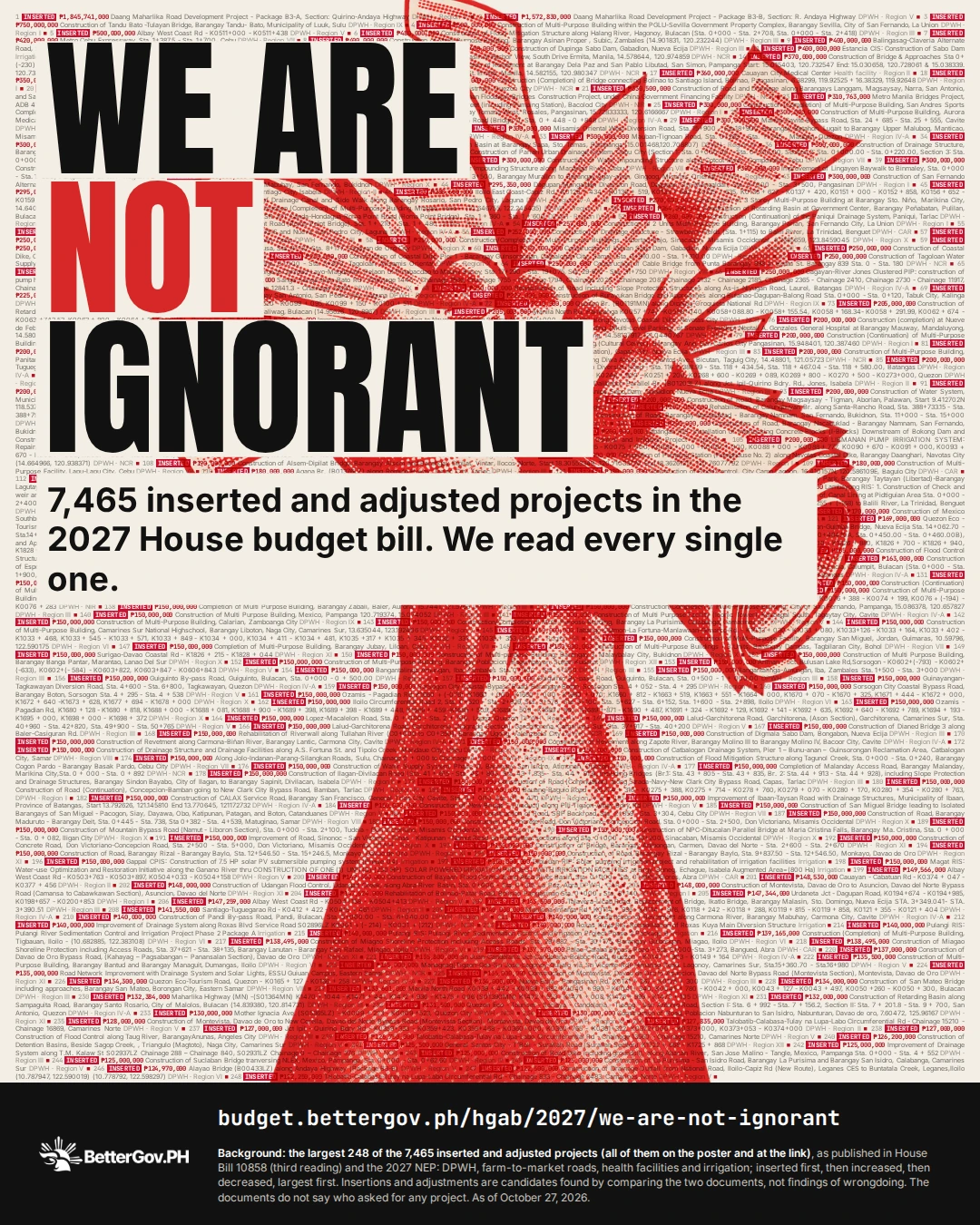
BetterGovPH’s answer is a record people can inspect. Its page, titled “We are not ignorant,” says the team read all 7,465 listed changes. The downloadable CSV file covers project lines in four areas: national infrastructure from the Department of Public Works and Highways (DPWH), farm-to-market roads from the Department of Agriculture, health facilities from the Department of Health, and National Irrigation Administration projects.
What the tracker can—and can’t—show
The four programs are included because both the National Expenditure Program and the House bill name individual projects in them. The tracker does not cover every part of the proposed budget. That boundary is central to interpreting its headline count: 7,465 records means changes identified within the comparison’s scope, not a complete accounting of every budget adjustment.
BetterGovPH’s methodology page describes how it pairs a House line with a line in the earlier spending plan. A match is accepted only if a written rule identifies one fit, and the record keeps the rule used. When several possible matches exist, the pairing stays unresolved. The project says it does not claim the two documents refer to identical projects, and notes that the documents do not identify who requested a project.
That qualification makes the tracker more useful for readers who want to check the work. It also draws a clear line between a documented change and a conclusion about intent. The overview page provides access to the four program comparisons.
The broader figures raised by the budget coalition
The People’s Budget Coalition presented a wider set of claims at a finance committee consultation on October 26. It described more than PhP1 trillion in proposed additions as “red flag” insertions, divided into PhP695 billion in “hard pork” for infrastructure, PhP210 billion in “soft pork” or assistance programs, and PhP112 billion in “shadow pork” under unprogrammed appropriations. Those labels and estimates are the coalition’s characterization, reported by The Philippine Star.
Coalition analyst Kenneth Isaiah Abante said the House added PhP43 billion for multipurpose buildings in the DPWH budget. He also cited around 7,000 infrastructure projects worth PhP190 billion that lack detail. The group’s more specific breakdown counted 6,200 DPWH projects, mostly multipurpose buildings, worth PhP172 billion; 180 health facilities worth PhP2 billion; 350 farm-to-market roads worth PhP6 billion; and 200 irrigation projects worth PhP7 billion.
The coalition also pointed to increases of PhP24 billion each for AICS and MAIFIP, plus PhP10 billion in assistance for farmers and fisherfolk. It identified reductions elsewhere, including roughly PhP27 billion for the Laguna Lakeshore Road, nearly PhP20 billion for the Metro Manila Subway, PhP15 billion for the North-South Commuter Rail, and PhP10 billion for pension and gratuity. It also cited a PhP7.75 billion reduction in an allocation for the National Disaster Risk Reduction and Management Council.
Health financing is another part of the coalition’s critique. It said the PhilHealth subsidy drops from PhP129.8 billion in 2026 to PhP74.4 billion in the National Expenditure Program, and that the House version does not restore the earlier amount. Instead, MAIFIP doubles to PhP49.2 billion. Co-convenor AJ Montesa argued that this could leave patients relying on politicians for guarantee letters. That is the coalition’s interpretation of the shift, rather than a conclusion established by the tracker.
District rankings and missing documents
The coalition ranked district offices by the value of DPWH projects assigned to them. House Majority Leader Sandro Marcos’s first district of Ilocos Norte topped the list with 405 projects worth PhP4.37 billion. Speaker Faustino Dy III’s sixth district of Isabela placed fourth with 147 projects worth PhP1.68 billion. Appropriations chair Mika Suansing’s district ranked seventh, while Batangas second district Representative Gerville Luistro’s ranked eighth.
The coalition cautioned that these figures reflect budgets assigned to DPWH district offices, not individual representatives. It said the rankings are not evidence of wrongdoing.
A separate documentation gap does not depend on matching project lines. At the finance committee consultation, Senator JV Ejercito said supporting documents accompanied 1,418 of 16,244 proposed DPWH projects. The other 14,826—91.27 percent—arrived without them. That figure addresses the call from Bataan Representative Albert Raymund Garcia for specific details to validate concerns. Garcia had also suggested that farm-to-market roads shown in the sea could be typographical errors, given the volume of paperwork, Politiko reported.
A dataset readers can query
BetterGovPH has also made a public API and an MCP server available for direct queries. That gives researchers a way to work with the underlying budget data instead of relying on screenshots or summaries. The approach follows the group’s earlier tracker, which Gadget Pilipinas covered in September.
Puno’s argument is that the House reviews agency submissions. The tracker focuses on what changed between the National Expenditure Program and the House bill, leaving readers to judge the significance of each difference. The House has said it will keep its version, with unresolved issues to be handled at the bicameral conference committee. At the tracker’s October 27 timestamp, the chamber had not responded individually to the 7,465 listed lines.