Smartphone Shipments Hit a 14-Year Low as Costs Rise and Upgrades Slow
Counterpoint Research says shipments fell 20% year over year. Higher RAM costs and longer upgrade cycles are squeezing phone makers.
A 20% drop in global smartphone shipments points to a market facing more than a supply squeeze. Counterpoint Research says shipments in the third quarter were down 20% from the same period a year earlier, making it the weakest third quarter in 14 years. Rising RAM costs are adding pressure, while buyers are keeping their phones longer than the industry expected.
Those factors can reinforce each other. Higher component costs and shortages make it harder for phone makers to keep devices available at familiar prices. When an upgrade costs more or the model a buyer wants is harder to find, waiting becomes an easier choice. And if an existing phone still runs well, there may be little reason to replace it.
Higher costs meet longer upgrade cycles
Counterpoint identifies the RAM crisis as a major contributor to the decline. The effects reach beyond manufacturers’ component bills: shortages can disrupt shipments and leave some models in shorter supply, while higher costs can feed into prices for consumers. That combination narrows the appeal of upgrading, particularly for people whose current phones already handle their everyday needs.
The research firm also says consumers are “holding on to their devices longer than expected.” That finding suggests the shipment decline may reflect a change in buying habits as well as a difficult period for supply. The source doesn’t say how much of the longer replacement cycle is due to prices, product design, or other factors, so it’s hard to assign the shift to any single cause.
There’s a straightforward reason buyers might wait: phones have become capable enough to stay useful for years. Even less expensive models can cover common tasks without making an immediate upgrade feel necessary. At the premium end, the case for replacing a recent phone can be harder to make. Flagship models already offer ample power, high-quality screens and strong cameras, leaving manufacturers less room to make each new generation feel essential.
That doesn’t mean new models have nothing to offer. It does mean that a faster chip or a modest camera change may not convince someone whose current phone still works well. When fewer buyers see a clear benefit in upgrading, shipment totals can remain under pressure even after component availability improves.
Apple and Samsung gain share as shipments fall
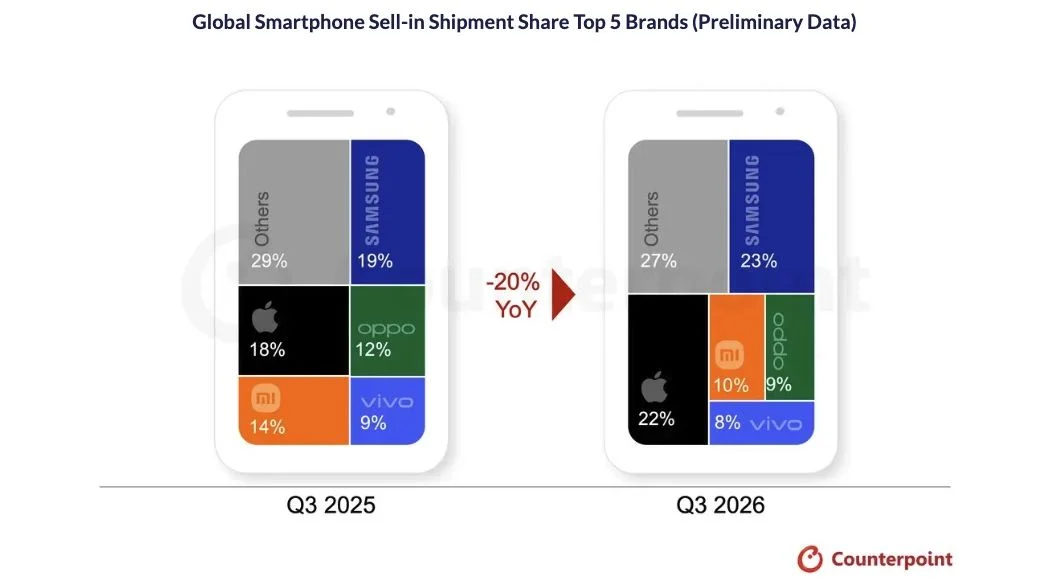
The slowdown has not affected every manufacturer equally. Counterpoint reports that Samsung’s market share rose to 23%, even though its shipments fell 3% compared with the same period a year earlier. The firm attributes much of Samsung’s performance to the success of the Samsung Galaxy Z Fold 8.
Apple’s share also increased, reaching 22%, despite the company selling fewer phones than a year earlier. The source suggests Apple might have done better if it had shipped a base iPhone 18, instead of waiting until next year. That points to the importance of having a model available for buyers who want a newer iPhone without choosing from the lineup currently on offer.
Xiaomi, Oppo and Vivo, by contrast, saw sharper shipment declines and lost market share, according to the report. When overall sales are contracting, a brand can lose ground even if the entire category is struggling. The gains for Apple and Samsung therefore show who held up better in this period, rather than indicating that either company escaped the slowdown.
What buyers and phone makers should watch
For buyers, the figures don’t establish that every phone will become more expensive or harder to find. They do suggest that component shortages and higher costs are adding friction to a market where many people already have less reason to replace a working device. Anyone considering an upgrade has a practical question to answer: does a new model solve a problem that matters enough to justify its price?
For manufacturers, the challenge is twofold. They need to manage component constraints while giving customers a persuasive reason to switch. A less expensive phone that remains capable for longer can be good news for its owner, but it also stretches the time between purchases. At the high end, the bar is higher still: improvements need to be noticeable in daily use, not just on a specification sheet.
Shipments could improve if RAM supply and pricing become less disruptive. But a recovery in components alone may not restore earlier buying patterns if consumers continue to hold on to phones for longer. The next signal to watch is whether demand rebounds as supply conditions ease, or whether longer upgrade cycles keep the industry’s sales lower.