AirTag Silencer Raises Safety Concerns by Removing a Key Tracking Alert
ElevationLab’s tool disables an AirTag’s speaker, making stolen gear easier to track but also removing a sound designed to help people detect unwanted tracking.
ElevationLab has stopped selling its AirTag Silencer after criticism that the device makes it easier to disable a feature meant to help people detect unwanted tracking. The tool is designed to destroy an AirTag’s speaker: remove the tracker’s back and battery, place the Silencer’s pin over the speaker, then tap it with a hammer. The result is an AirTag that can no longer make a sound.
That sound does more than help someone find a misplaced item. Apple uses it as one part of its system for alerting people to an unknown tracker moving with them. Removing the speaker also removes a way to discover a tracker when it has been left in a bag, vehicle, suitcase or other object and its owner’s phone isn’t nearby.
The trade-off behind a silent AirTag
ElevationLab says it made the Silencer for people who want to recover stolen property. CEO Casey Hopkins told the writer that he and his team had recovered expensive bikes and other gear with AirTags, and had already silenced their own trackers using methods found online and on YouTube. He argued that a determined person could disable the speaker without the tool, while the tracker would still send phone notifications. With roughly 200 million AirTags in use, he said, most owners simply want to keep track of their belongings.
There’s a real tension here. The sound and phone alerts can make an AirTag less useful for following stolen property without drawing attention to it. But the same features can help someone discover that a tracker is traveling with them. A tool that makes the speaker easier to destroy lowers the effort needed to remove one of those safeguards.
Eva Galperin, director of cybersecurity at the Electronic Frontier Foundation, argued that the product puts property ahead of people. “There is a reason why the AirTag makes that noise,” she said in an email. A tracker that stays quiet for a thief can also stay quiet when used to follow someone without their knowledge, she added.
The writer acknowledges that ElevationLab’s stated use is plausible, especially for people trying to recover valuable gear. But that purpose doesn’t erase the risk to people who may be tracked without consent. AirTags can help owners locate their own possessions or share an item’s location with someone they trust. The same network can also be misused to follow an acquaintance or stranger.
How the alerts work
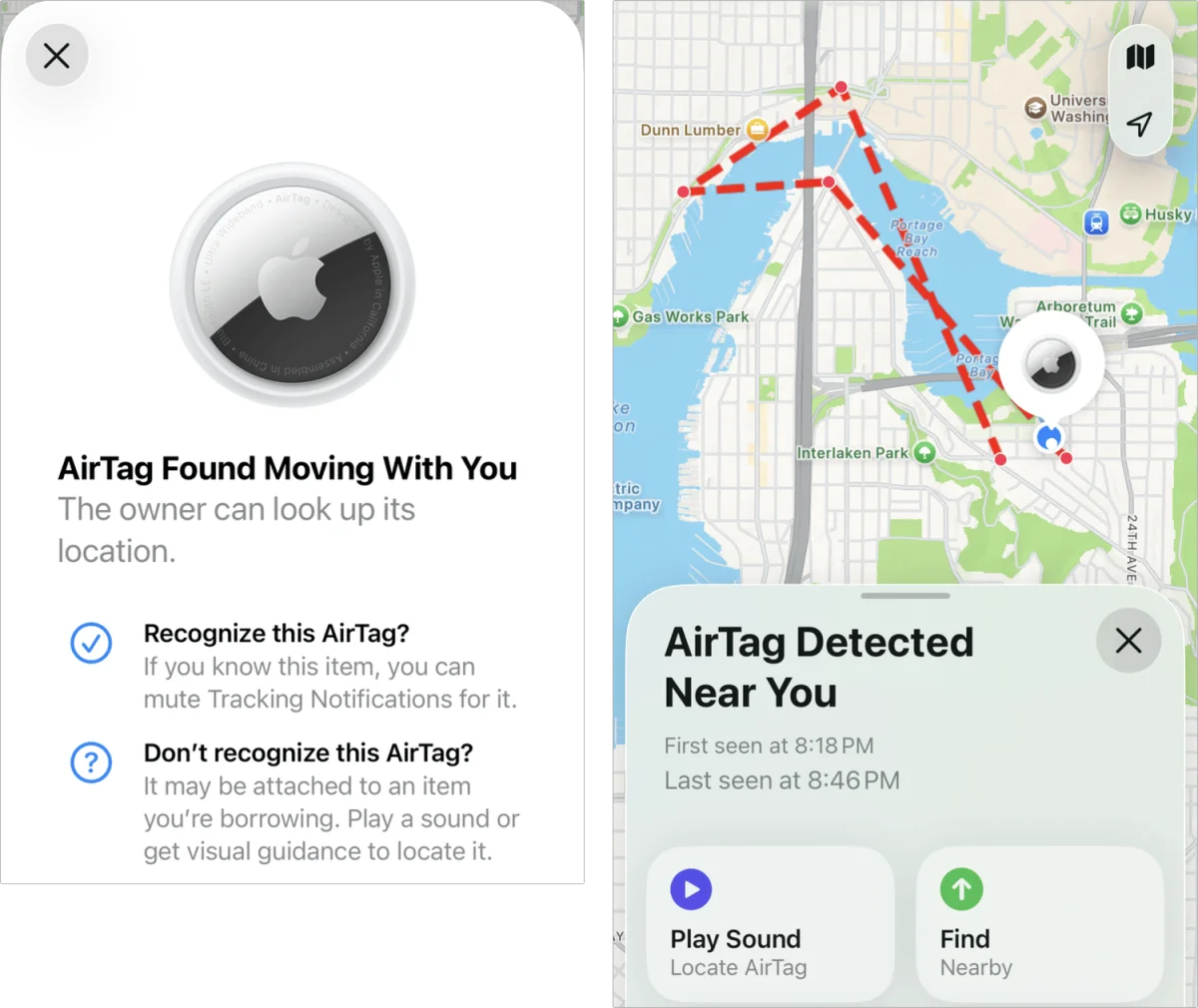
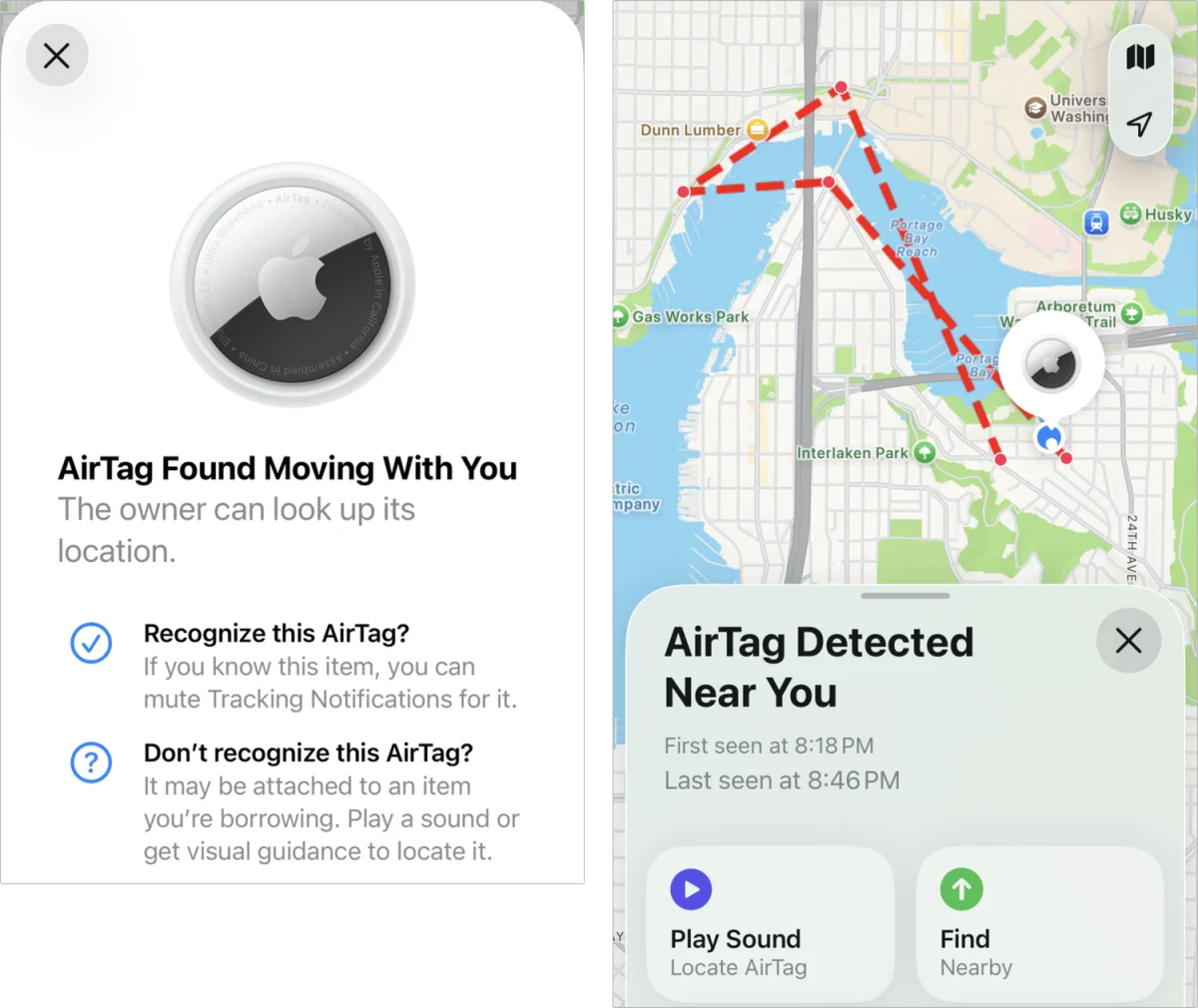
Apple’s Find My network and Google’s Find Hub network use nearby devices to relay signals from compatible trackers. The systems can help owners find lost items, but both companies have also worked on alerts for unknown trackers moving with someone. When an iPhone, iPad or Android device detects a compatible tracker traveling alongside its owner, it can show a notification and a map of the route detected so far. The person can also ask the tracker to play a sound. That option disappears if its speaker has been disabled.
The speaker also plays when an AirTag has been away from its paired device and is moved. Apple initially set that sound to trigger after three days in one location. After concerns from privacy groups and advocates for people experiencing domestic violence, the company shortened the wait to a random interval. Since mid-2021, an AirTag or Find My item can chirp between 8 and 24 hours after its paired device was last within Bluetooth range. The variable timing makes it harder to predict when the sound will occur.
Apple’s second-generation AirTag, which replaced the original this year, emits a sound that Apple describes as 50% louder. That can help people find a misplaced tracker. It can also make an alert easier to hear when a tracker has been planted in someone’s belongings. Apple and Google adopted a shared proposal for unwanted-tracker alerts in 2023, including the use of audio alerts.
Cases of trackers being used to follow people have been reported in news coverage and research into the issue. One report in New South Wales, Australia, examined purchases of tracking devices in 2023. It found that about 750 of 3,000 purchasers had a history of domestic violence, and that another 126 were defendants in protection order cases when they bought the devices. Coverage has documented the wider problem, and another recent example came from Oregon.
People who find an unknown AirTag or similar tracker can usually disable it by turning the back cover and removing the battery. Galperin’s advice was more forceful: “I think that encouraging people to hit their AirTags with a hammer is a fine idea. They may need to hit it several times.” The practical point is clear: a Silencer may make disabling a speaker neater, but removing the battery also stops the tracker.
ElevationLab withdraws the tool
ElevationLab had built a reputation for carefully designed accessories, starting with its ElevationDock in 2012. The Silencer drew criticism precisely because the company applied that design approach to a tool that can also make unwanted tracking harder to detect. The product page described it as a way to keep a speaker from alerting a thief, with stolen bikes as the company’s original use case.
Other sellers offer trackers with speakers already disabled, and instructions for doing it yourself are widely available. That doesn’t make a purpose-built tool harmless: it makes the modification easier and gives it a polished product treatment. ElevationLab has since withdrawn the Silencer from sale. For buyers using AirTags to protect valuable gear, the trade-off remains the same: quiet tracking may help with recovery, but it also takes away a sound that can help someone recognize a tracker they didn’t choose.