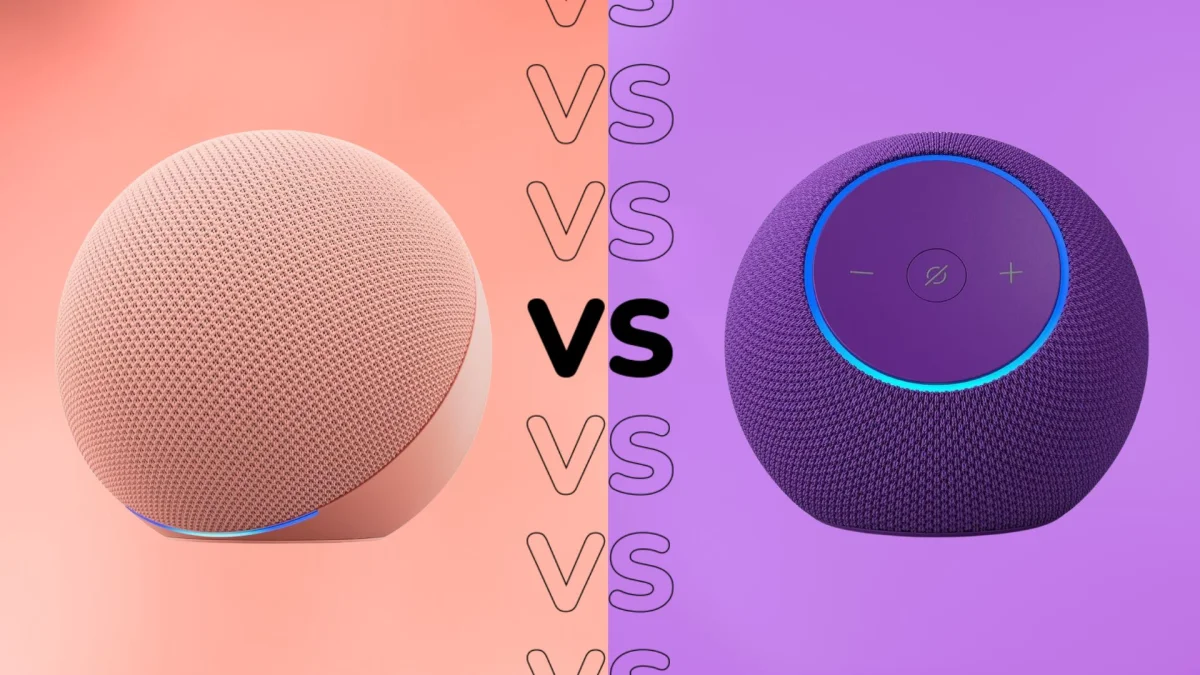
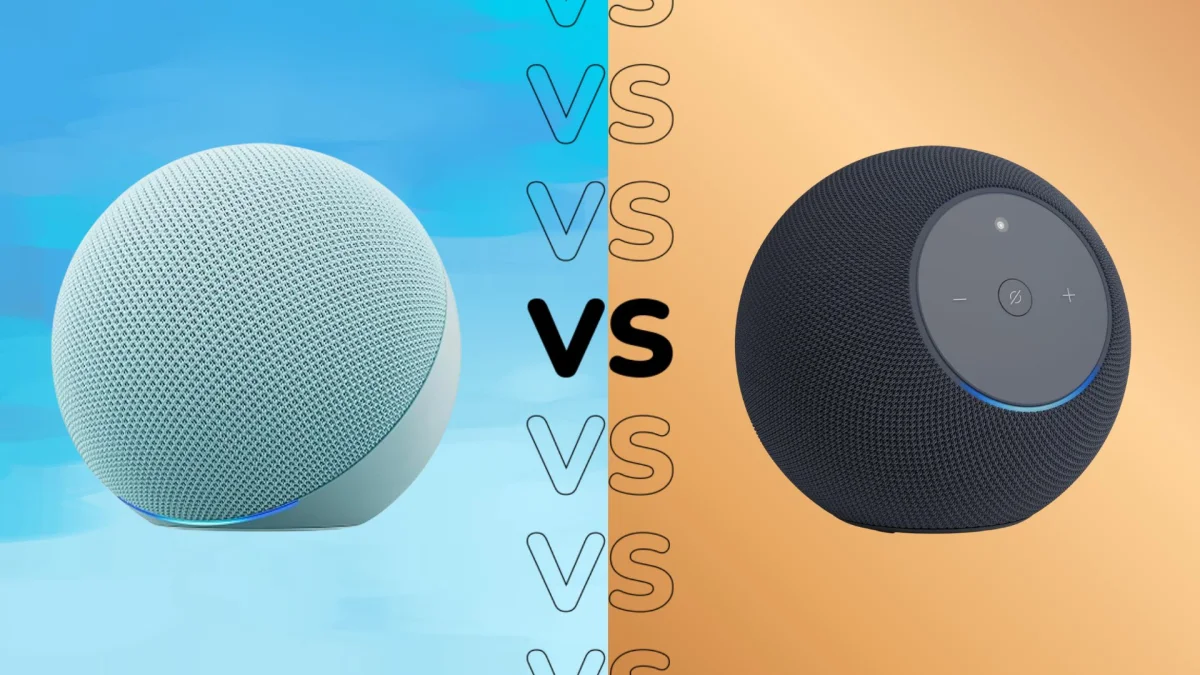
Amazon Echo Studio With Home Camera vs Echo Time: Key Differences
The Echo Studio adds a camera and room-filling audio, while the Echo Time pairs a touchscreen with sleep features for the bedside.
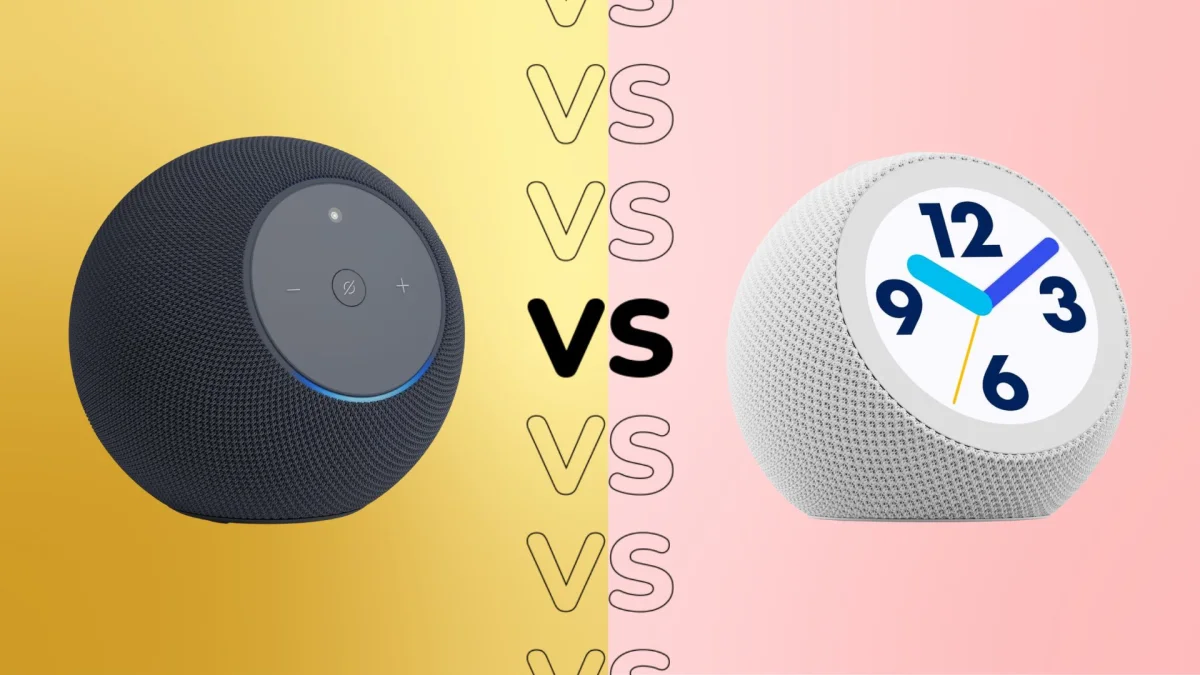
The right choice between Amazon’s Echo Studio with Home Camera and Echo Time comes down to where you’ll use it. The Studio is built for stronger audio and adds a camera for Alexa+ features and room monitoring. The Time is a bedside device, with a circular touchscreen, an optional sleep-aware alarm and a version made for children.
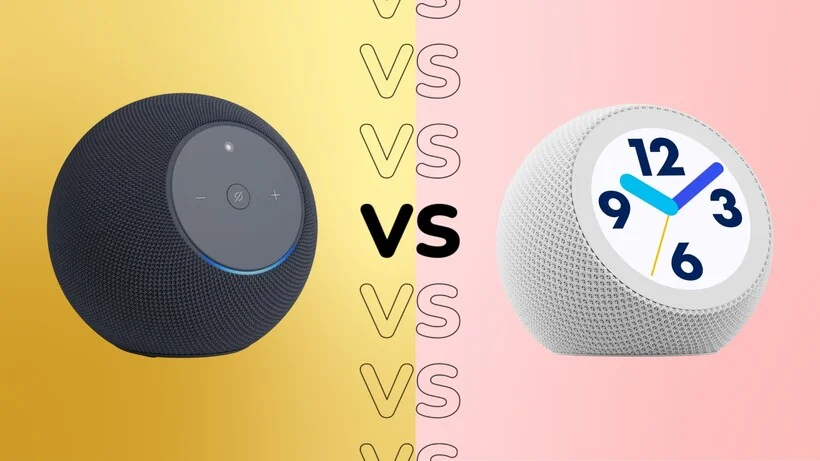
Both devices are available now. The Echo Studio with Home Camera costs £239.99/$249.99 and comes only in Graphite. Echo Time starts at £184.99/$199.99, with Graphite, Glacier White and Coral Pink finishes, plus two children’s versions in Galactic Grape and Cosmic Lime. That makes the Time the less expensive option, while the Studio asks you to pay more for its camera and more ambitious sound system.
Camera and display serve different needs
The Studio’s front-facing camera gives Alexa+ visual input. Amazon’s example is holding up a board game box and asking the assistant to explain its rules. The camera also supports Live View in the Alexa companion app, so you can check in on the room. A built-in LED lights while someone is viewing the feed.
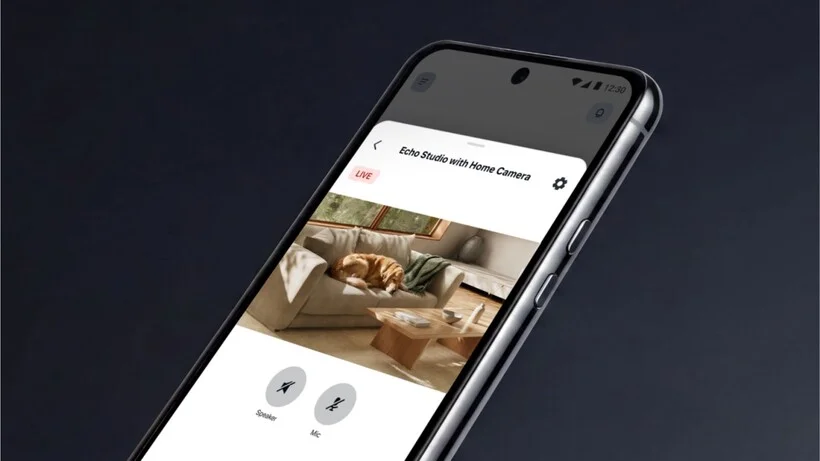
Amazon also says the Studio with Home Camera will soon be able to pair with a compatible Fire TV device, allowing video calls to appear on a television. The company hasn’t given a date for that feature. Buyers who want the Studio’s audio without a camera can still choose the camera-free Echo Studio.
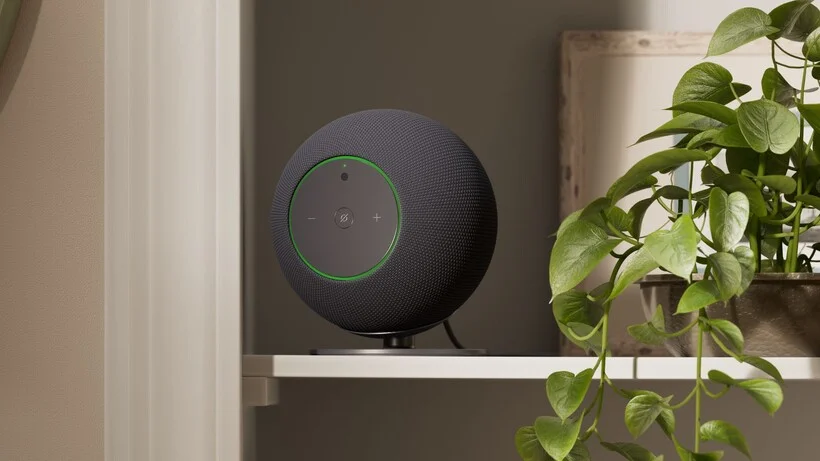
Echo Time takes a different approach: its 3.2-inch circular touchscreen makes it easier to see information at a glance. You can customise the display with clock faces, widgets and themes. It also adjusts across the day, with a sunrise effect as an alarm approaches, followed by lower brightness and reduced blue light in the evening.
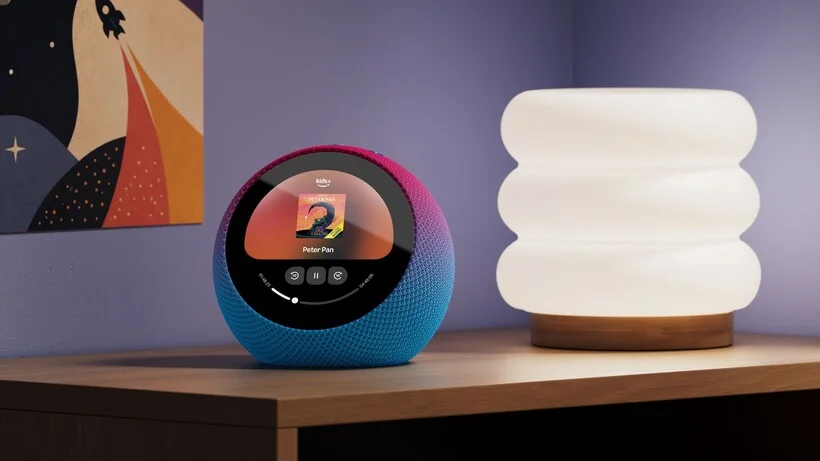
That screen is likely to matter most on a bedside table, where a quick look at the time or a widget can be more useful than a camera. The Studio instead keeps physical controls on its front panel and puts its camera to work for Alexa+ and room viewing. Echo Time has no camera and doesn’t offer those Studio features.
The Studio is the audio-first option
Amazon says the Home Camera model shares its audio architecture with the camera-free Echo Studio (2025), which the company describes as its best-sounding speaker. Its hardware includes a high-excursion woofer for bass, full-range drivers and Dolby Atmos for spatial audio. Amazon also lists Advanced Room Adaptation, which adjusts output to the room, and Adaptive Volume, which changes loudness based on where you are.
Trusted Reviews described the 2025 Echo Studio as a “very good speaker” with “clean, well-defined audio.” That gives some basis for expecting similar sound from the camera version, but the Home Camera model still needs a full review before its performance can be confirmed.
Echo Time is intended for bedside listening, and Amazon promises “crisp vocals and balanced sound.” The source doesn’t provide a direct listening comparison or detailed audio specifications for the Time, so there’s no basis yet for judging how far it falls short of the Studio. If music quality and room-filling sound are priorities, the Studio’s listed hardware gives it the clearer case.
Echo Time adds an optional sleep-aware alarm
The Time’s standout bedside feature is an alarm that can wake you during a lighter sleep stage. Amazon says Alexa can monitor for that stage between 10 and 60 minutes before the alarm time you set, then sound the alarm when it detects a suitable moment. The aim is to avoid waking you at a fixed time when you may be in deeper sleep.
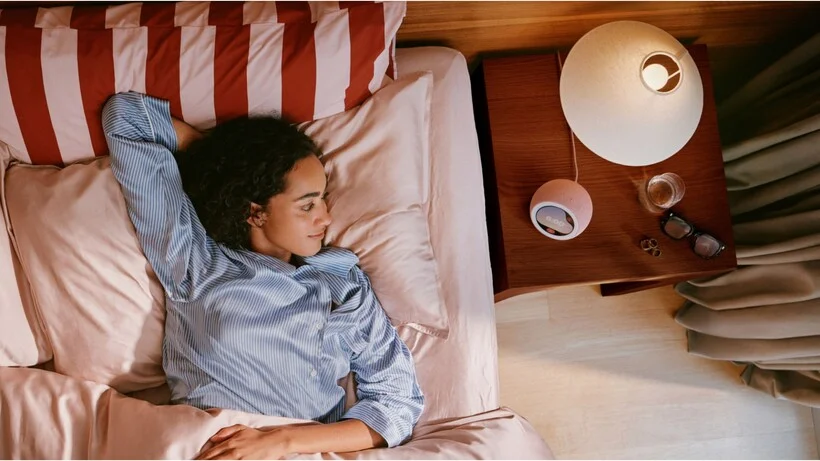
Amazon attributes the feature to Omnisense, its sensor fusion technology. The company says it uses breathing and proximity detection to build a picture of your sleep routine without extra equipment. The feature is optional and can be turned off. Whether you’re comfortable having the device monitor sleep is a personal choice, so the ability to disable it is useful for anyone who wants the Time’s display and alarm without that tracking.
The children’s Time skips Omnisense
The Kids Echo Time is aimed at children and runs Amazon Kids+. Amazon says children can set alarms, ask Alexa+ questions and access age-appropriate content. Sleep Studio adds bedtime material intended to help them wind down, turning the device into more than a clock and alarm.
Amazon says the children’s model doesn’t include Omnisense. That distinction may matter to families weighing the standard Time’s sleep detection against a simpler bedside setup. The children’s models come in Galactic Grape and Cosmic Lime.
Which Echo fits your home?
Choose the Echo Studio with Home Camera if you want a main-room speaker with Dolby Atmos, adaptive audio features and a camera for Alexa+ visual tools or Live View. Its £239.99/$249.99 price is higher, and its single Graphite finish gives you less choice. The camera-free Echo Studio remains an option if the audio is what you want and the camera isn’t.
Echo Time makes more sense beside the bed. Its touchscreen, changing day and night display, and optional sleep-aware alarm are specific to that role, while its lower £184.99/$199.99 starting price helps. Families can also consider the Kids Echo Time and its Kids+ features.
These are early comparisons based on Amazon’s listed features; both devices still need reviews before their real-world audio, camera and sleep performance can be assessed. For now, the decision is straightforward: pick the Studio for living-room sound and camera features, or the Time for a display-led bedside routine.