Asus ProArt P14 vs P16 (2026): Price, performance and battery life compared
The P14 is lighter, brighter and cheaper; the P16 delivers a little more speed and screen space. Both pair RTX Spark with long battery life.
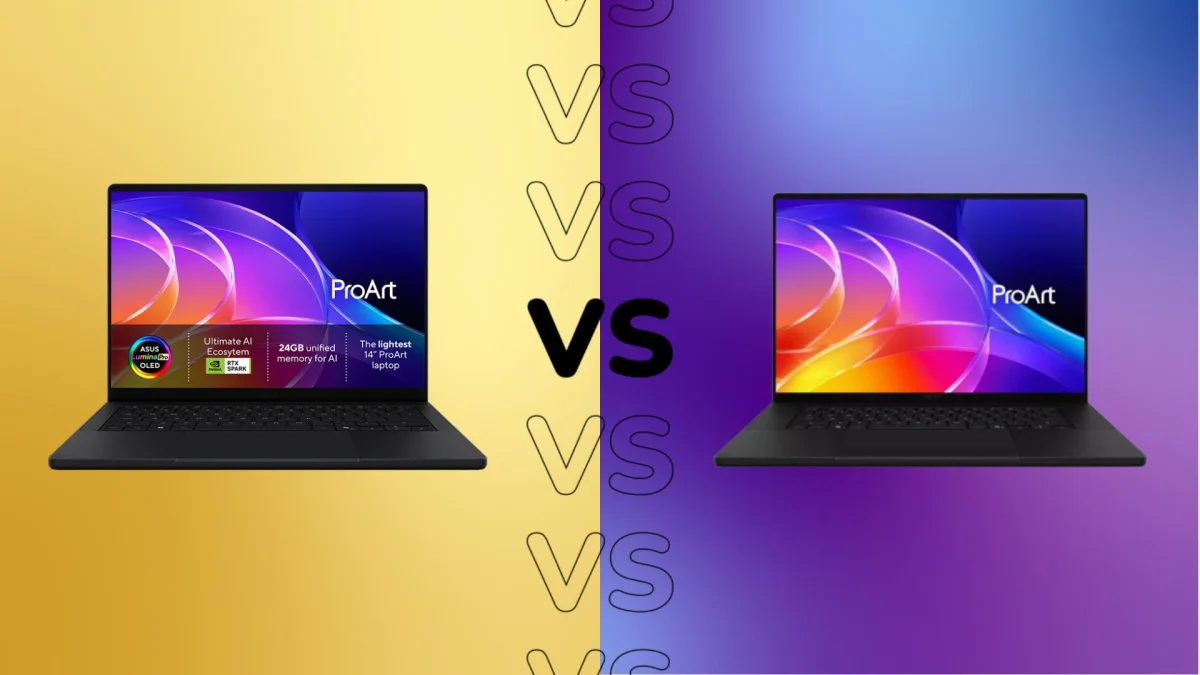
The Asus ProArt P14 and P16 put the same Nvidia RTX Spark platform into two different sized creative laptops. Their performance is close, but the P16 pulls ahead in graphics tests and offers a larger display. The P14 costs less, weighs less and measured brighter in SDR, making the choice largely a question of portability, screen size and budget.
Price and size
The ProArt P14 starts at £2,699.99, while the P16 starts at £3,899.99. That £1,200 gap is substantial, so the larger model needs to justify its extra cost with the screen space and performance its buyer actually needs.
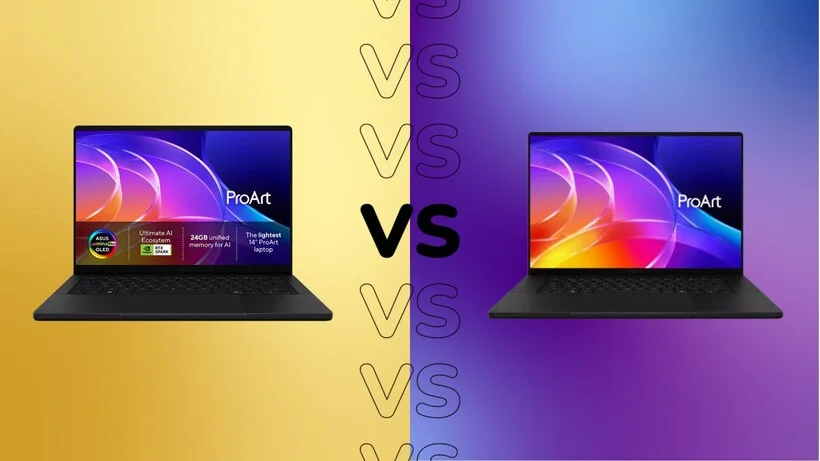
As their names suggest, the P14 has a 14-inch display and the P16 a 16-inch one. Both share a similar design and come in Nano Black or Neo White. The P14 weighs 1.48kg, compared with 1.77kg for the P16. Yet the larger laptop is thinner: at 12.9mm, Asus describes the P16 as its thinnest 16-inch ProArt laptop to date. The P14 measures 13.9mm.
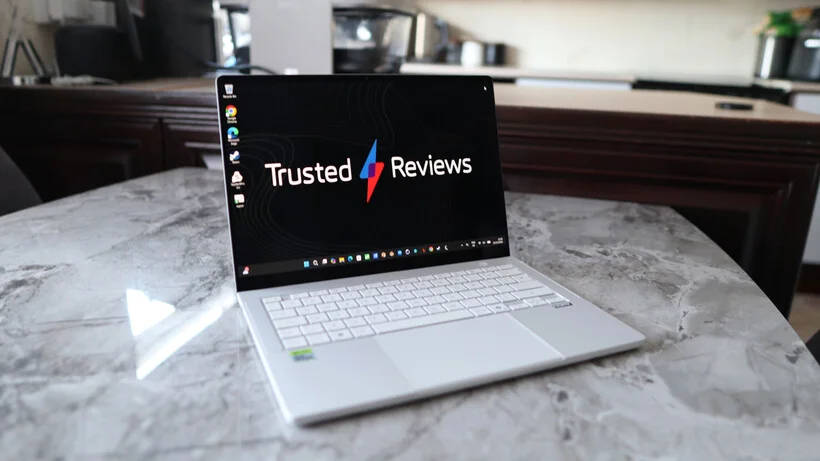
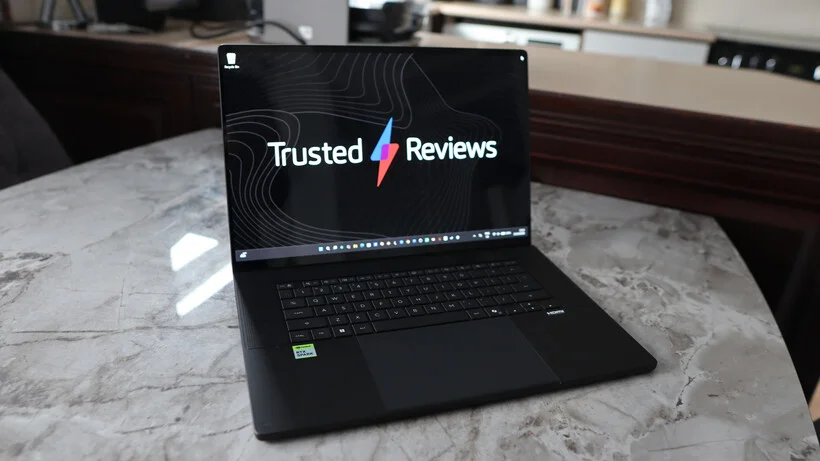
Connectivity is the same on both. Each has two USB-C ports, full-size HDMI and a headphone jack on the left, plus a full-size SD card reader, another USB-C port and USB-A on the right. Their compact keyboards include a function row and arrow keys; the P16 adds larger speaker grilles beside its keyboard.
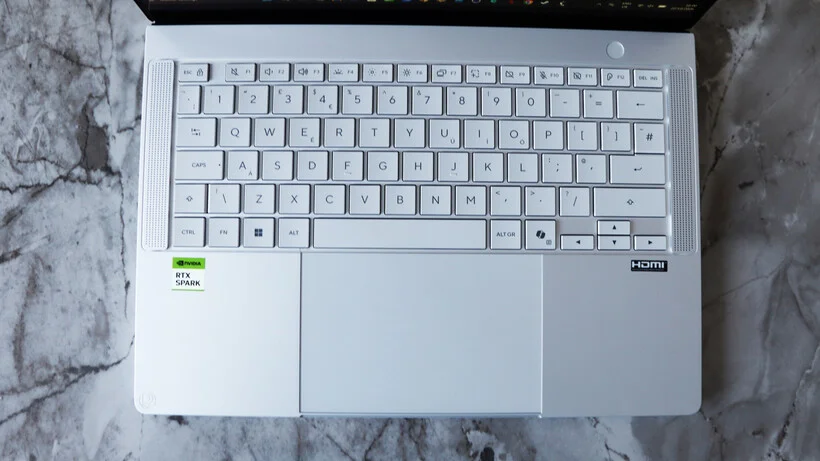
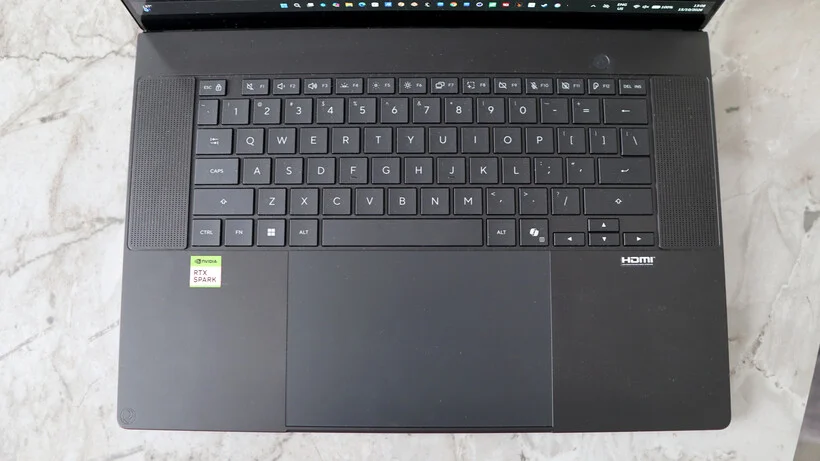
The P14 is the easier recommendation for people who carry their laptop often: it’s lighter and offers the same port selection for less money. Choose the P16 if the extra two inches of screen space matter more than that weight and price difference.
OLED screens and speakers
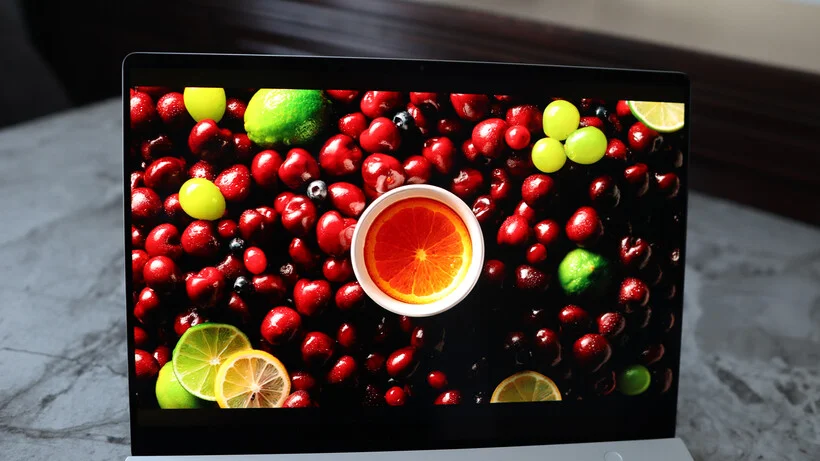
Both laptops use Lumina Pro tandem OLED panels with a 2880×1880 resolution and a 120Hz refresh rate. Colour coverage is strong on both: testing found 100% coverage of sRGB and DCI-P3, plus 94% of Adobe RGB.
The P14’s measured peak SDR brightness reached 624.3 nits, well above the P16’s 436.5 nits. Asus offers an optional 4K P16 configuration that promises up to 700 nits of peak SDR brightness, though that’s a different screen option from the tested panel. For the standard display comparison, the P14 has the brightness advantage.
The speakers are a strong point on both models, with testing describing their sound as having “excellent depth, body and clarity”. That makes the P14’s smaller size less of a compromise for people who rely on the built-in audio.
RTX Spark performance
Both configurations use Nvidia RTX Spark, which combines a 20-core Grace CPU with an integrated RTX Blackwell GPU and 6,144 CUDA cores. The platform supports up to 128GB of unified memory. The tested P14 had 32GB and the tested P16 had 64GB; both were described as the more affordable configurations for their respective models.
Benchmark results put the P16 slightly ahead. In Geekbench 6, it scored 3,085 in single-core and 19,313 in multi-core tests, against 3,003 and 19,171 for the P14. The gap was larger in 3DMark Time Spy: 11,763 for the P16 and 10,131 for the P14. Both were a little ahead of the Core Ultra X9 388H in single-core testing; the P14 was slightly behind that chip in multi-core performance.
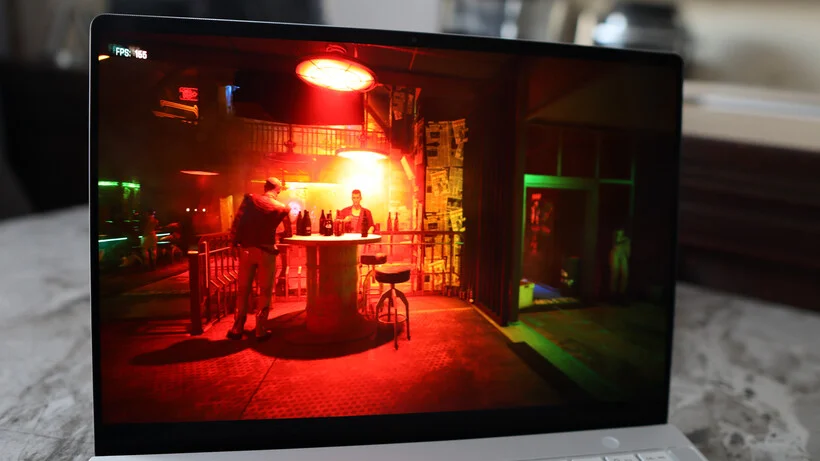
Gaming results also favour the P16. In Cyberpunk 2077 at 1080p, it averaged 69.73fps, while the P14 reached 61.53fps. At QHD, the averages were 47.12fps and 40.83fps respectively. Both struggled with Cyberpunk’s Ultra ray-tracing preset, where the P16 managed 30.63fps and the P14 27.05fps. The P16’s edge is real, but these results don’t make either laptop a natural pick for demanding ray-traced gaming.
RTX Spark’s appeal also includes running AI workloads locally, without sending data to the cloud. Both laptops are Copilot+ PCs and run Windows 11, with features such as Windows Studio webcam effects and image generation in Photos and Paint. Asus also includes GlideX for screen casting or mirroring and StoryCube for organising photos and videos. The agentic AI features worked on both, though their use was described as fiddly.
Battery life and charging
The P16 has a 99.9Wh battery, compared with 90Wh in the P14, but both lasted just under 14 hours in testing. The P14 ran for 13 hours and 43 minutes; the P16 lasted 13 hours and 55 minutes. The larger model’s small lead in battery life is unlikely to settle the choice on its own.
Each laptop comes with a 140W charger. The P14 reached 50% charge in 27 minutes and a full charge in 90 minutes. The P16 took 30 minutes to reach 50%, then 70 minutes to reach full. So the P14 gets to the halfway mark faster, while the P16 completes a full top-up sooner.
Which ProArt should you choose?
The P14 is the better fit for buyers who want a lighter, less expensive laptop with the brighter tested display and nearly the same performance. The P16 costs more, but its larger screen, slimmer chassis and modest lead in benchmarks and gaming make sense for people who want more room to work and can make use of the extra graphics headroom. With similar battery life, long unplugged sessions are within reach either way; the key decision is whether screen size and a small performance gain are worth the P16’s higher starting price.