Apple’s PROLED XDR MacBook Pro Display: Tandem OLED, Brightness and Color
The 14-inch and 16-inch MacBook Pro bring Tandem OLED, up to 2,000 nits of peak HDR brightness and variable refresh rates.
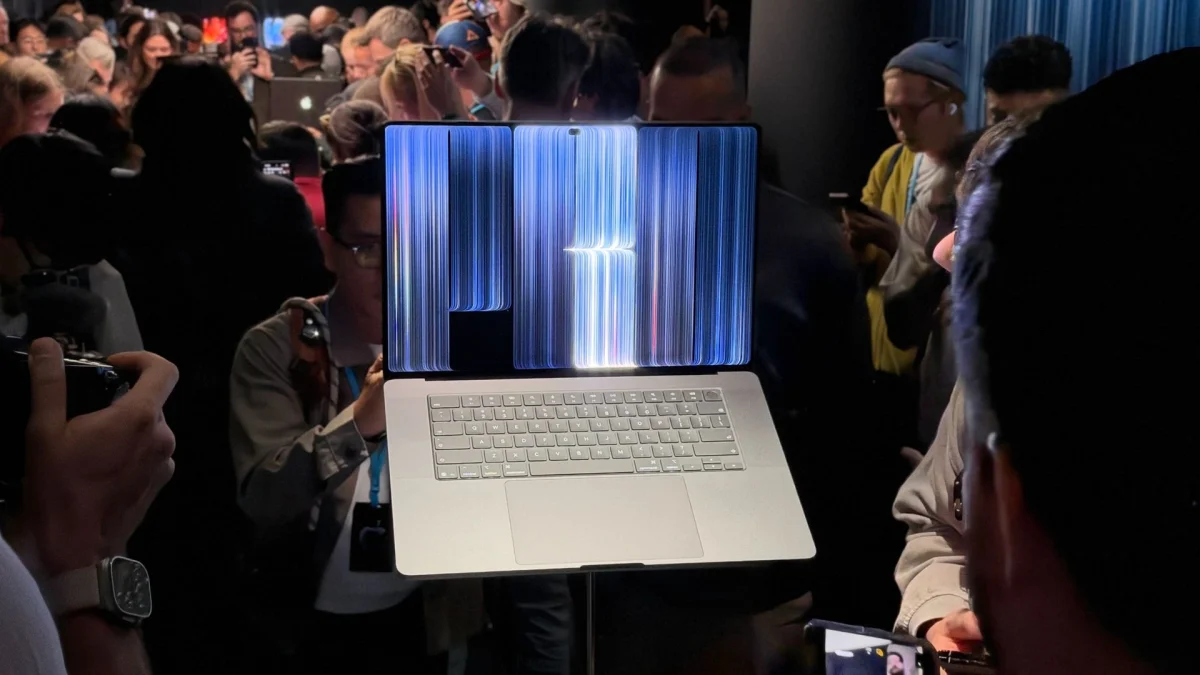
Apple’s first OLED MacBook Pro display pairs the familiar advantages of OLED with a two-layer panel designed for higher brightness and longer life. Apple calls it PROLED XDR, and the technology arrives in 14-inch and 16-inch laptops. Pre-orders are open, with shipping scheduled for on or after November 6. The new models also introduce OLED to the MacBook Pro line and bring touchscreens to the Mac for the first time. Hands-on time with the laptops has already begun.
PROLED XDR is Apple’s name for a Tandem OLED display: two layers of organic light-emitting diodes work together in each pixel. Because both layers can contribute light, the panel can reach higher brightness than a conventional single-layer OLED. Sharing the work between layers may also reduce the strain on each one, which can help with lifespan and the risk of burn-in from static interface elements such as toolbars.
That construction helps explain why Apple has brought OLED to its laptops now. The company says the panel addresses concerns it associates with traditional OLED, including limited or inconsistent brightness, color shifts when viewed from an angle, and burn-in over time. Those are manufacturer claims; real-world performance will depend on how the display behaves across different workloads and how it holds up with extended use.
Brightness, blacks and contrast
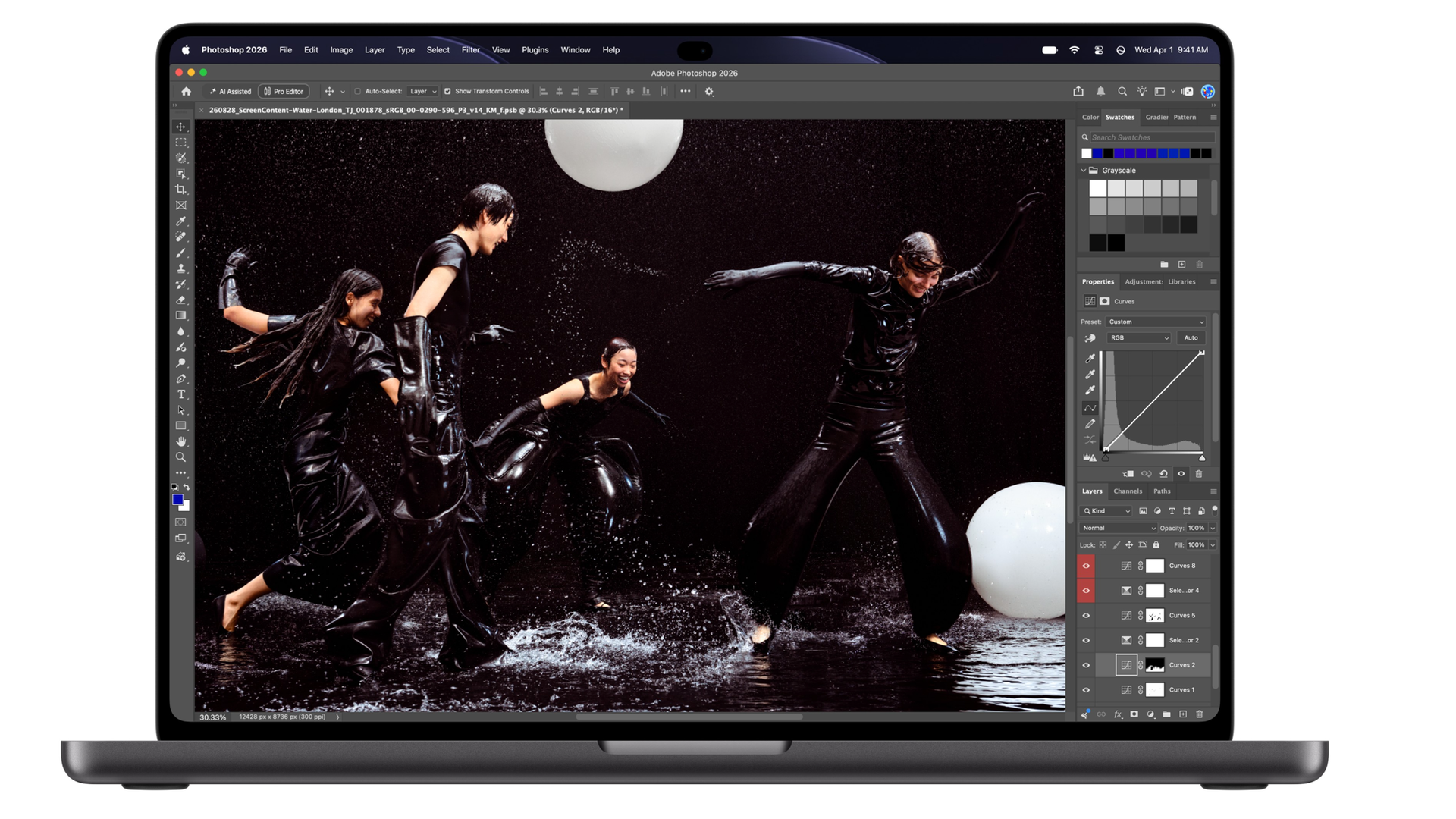
Apple rates the MacBook Pro panel for up to 2,000 nits of peak HDR brightness in a small area of the screen, and up to 1,000 nits when the entire display is bright at once. Those figures describe different conditions: peak brightness can make intense highlights stand out in HDR material, while sustained full-screen brightness matters more when a bright image fills the panel.
The comparison with the 2025 iPad Pro makes that distinction useful. Apple lists the iPad’s full-screen brightness at 1,000 nits as well, while its peak brightness reaches 1,600 nits. The MacBook Pro’s listed peak is 25% higher, but the shared full-screen rating means the difference may be less apparent in scenes that keep most of the display bright.
OLED pixels produce their own light, so pixels showing black can switch off instead of relying on a backlight that might spill into dark areas. Apple gives the MacBook Pro a contrast ratio of 10,000,000:1. For comparison, the iPad Pro is rated at 2,000,000:1. The fivefold gap sounds dramatic, but Apple hasn’t explained exactly what measurement accounts for it.
One possible explanation is the panel’s very low measured black level. Applying the published brightness and contrast figures gives an estimated minimum of 0.0002 nits for the MacBook Pro and 0.0008 nits for the iPad Pro. These calculations are estimates based on Apple’s specifications, not separate measurements of the new laptops. Both values are so low that black should look black to the viewer; the difference has a much larger effect on the ratio than it does on perceived darkness.
Apple also describes the new panel design as reducing internal reflections found in traditional OLED displays. Less reflected light inside the panel could help account for a lower black level. That may matter to the stated contrast figure, though it won’t necessarily look like a visible change in ordinary viewing.
Color, refresh rate and practical use
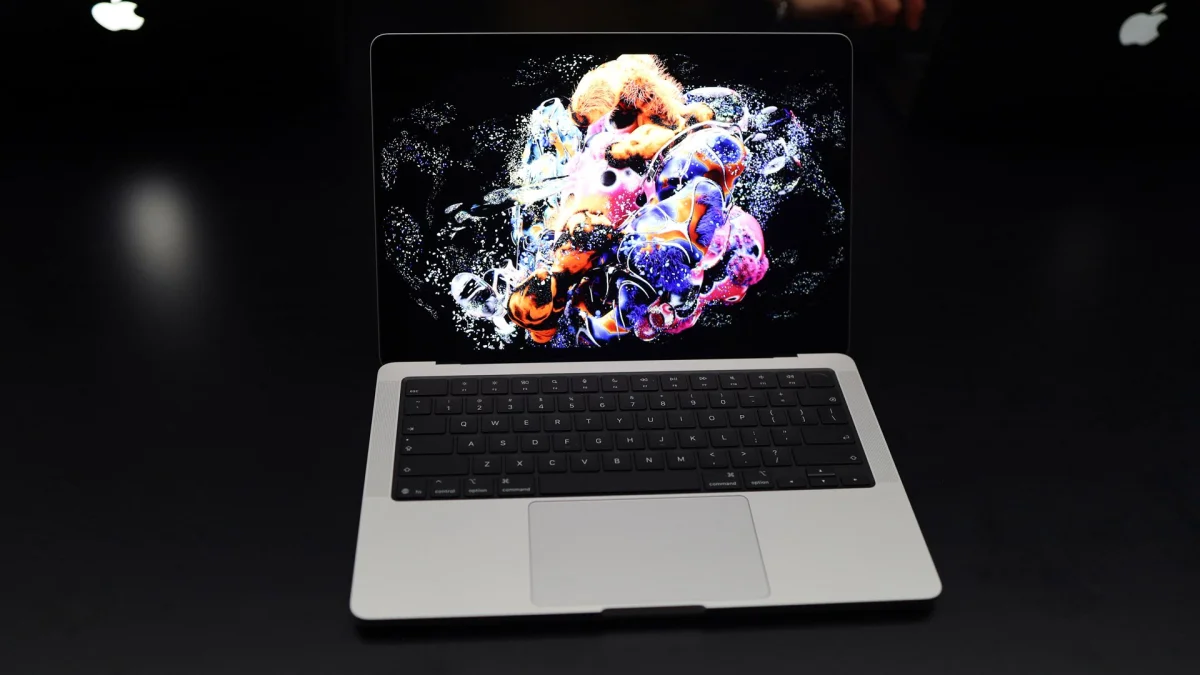
Color coverage could be another point of difference from the iPad Pro. Apple says the MacBook Pro can cover more than 80% of the BT.2020 color gamut, a specification that suggests coverage close to the full DCI-P3 gamut. The iPad Pro measured around 82% of DCI-P3 in the publication’s lab testing. The MacBook Pro’s reported BT.2020 figure points to a potential advantage, but it isn’t a direct measurement against the iPad’s DCI-P3 result.
The display engine is built into the M5 Pro and M5 Max chips. Apple says it continually adjusts pixels in response to content, usage, temperature and surrounding light. That processing sits alongside a variable refresh rate from 10Hz to 120Hz. For film work, Apple also lists fixed options at 47.95Hz, 48Hz, 50Hz and 59.94Hz, giving editors choices that match common video frame rates.
A nano-texture glass option is available for people working in bright surroundings. It’s a practical extra for mobile creators who can’t always control reflections, though the source doesn’t provide a price for that option or describe its effect on image quality.
Apple positions PROLED XDR as a portable reference-style display for video professionals and other creators who need accurate color away from a studio. The combination of high HDR peak brightness, OLED blacks, broad color coverage and a range of refresh rates makes that a plausible use case. The specifications alone don’t establish how closely the screen performs as a reference monitor, so independent testing will help clarify how it compares with dedicated displays.
For buyers, the strongest case is a laptop display that combines high brightness with OLED contrast and flexible refresh rates. Video editors may value the frame-rate options and color coverage; other users may simply want a vivid screen for everyday work, films or games. The new panel’s most meaningful test will be whether its measured color and brightness hold up in real creative workflows. Apple has published a technical paper with further display details: read the PROLED XDR display paper.