The First iPod’s $399 Price Drew Doubts, but Reviewers Saw Its Potential
The 2001 iPod paired 5GB of storage with a compact design, though its price and Mac-only support left many unsure.
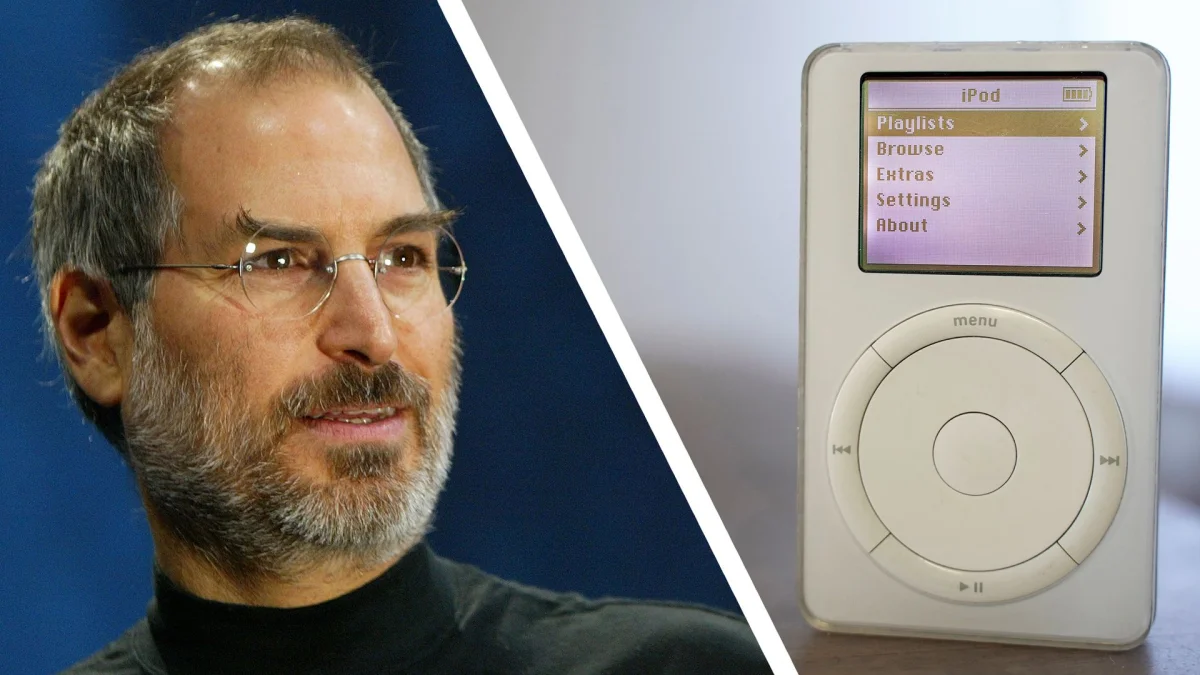
The first iPod arrived with a simple pitch: carry 1,000 songs in your pocket. But when Apple introduced it on October 23, 2001, that promise came with a $399 price in the US and £349 in the UK—and plenty of people weren’t sure the device was worth it. The launch shows how a product can make its case through everyday use even when its audience hasn’t yet caught up with the idea.
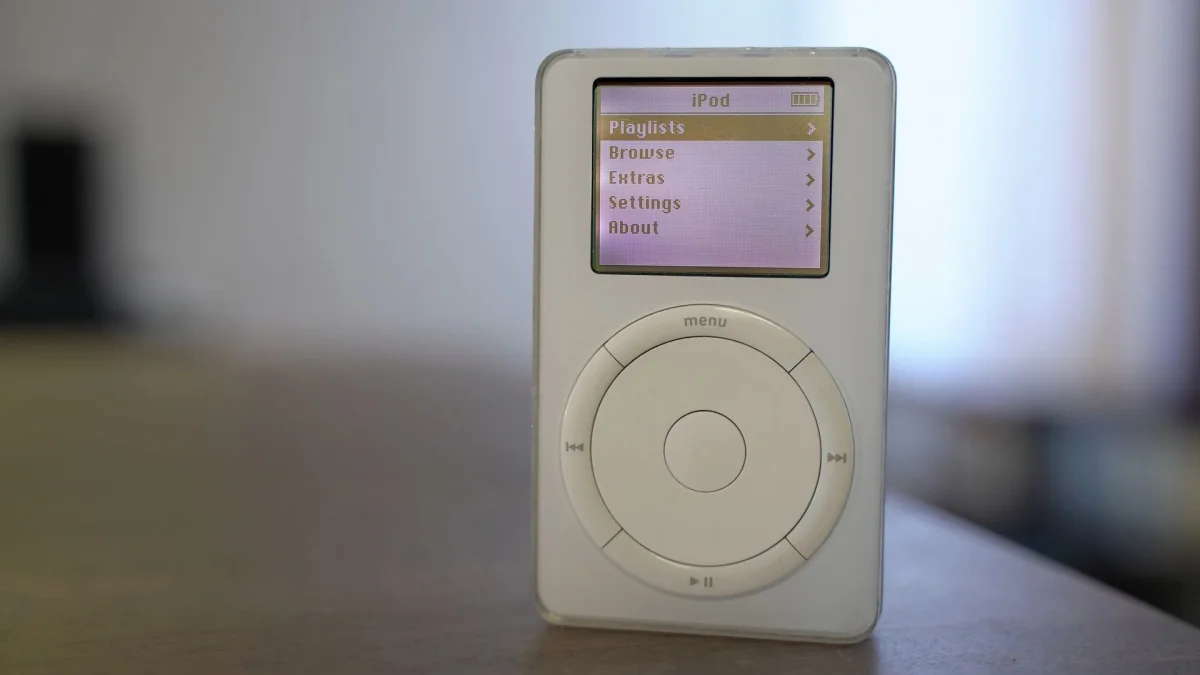
A new kind of portable music player
Steve Jobs presented the iPod at Apple’s Town Hall auditorium at the company’s Infinite Loop campus in Cupertino, California. Apple was then known mainly for its computers and a handful of accessories. The iPhone was still six years away, and Jobs framed the Mac as a digital hub for photos, videos and music.
Portable MP3 players already existed, but they remained niche products. Digital music had yet to become routine for most listeners, CD ripping was unfamiliar to many, and people who did have MP3s often got them through internet file-sharing services. Napster closed the same year the iPod launched, though alternatives followed.
Apple’s player combined 5GB of storage with a compact body, a scroll wheel for navigating a large collection, and a reported 10 hours of battery life. Rivals might offer comparable capacity in bulkier designs, or a smaller device with less room for music. The iPod’s appeal lay in putting storage and portability together, with simple syncing through iTunes on a Mac. A new hard drive from Toshiba helped make that combination possible.
Jobs pulled the player from his jeans pocket onstage to underline its size. The “1,000 songs in your pocket” line made the storage figure tangible, at a time when many listeners were accustomed to carrying CDs or using players that held far fewer tracks. The original launch event is still available on YouTube.
Journalists weren’t sure what to make of it
Jason Snell, then editor of Macworld and now host of the Designed in California podcast, was in the room for the launch. He remembers a press audience puzzled by Apple making a product that wasn’t a Mac. “It was a mixed reaction,” he recalled, with the $399 price drawing particular attention.
Snell said many people didn’t yet understand the value of taking a large music collection with them. Apple tried to make the amount of music more concrete by giving journalists a cube assembled from CD jewel boxes, representing the tracks preloaded on the iPod.
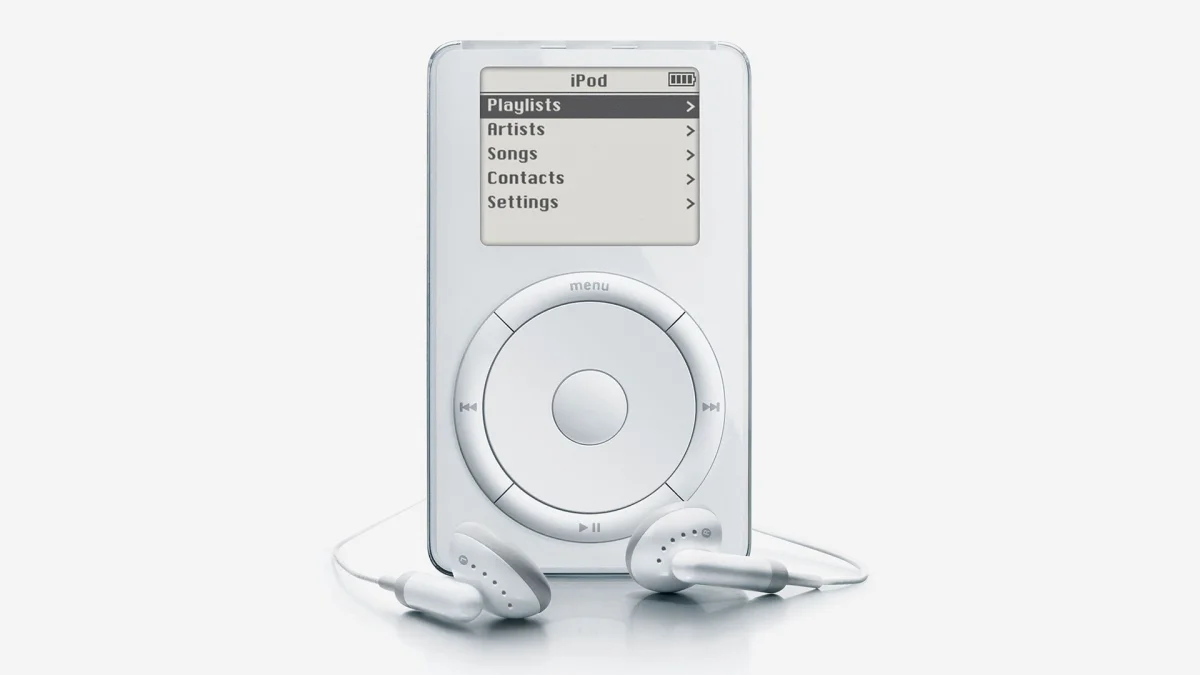
For Snell, the practical benefit clicked quickly. His existing MP3 player held just eight songs, while the music collection on his work computer was about 3GB. “So I could fit every MP3 I’d ever made onto this thing with room to spare,” he said, and take it on his bus commute. That contrast made the iPod’s capacity more compelling than a storage number alone.
Today, a small Apple Music easter egg lets visitors try a working original iPod on its “page not found” page. It offers a way to revisit the device’s interface, which was a key part of its pitch.
Fans and reviewers saw different sides
Reactions posted in a MacRumors discussion from October 23, 2001 capture the skepticism. Some users wanted Apple to announce another Mac instead. The iPod was called expensive, a “glorified consumer gimmick” and “stupid”; one person asked, “Why would they do this?” For many listeners, a CD player already worked, and $400 was a substantial ask for a separate music device.
There were positive responses, too. One commenter liked how the iPod looked, while another saw the launch as a starting point for technology that could improve quickly. That mix of curiosity and doubt reflected the challenge Apple faced: the device made the most sense to people who already had a digital music collection and wanted to carry more of it.
Analysts quoted by The New York Times saw room for a new digital music player market but questioned the iPod’s reach without Windows support. iTunes for Windows did not arrive until 2003, limiting the initial setup to Mac users. In a separate review, columnist David Pogue praised the 5GB capacity, portable size and speedy FireWire connection.
Writing in the Wall Street Journal, Walt Mossberg called it “simply the best digital music player I’ve seen.” He acknowledged that competing products could be cheaper, smaller or offer more storage, but said Apple had brought the package together with greater finesse and appeal.
A later review from What Hi-Fi? awarded the player four stars out of five. It highlighted sound quality, screen brightness, compact dimensions and accessible software, while noting that Creative offered a player with 20GB of storage. The iPod’s strongest case, then, wasn’t winning every specification comparison; it was making the whole experience feel more considered.
From a doubtful launch to a lasting legacy
Snell’s own iPod story soon became personal: a week after launch, he used it to play music in a hospital delivery room while his wife gave birth to their daughter. That memory captures the kind of everyday role Apple wanted the player to fill. Smartphones have since taken over much of the portable music player’s job, and Apple no longer sells an iPod in 2026. The device’s legacy rests in how it helped make carrying a digital music library feel practical—and in how slowly that promise became obvious to some of its first listeners.
The iPod’s early reception is also a reminder that a product’s value can depend on habits people haven’t formed yet. Its price looked steep beside a CD player, and its Mac requirement narrowed the audience. For listeners with a growing MP3 collection, though, the combination of room, portability and easy navigation offered a clear reason to change how they listened.
Snell’s recollections and the reviews from the time make the split understandable: buyers had to pay for a new device before digital music was mainstream, while reviewers could already see how well Apple had brought its parts together. The iPod’s first announcement didn’t win everyone over. Its larger achievement was making the portable music library easier to imagine—and then easier to take along.
The first iPod’s story still echoes in Apple’s later hardware. A device can look expensive or unnecessary when judged against the routines people already have. The useful question is what those routines might become once the product makes a new one convenient.
For the iPod, the answer began with a thousand songs, a scroll wheel and a player small enough to disappear into a pocket.