Apple iPhone Duo review: a polished foldable with a cramped cover screen
Apple’s first foldable pairs a nearly crease-free 7.6-inch display with strong cameras and performance, but its weight, price and app support need consideration.
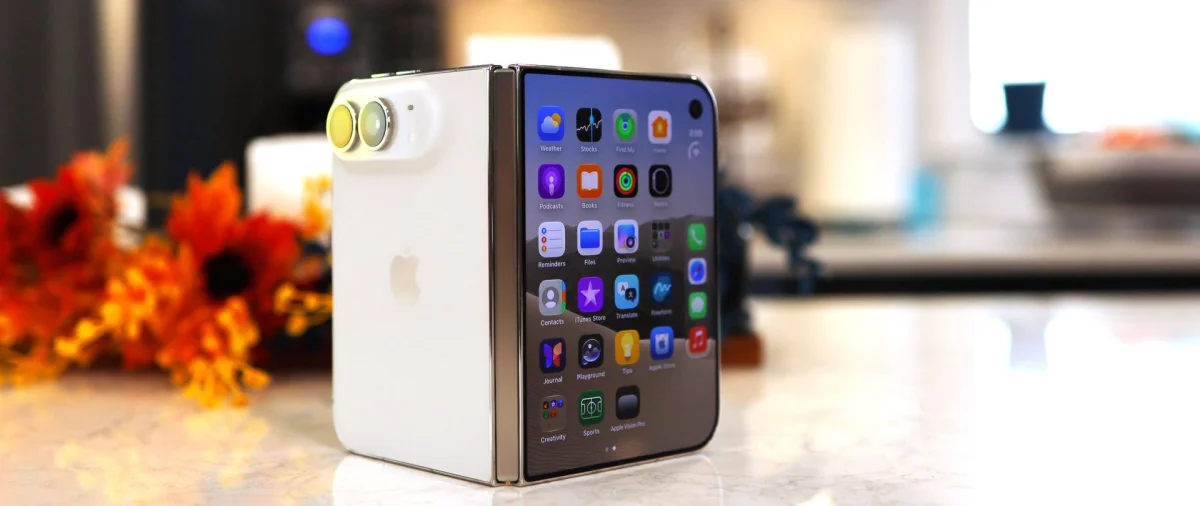
The iPhone Duo makes Apple’s first foldable feel like a new kind of iPhone: a compact, wide phone that opens into a 7.6-inch tablet. Its carefully made hinge and matte inner display address two familiar foldable concerns, while the A20 Pro chip, capable cameras and all-day battery life make it practical as a primary device. The trade-offs are just as tangible: it weighs 254g, starts at $1,999 / £1,999 / AU$3,499, lacks Face ID and a dedicated telephoto camera, and some apps still don’t use the large screen well.
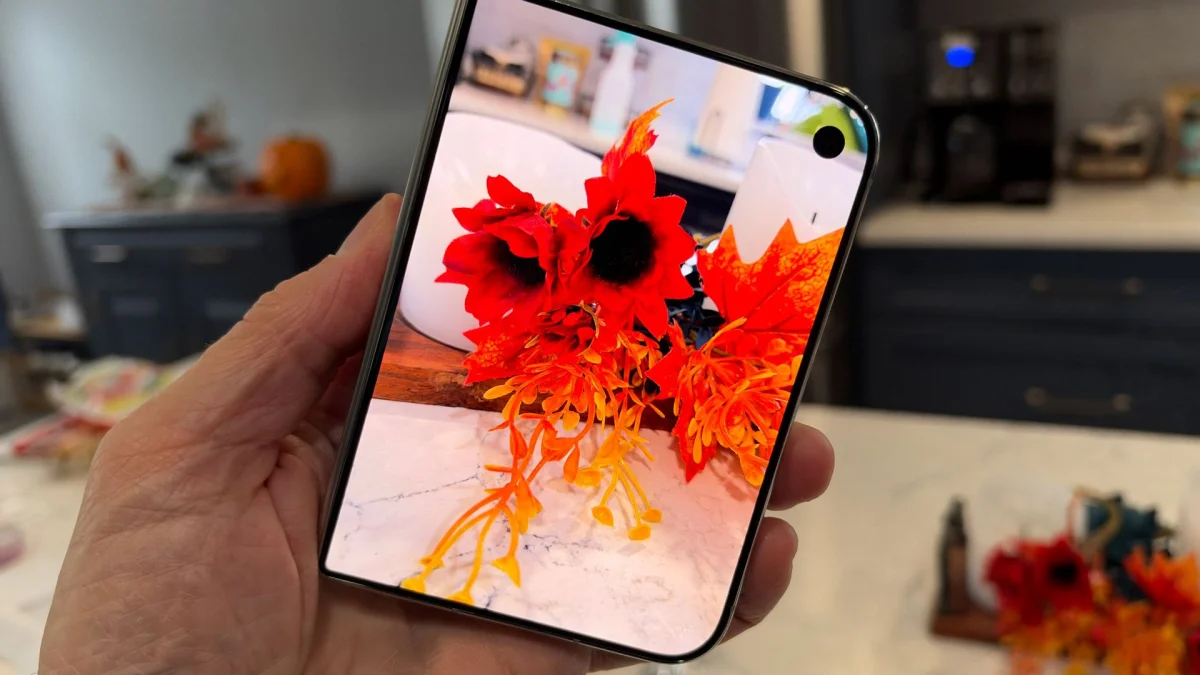
That blend of phone and tablet gives the Duo a presence that recent slab-style iPhones have lost. During a week of testing, taking it out to photograph a wedding drew questions from people who otherwise wouldn’t have noticed another new iPhone. Folded, it fits a small pocket; open, it offers a much larger surface for photos, video, games and split-screen work.
Price and configurations
Apple introduced the iPhone Duo as its first folding phone at the Surprise and Shine event on September 9, 2026. The 256GB model starts at $1,999.99 in the US, £1,999 in the UK and AU$3,499 in Australia. That makes it Apple’s most expensive iPhone, and the entry storage capacity feels modest for a device at this price.
| Storage | US price | UK price | Australia price |
|---|---|---|---|
| 256GB | $1,999.99 | £1,999 | AU$3,499 |
| 512GB | $2,199 | £2,199 | AU$3,899 |
| 1TB | $2,599 | £2,599 | AU$4,699 |
| 2TB | $3,199 | £3,199 | AU$5,899 |
The range tops out at 2TB, a capacity not listed for the Galaxy Z Fold 8. Apple’s foldable costs more at entry level than the Galaxy Z Fold 8, which starts at $1,899.99 / £1,699 / AU$2,699 and also begins with 256GB. A trade-in may reduce the upfront cost. Apple’s leasing program is listed at around $57 to $83 a month in the US, £47 to £66.63 in the UK, and AU$97.19 to more than AU$161 in Australia for the base model.
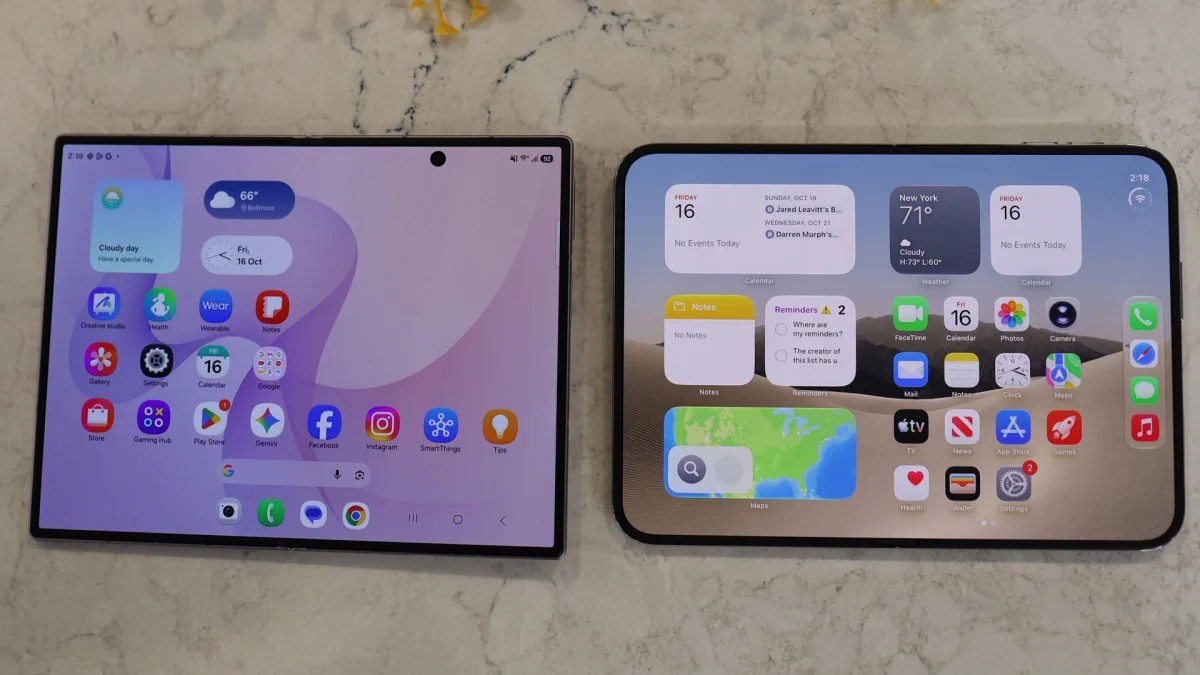
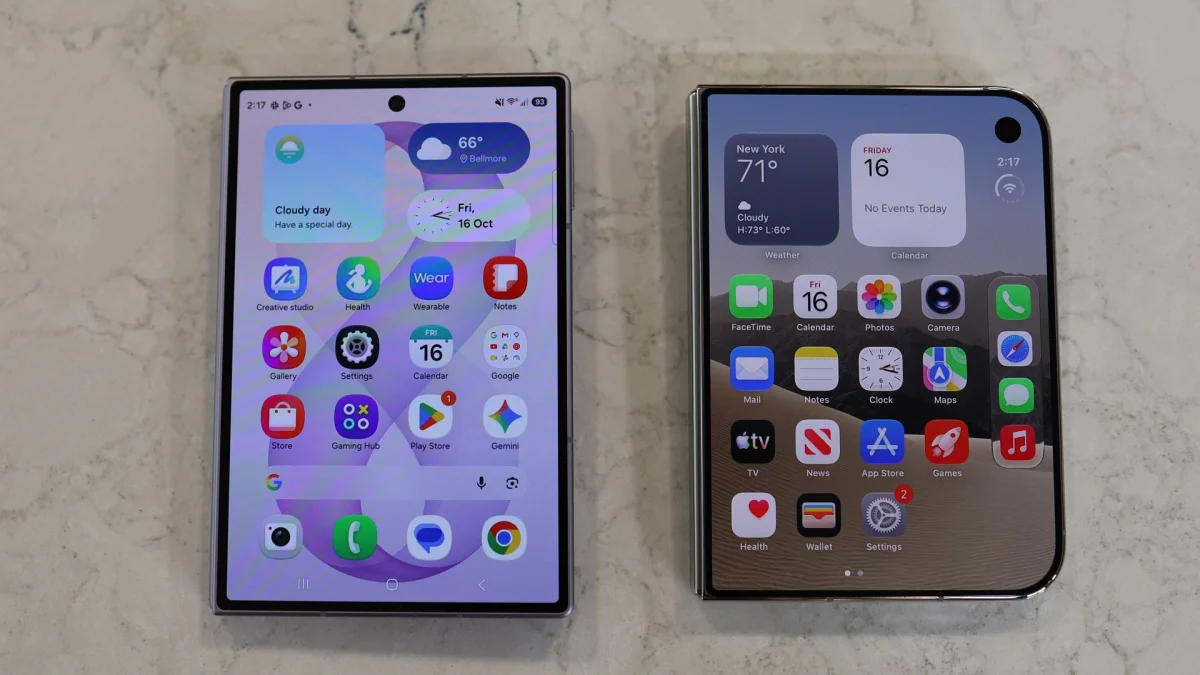
The price buys two screen sizes in one device: a 5.4-inch cover display for quick phone use and a 7.6-inch inner display for more expansive tasks. The inner screen is also set to support the USB-C Apple Pencil, though that feature wasn’t available during testing and was expected by November. Whether those extras justify the cost depends on how often you’d use a tablet-sized screen and whether you want to carry one device instead of two.
Design: a satisfying hinge, with extra weight
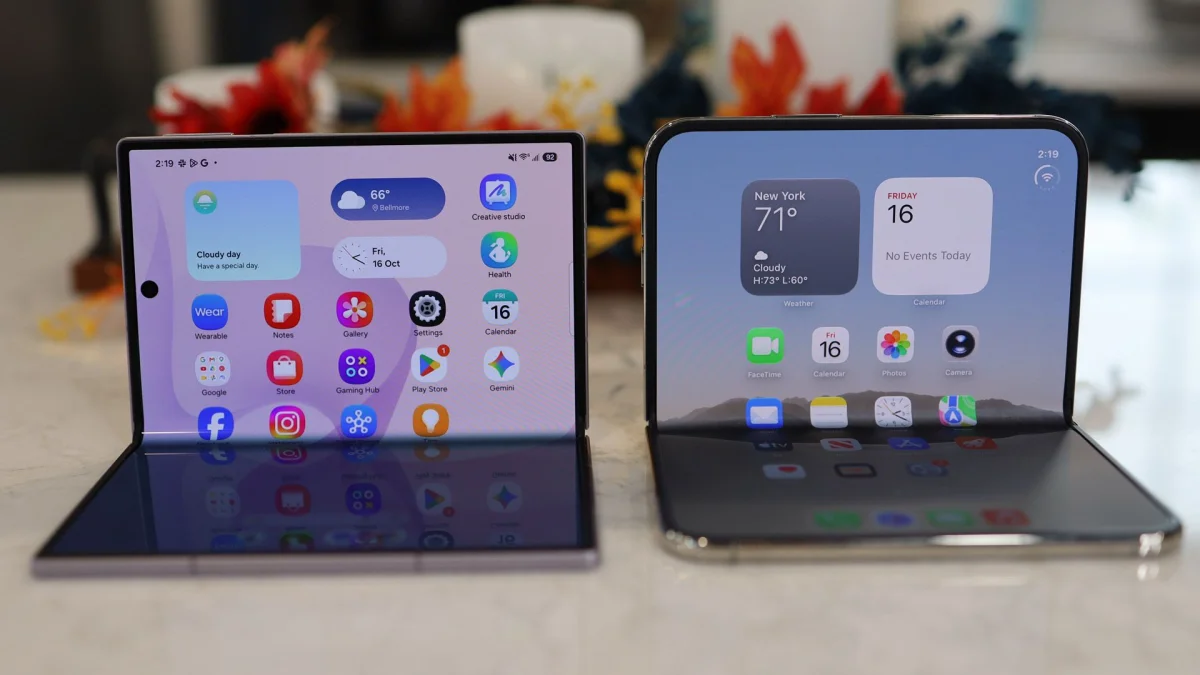
The iPhone Duo’s polished titanium frame, curved edges and precise fit give it the refined feel expected of a premium Apple device. Opening it takes little effort at first; then the hinge adds resistance, holding the screen at angles up to fully flat. Magnets help keep the phone closed, and the hinge largely disappears from view when the inner display is open.
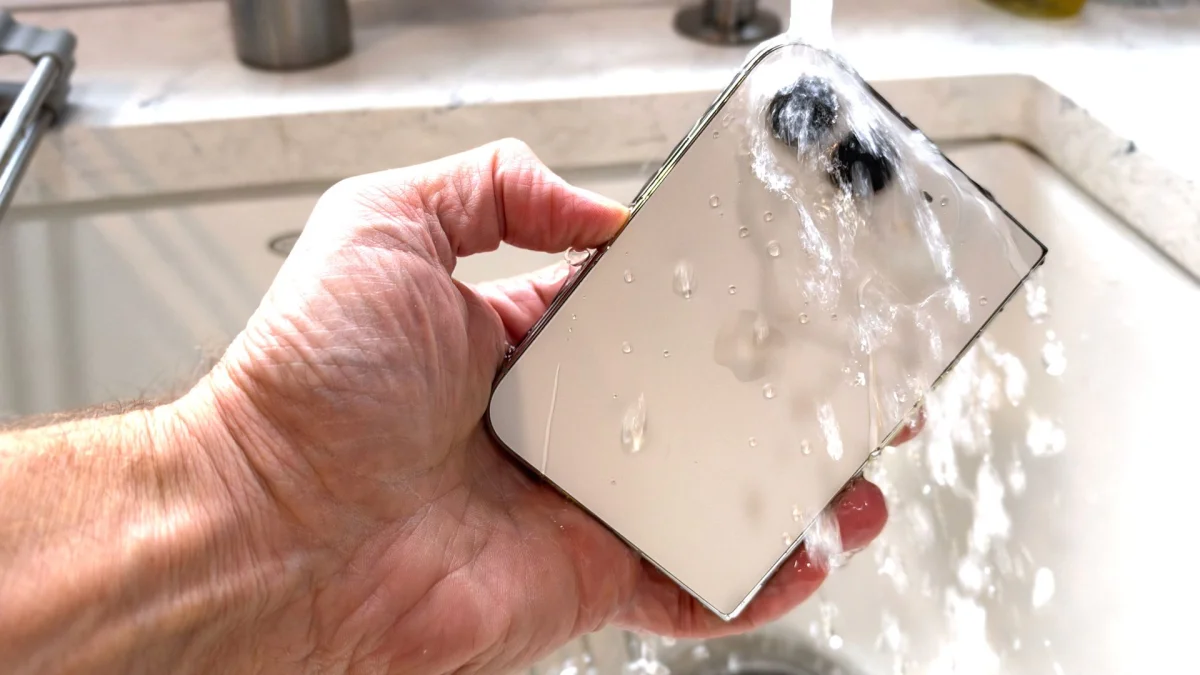
That motion is easy to get used to. The reviewer found himself folding and unfolding the Duo without thinking, and the phone opens smoothly enough to make switching from its cover display to the larger screen feel natural. Apple also gives the device an IP68 rating for dust and water protection. In testing, it came through a run under a faucet without trouble.

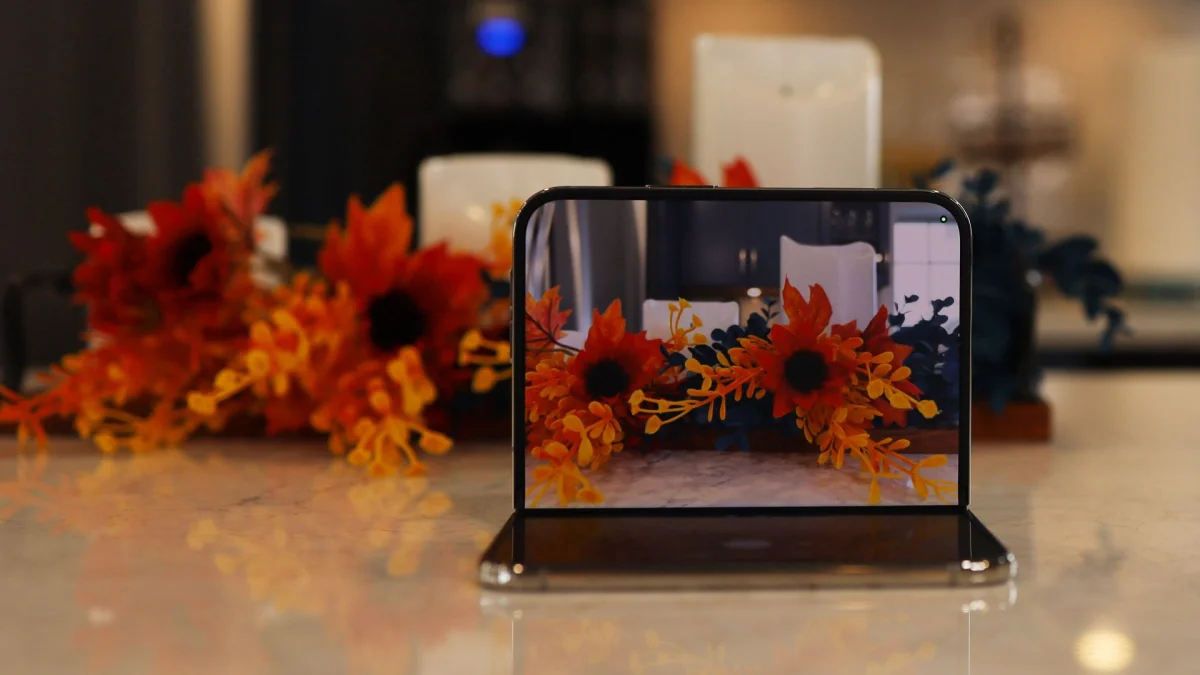
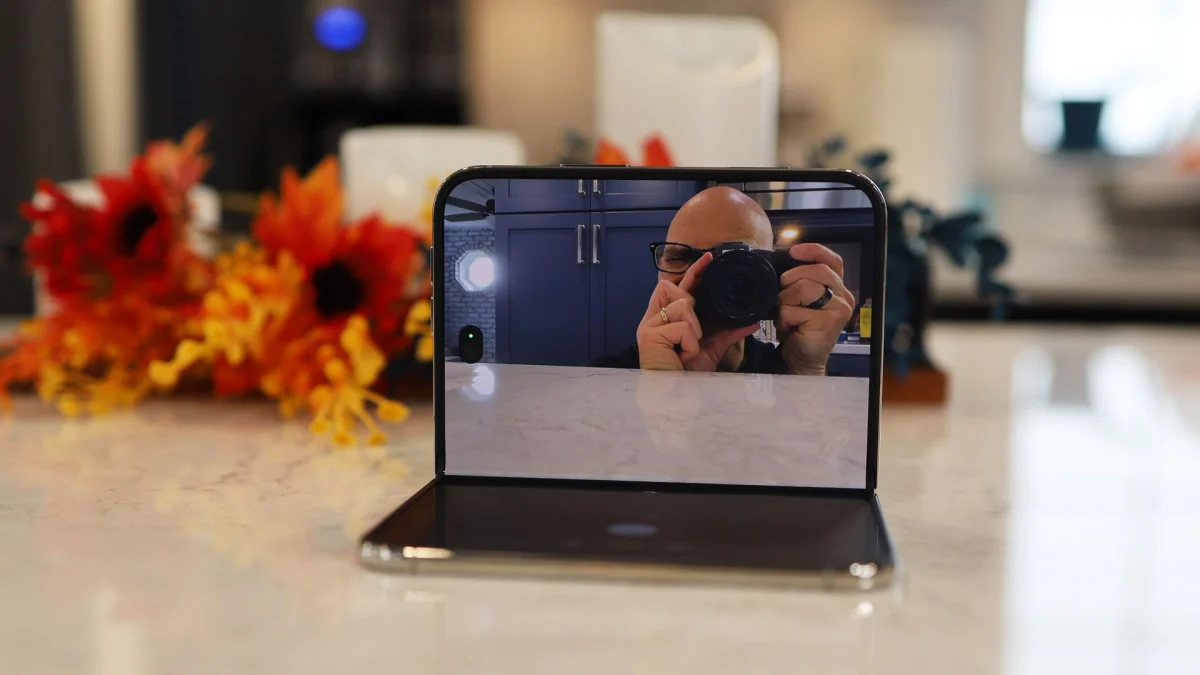
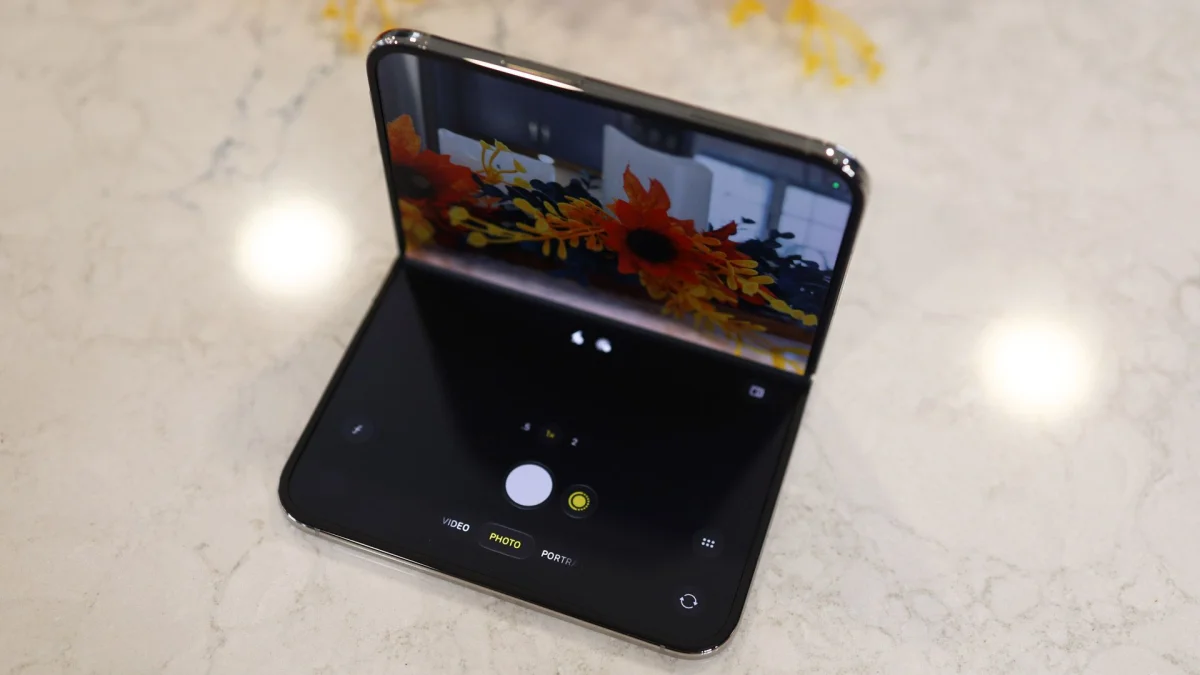
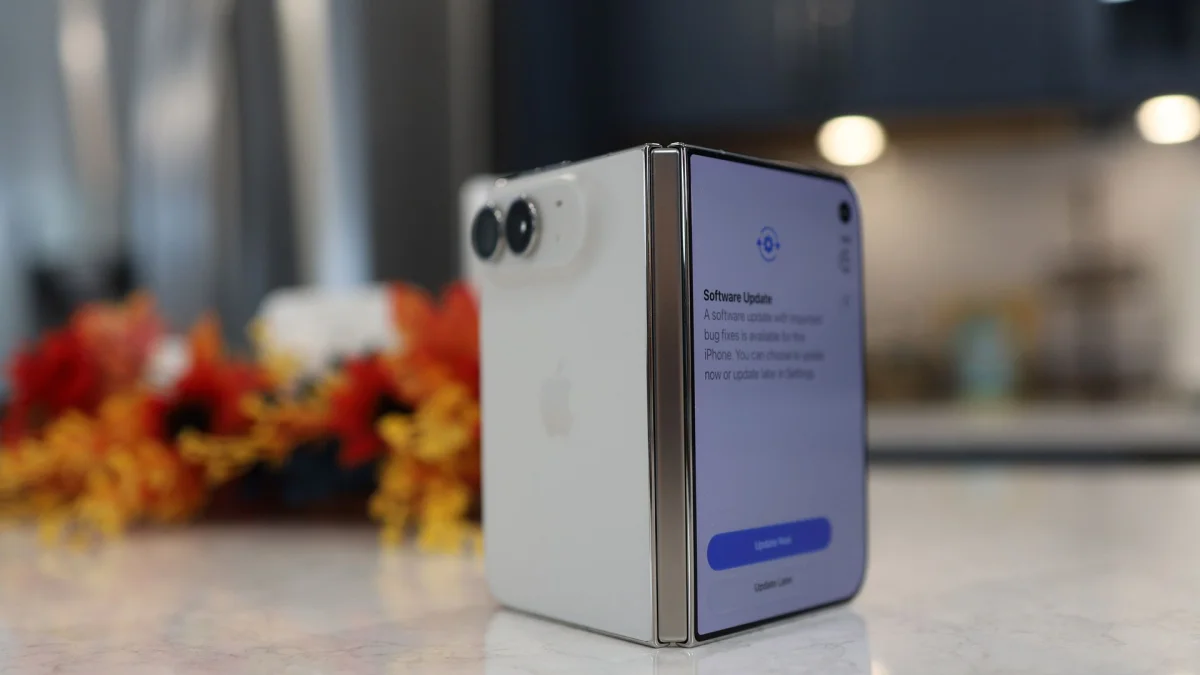
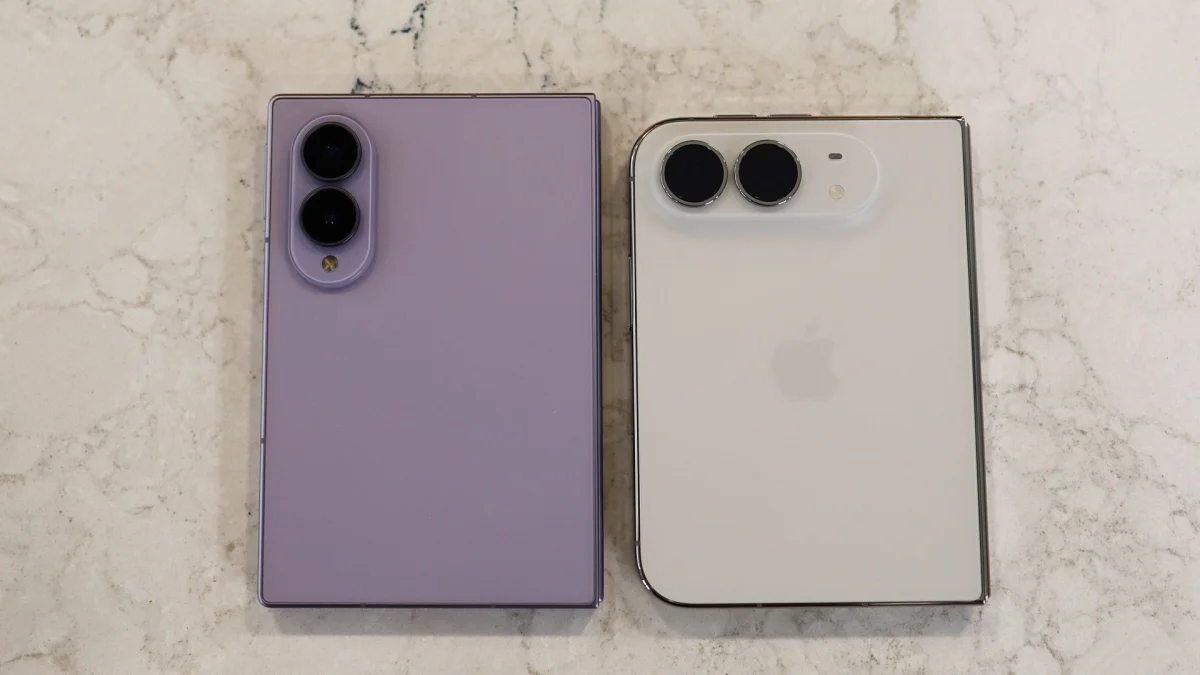
At 5.2mm thick when open, it is Apple’s thinnest iPhone in tablet mode and thinner than the 6.3mm iPad mini. Folded, it measures 11.3mm thick and weighs 254g. The Galaxy Z Fold 8 is 9.7mm thick when closed and weighs 201g, so the Duo adds noticeable bulk and 53g. It’s even heavier than the 249g iPhone 18 Pro Max.
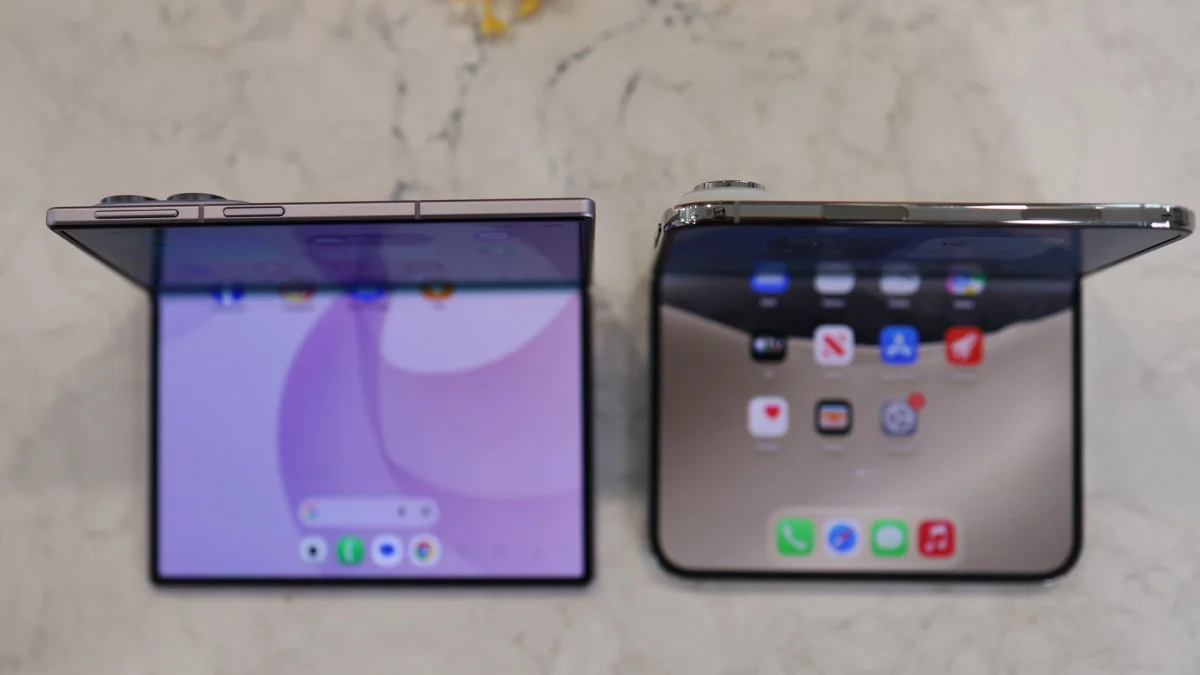
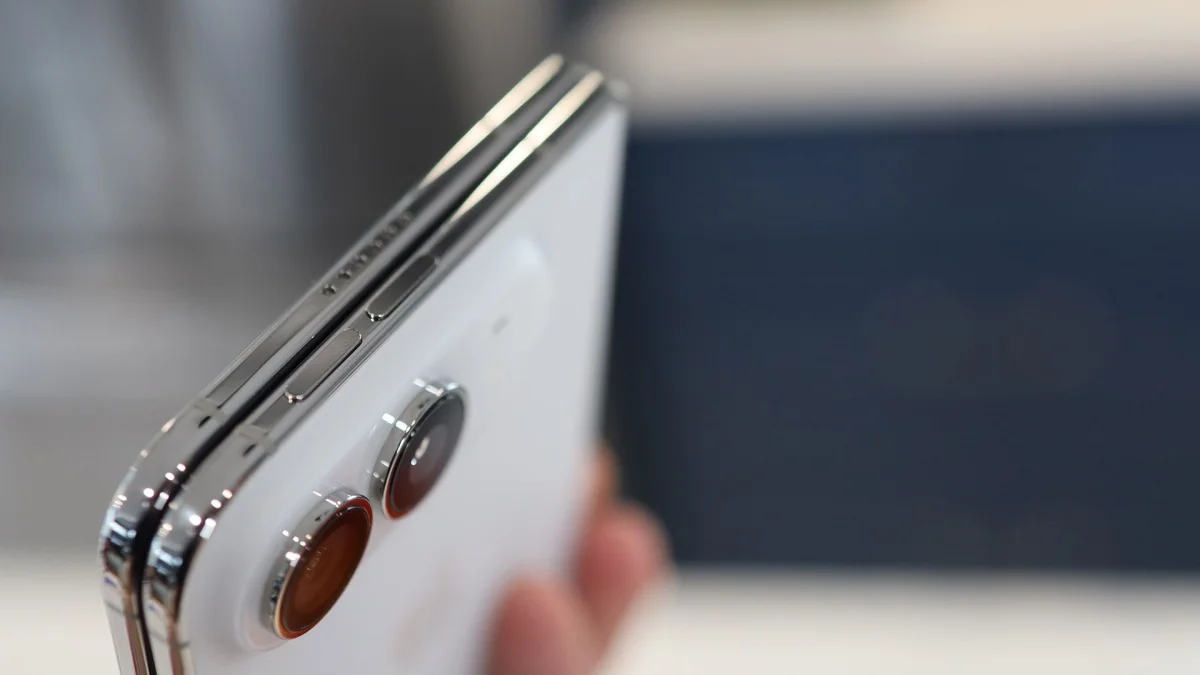
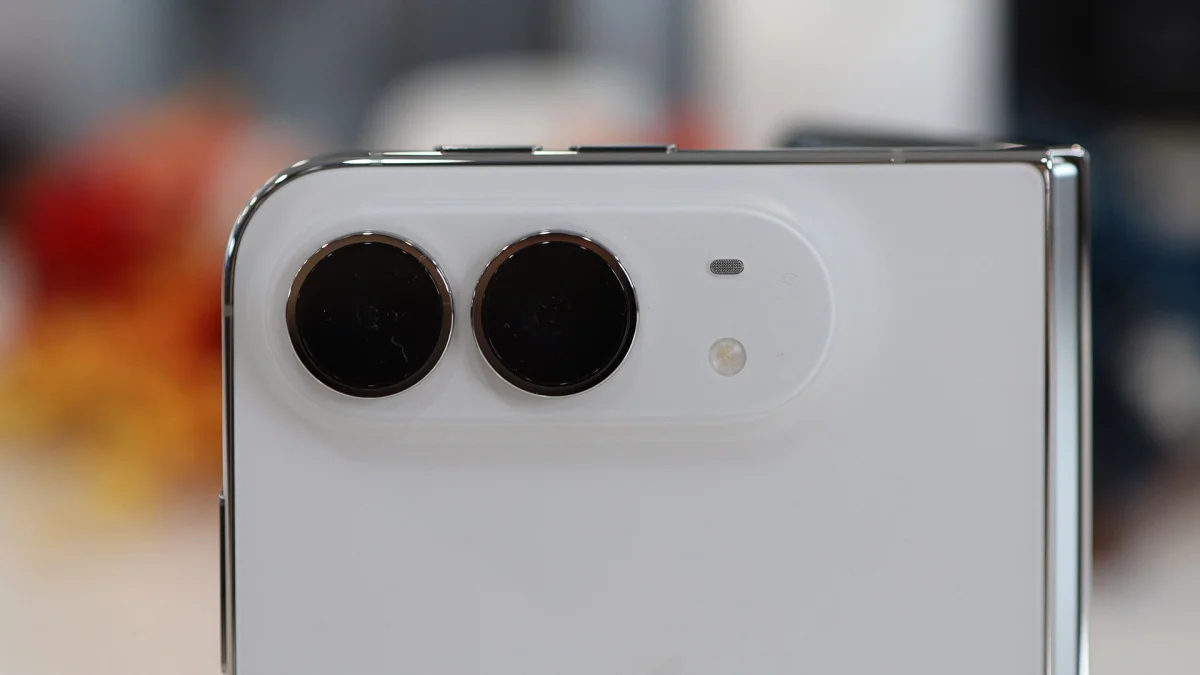
Its folded shape is unusually wide and close to square, with one flat side and one curved side. That makes it distinctive, but the width takes some adjustment in the hand. Ceramic Shield 2 covers the front and back, while a matte rear finish offers a secure-feeling grip. The prominent dual-camera bump recalls the iPhone Air, though the rest of the design is its own.
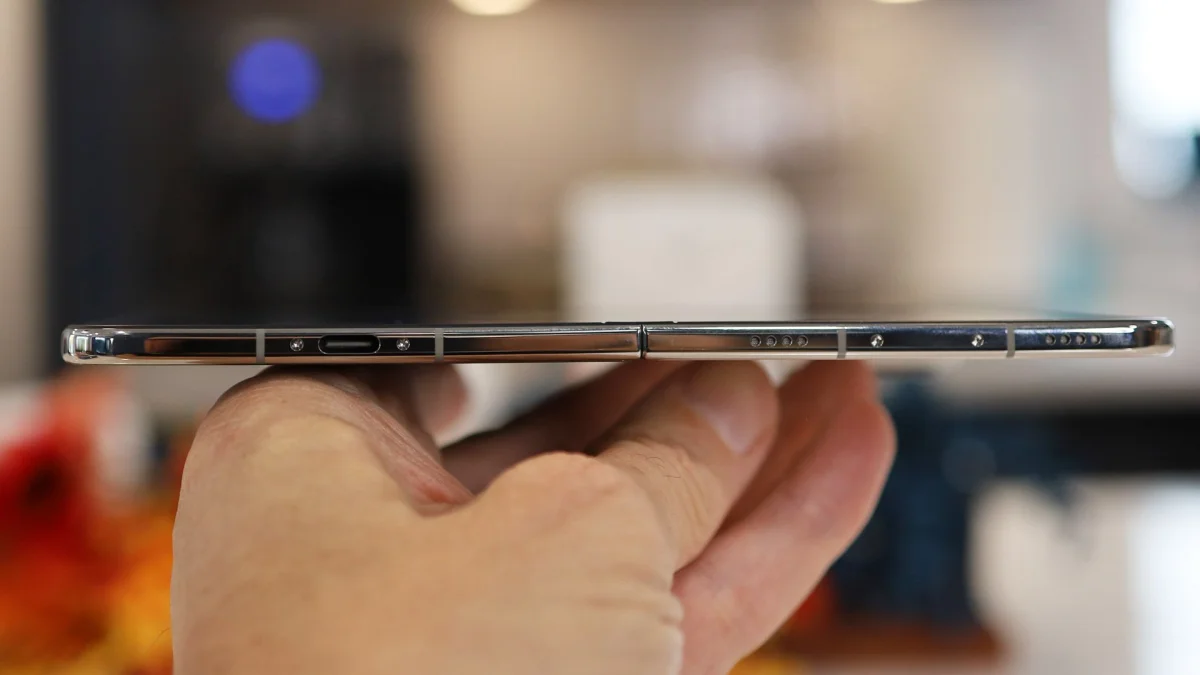
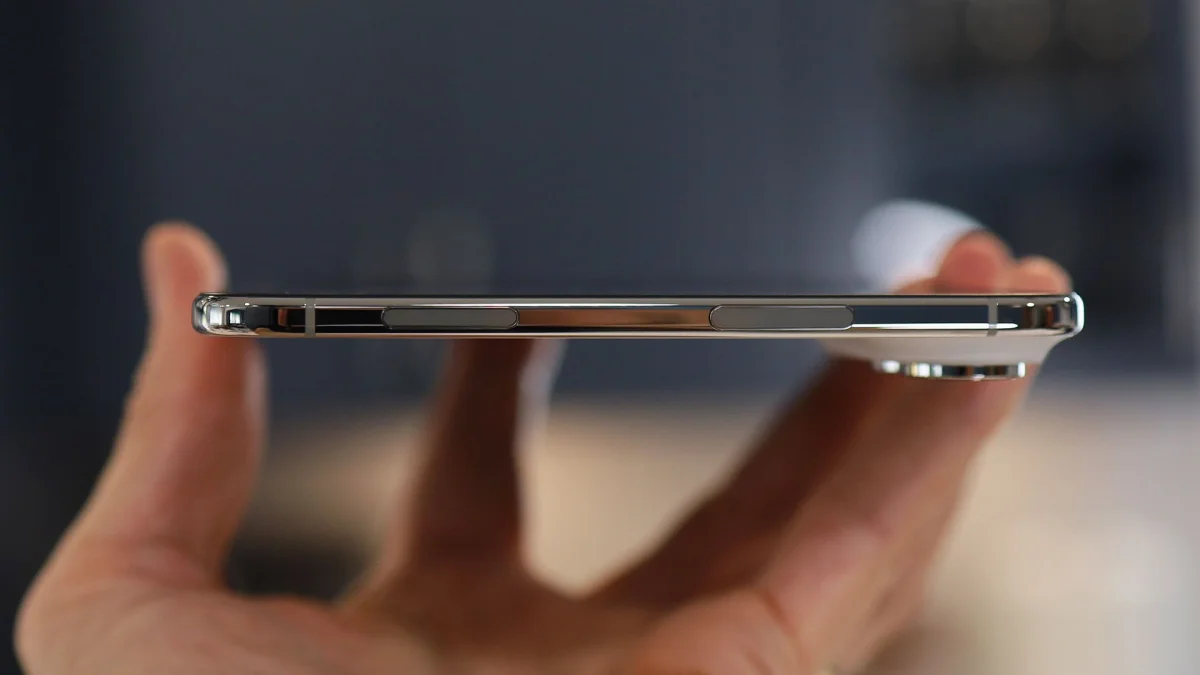
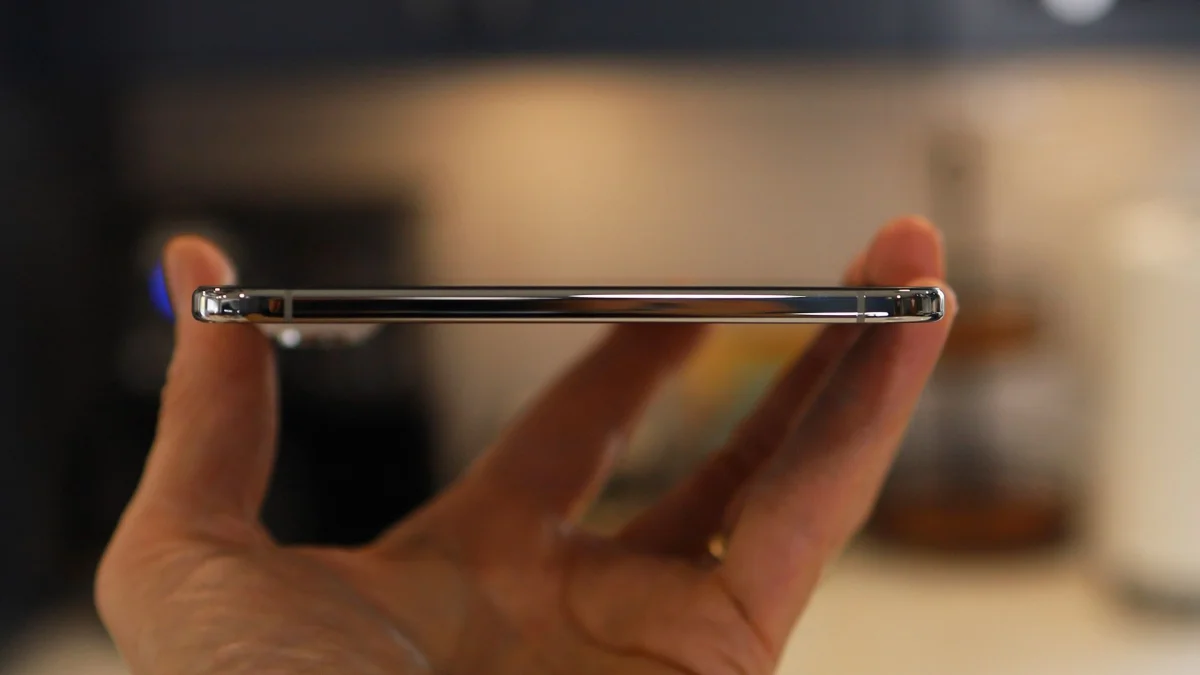
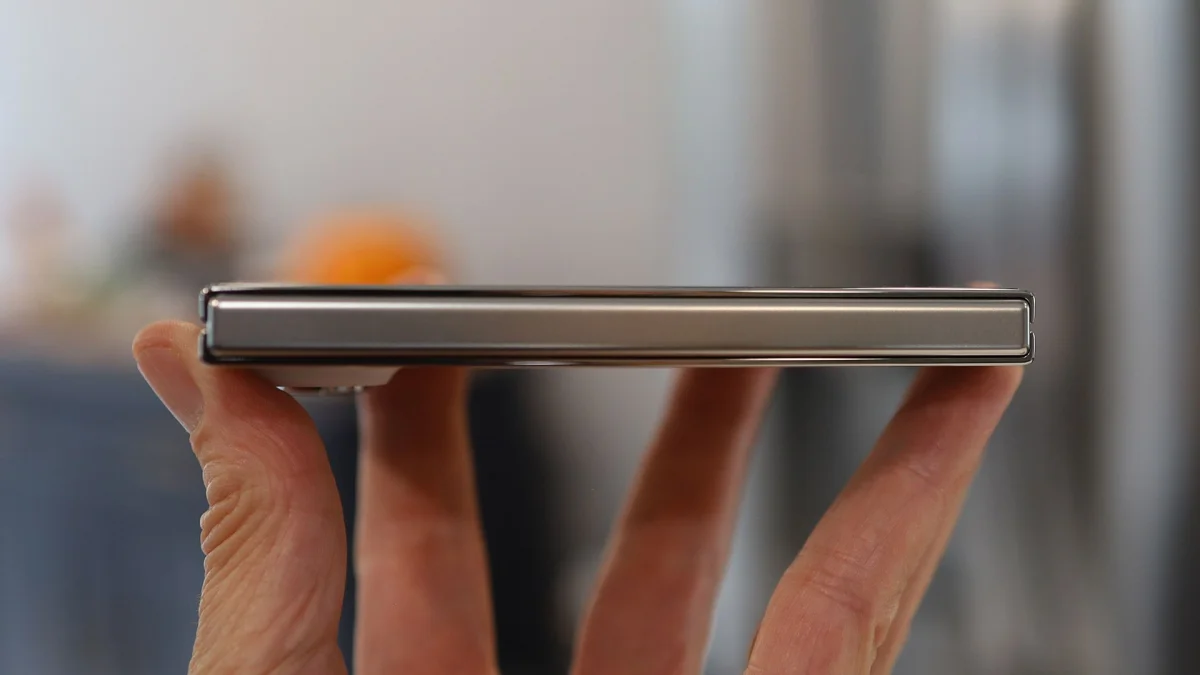
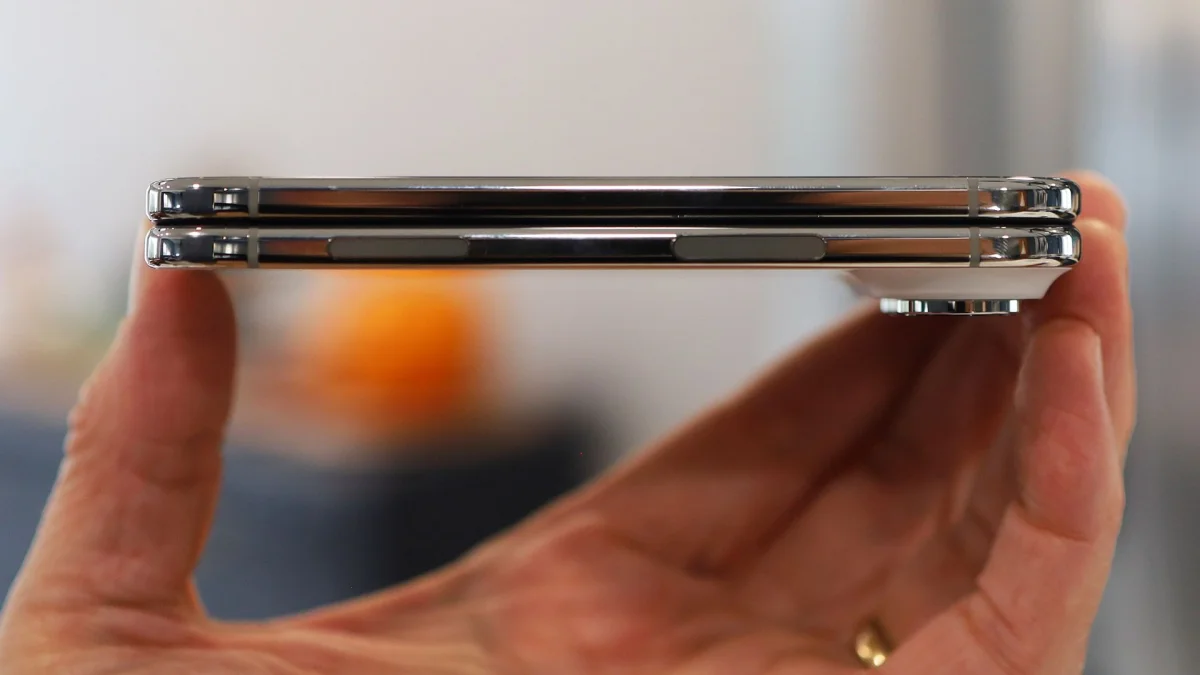
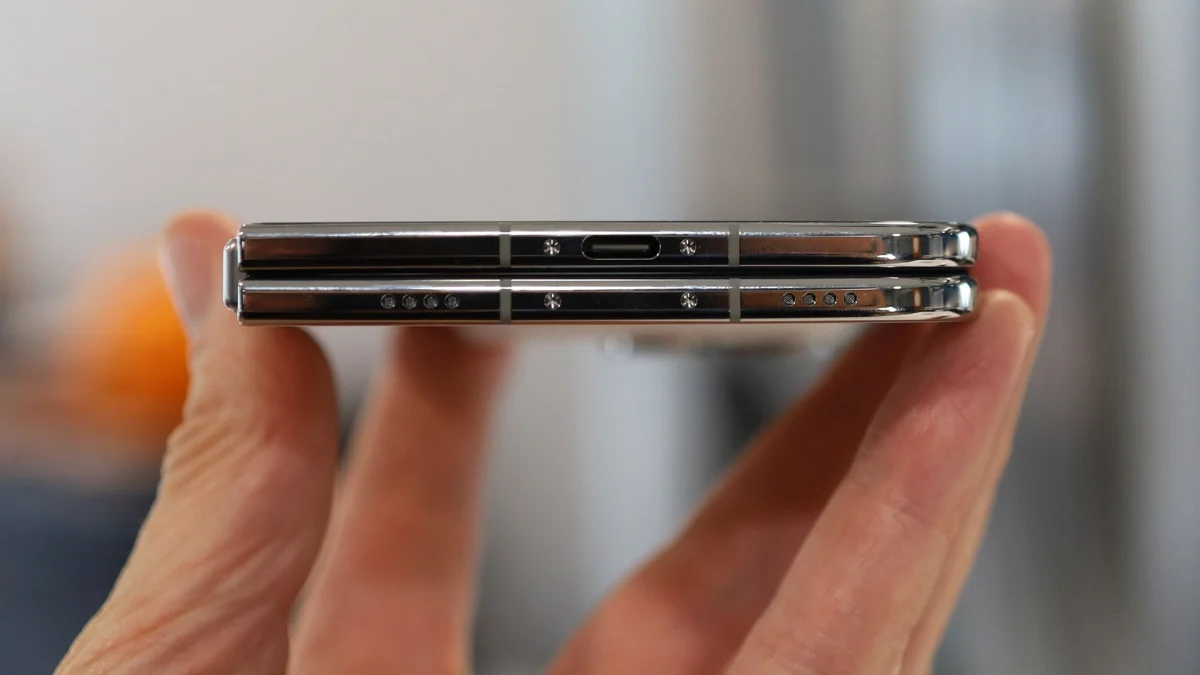
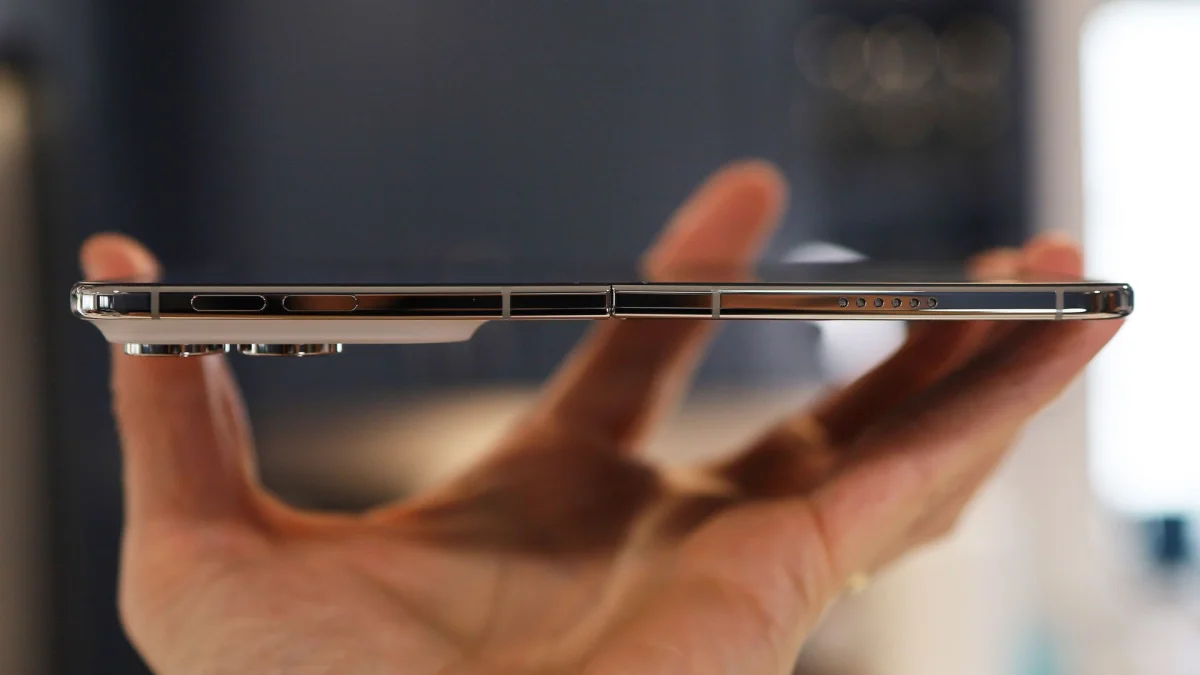
The controls depart from the usual iPhone layout. Volume buttons sit along the top edge; the right side holds a Touch ID power, sleep and Siri button, with the Action button below. A USB-C port, speakers and microphones line the bottom. The phone ships with a charging cable but no power adapter.
Touch ID works, but its presence highlights the absence of Face ID. The reviewer found himself waiting for the cover screen to unlock automatically before remembering to touch the power button. For a phone that costs close to $2,000, losing the quick face-based unlock is a frustrating step back. The Duo’s size can also make camera handling less intuitive: it isn’t always clear whether to shoot folded, open or turned sideways.

Two strong displays, and one awkward layout
Both screens are Super Retina XDR OLED panels with always-on support, variable refresh rates from 1Hz to 120Hz and peak brightness of 3,000 nits. Their resolutions are 1,398 x 2,034 on the 5.4-inch cover display and 1,878 x 2,670 on the 7.6-inch inner display. Those figures edge out the comparable Galaxy Z Fold 8 screens listed in the review.

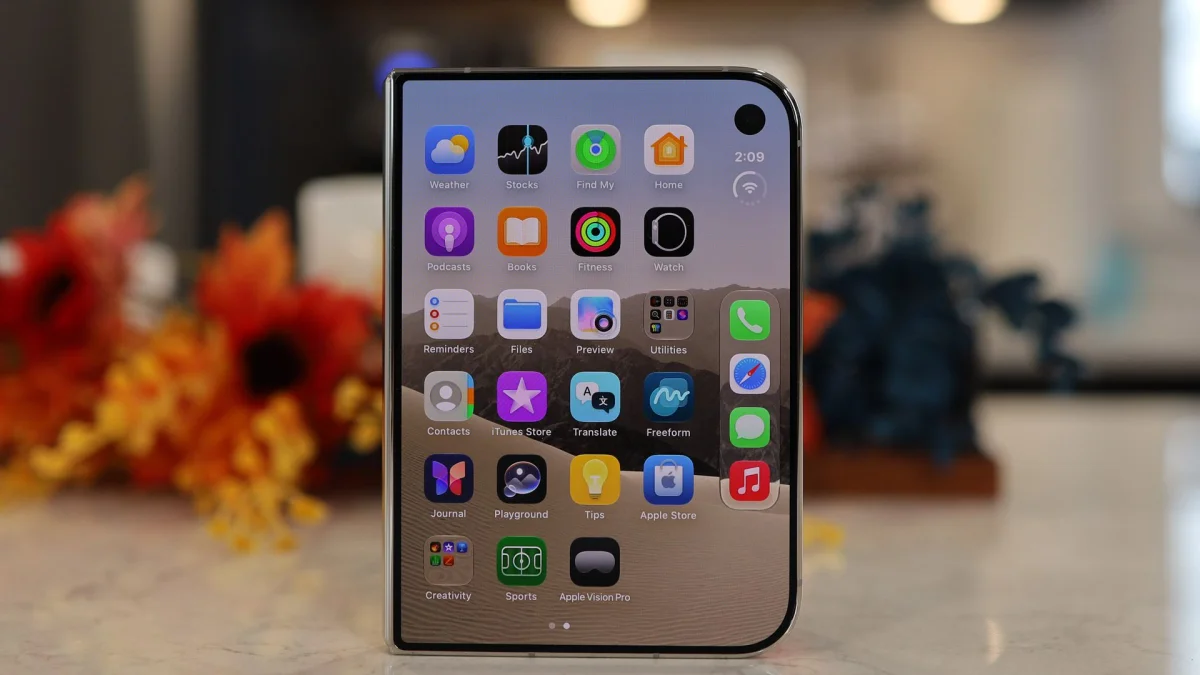
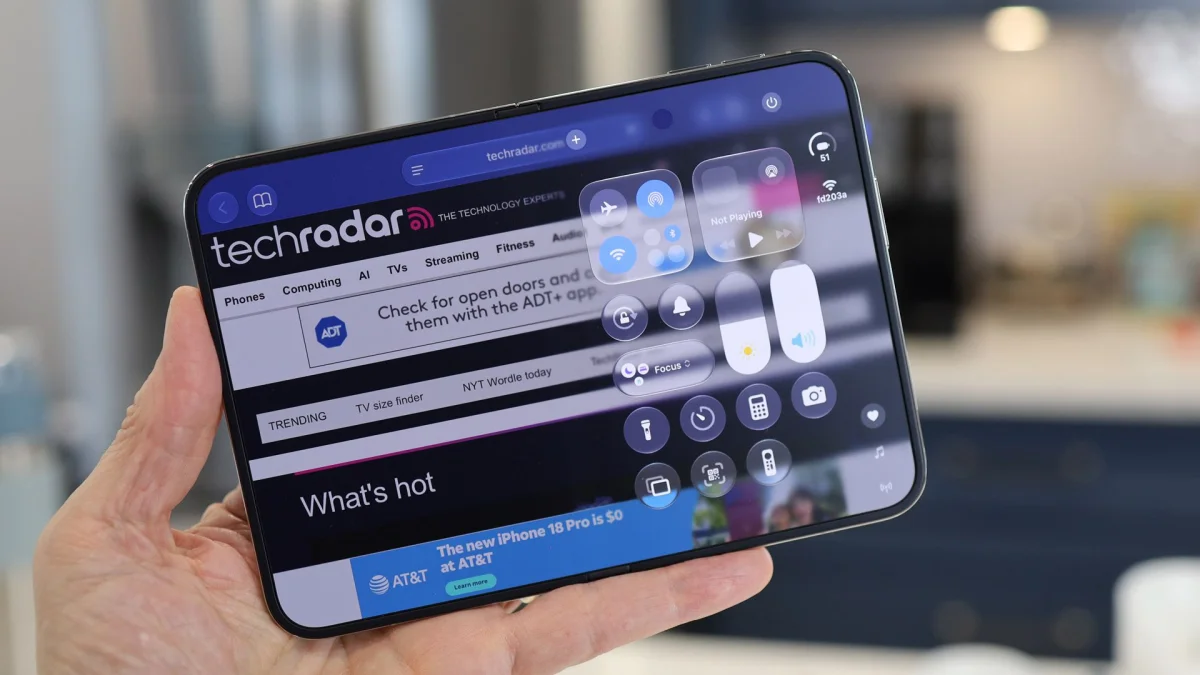
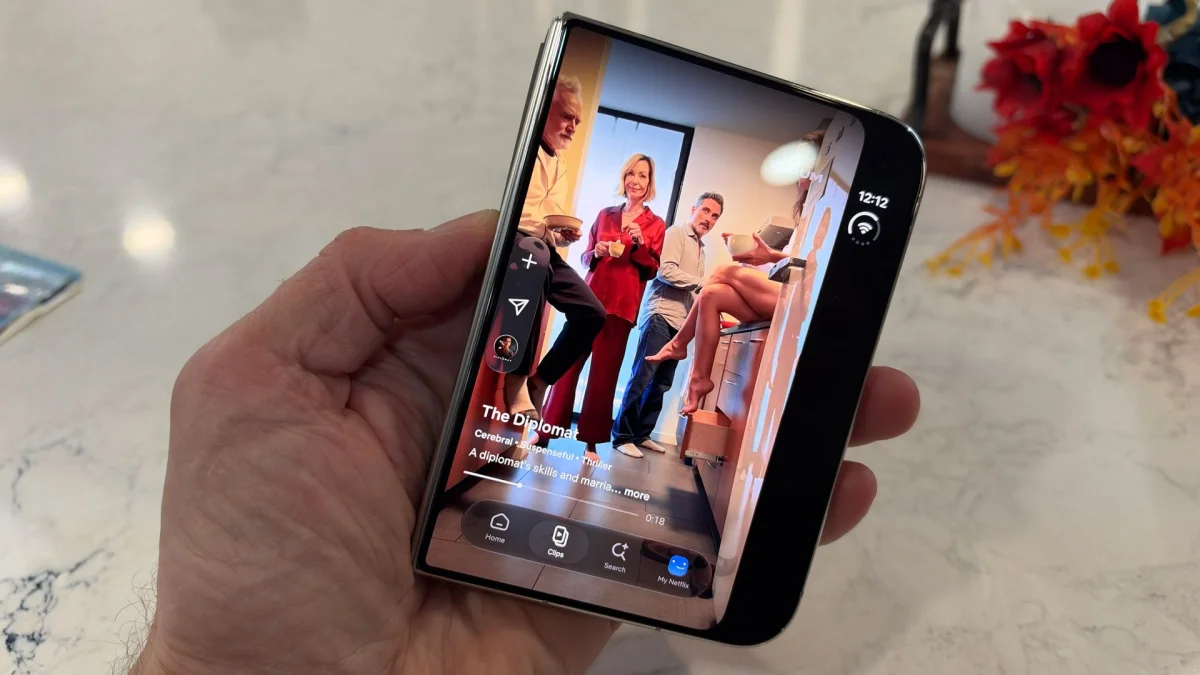
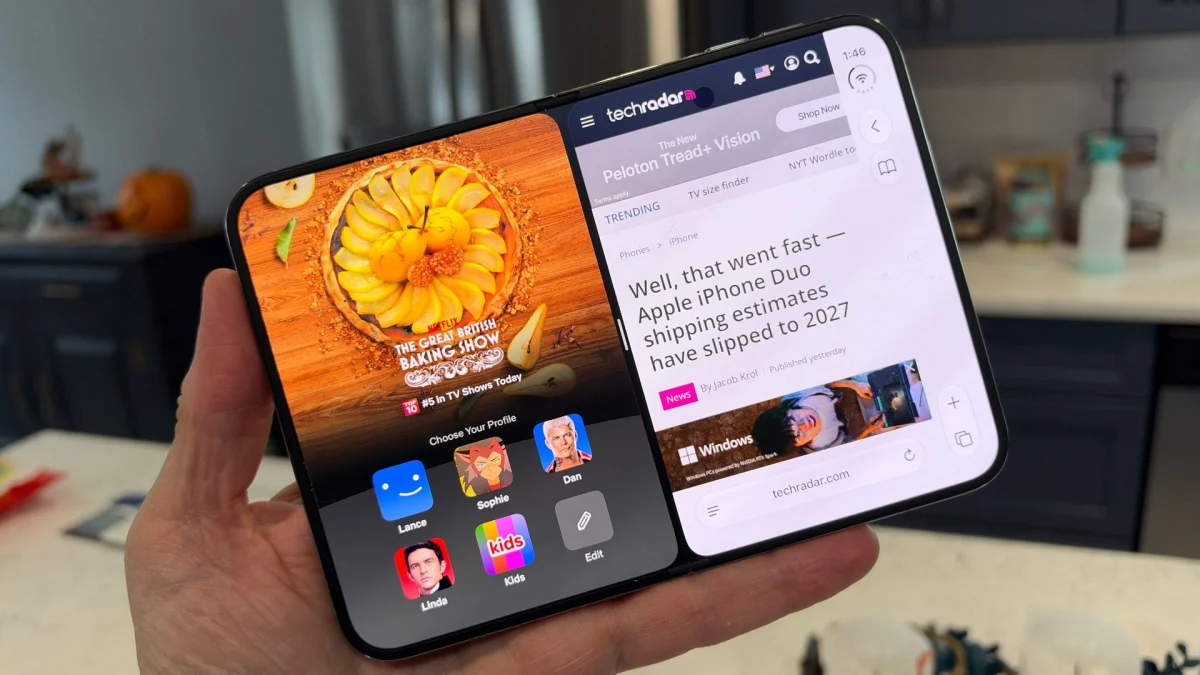
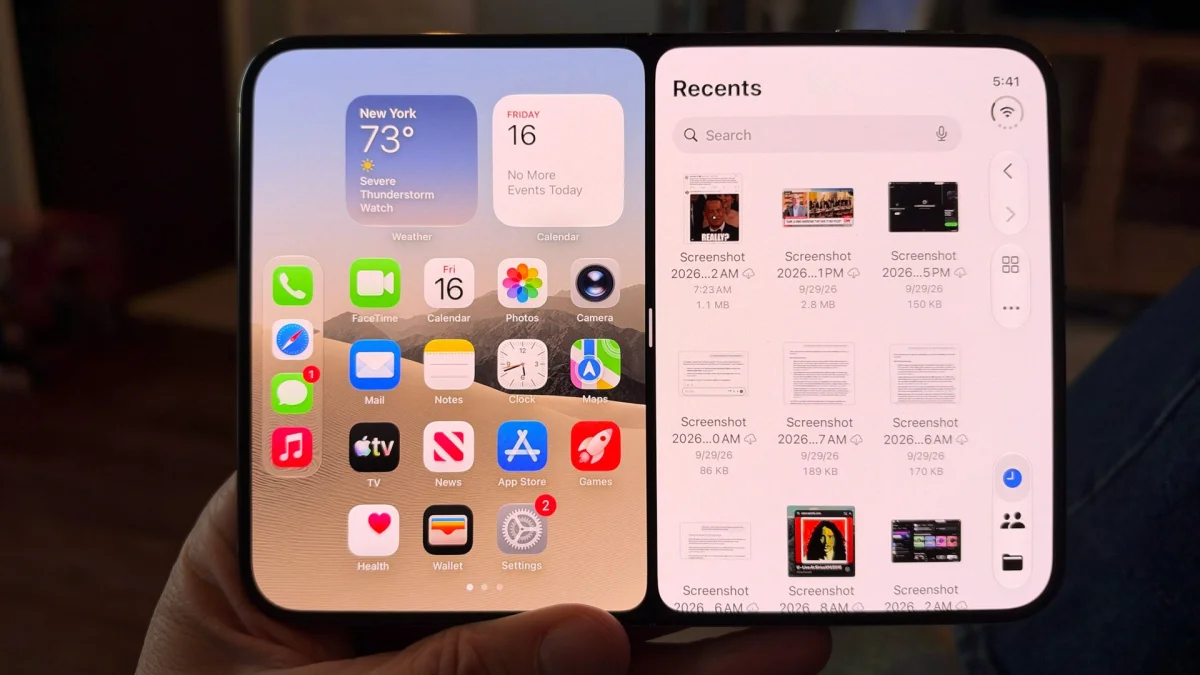
The cover screen looks unmistakably like an iPhone, but Apple has rearranged the interface to fit its short, wide shape. The Dynamic Island sits vertically on the right, above a dock and status area arranged along that same edge. This makes app icons easy to reach with a right thumb, but it takes space away from content. Safari pages, TikTok and even Apple’s Sports app can feel cramped. The camera viewfinder and photo gallery make better use of the full display.

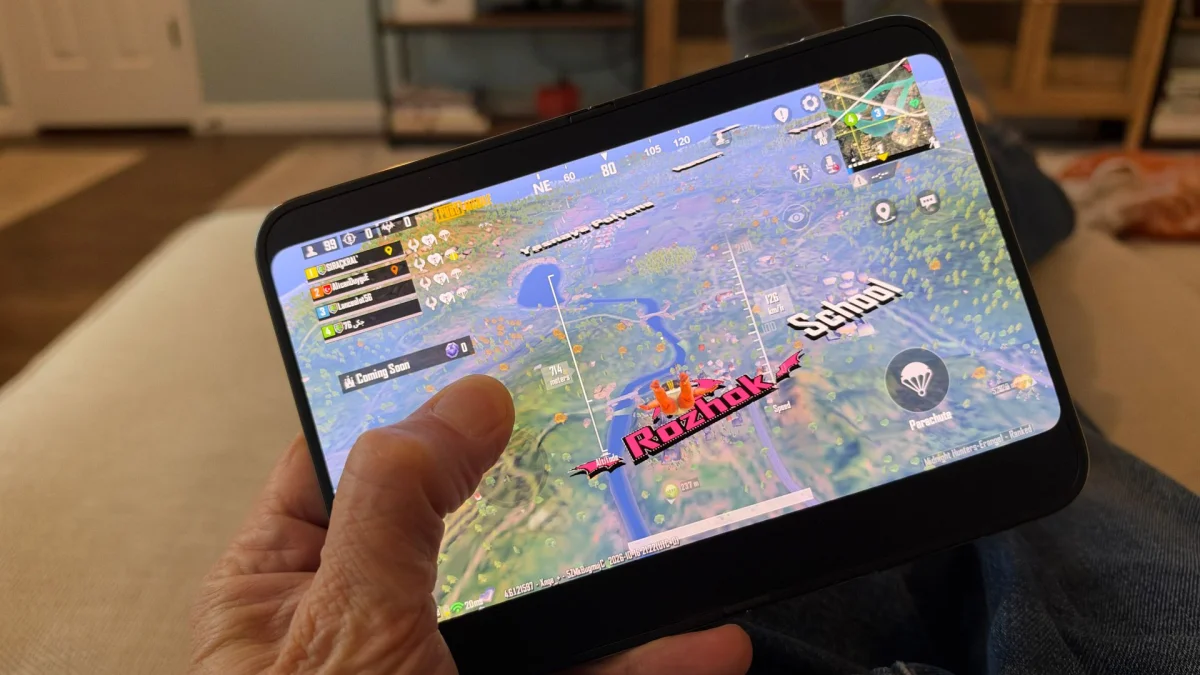
The inner screen is the Duo’s standout feature. Its nano-texture finish scatters reflected light, making the folding crease difficult to see in normal use and reducing glare in bright surroundings. It gives images a matte, print-like appearance and feels smooth under a finger. The reviewer enjoyed games such as PUBG, video on Netflix, photo editing and web browsing on the larger panel. The finish may soften some visual punch, but the screen remains sharp and fluid.

Apple places the inner 4MP FaceTime camera beneath a small section of display. It works for calls, though the area around it is visible because its pixels and surface don’t quite match the rest of the panel. The reviewer wondered whether a conventional, smaller cutout might have looked better.
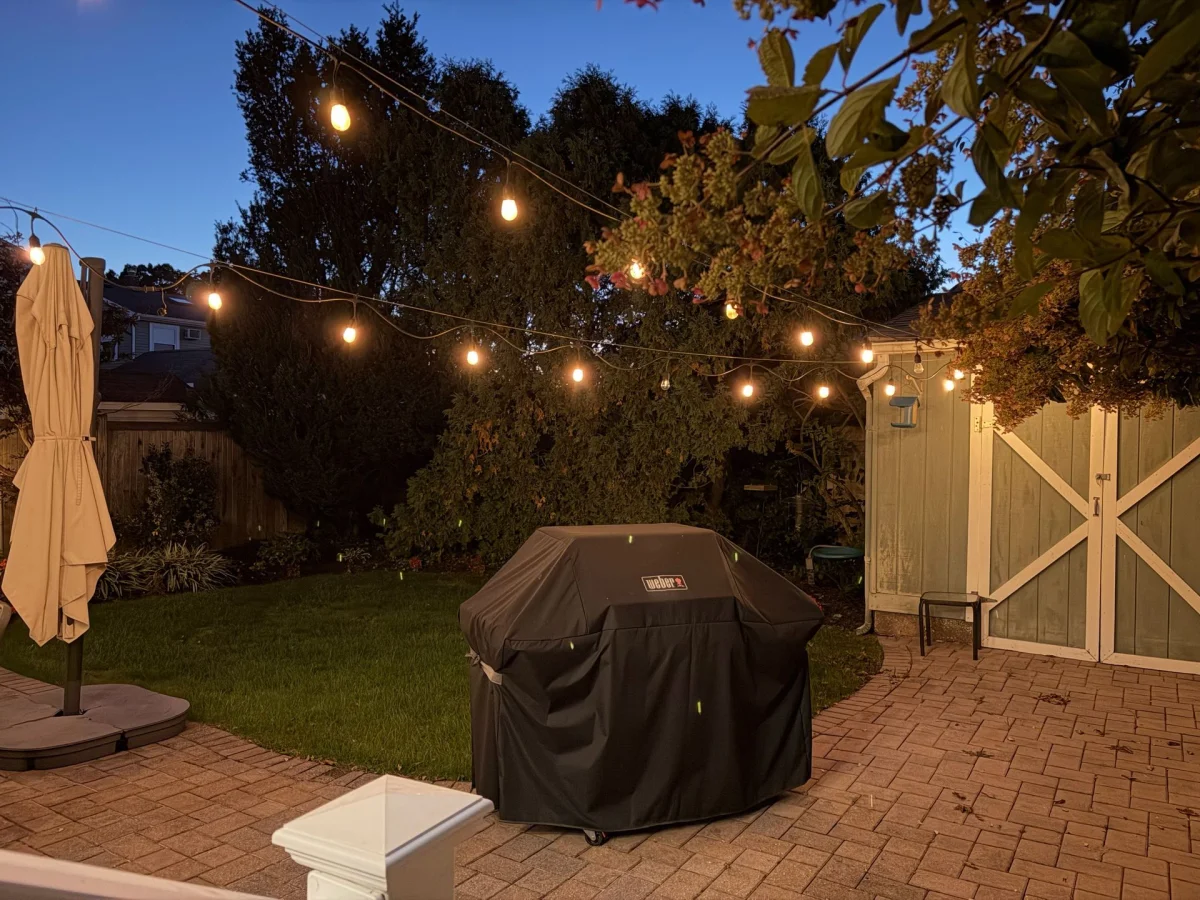
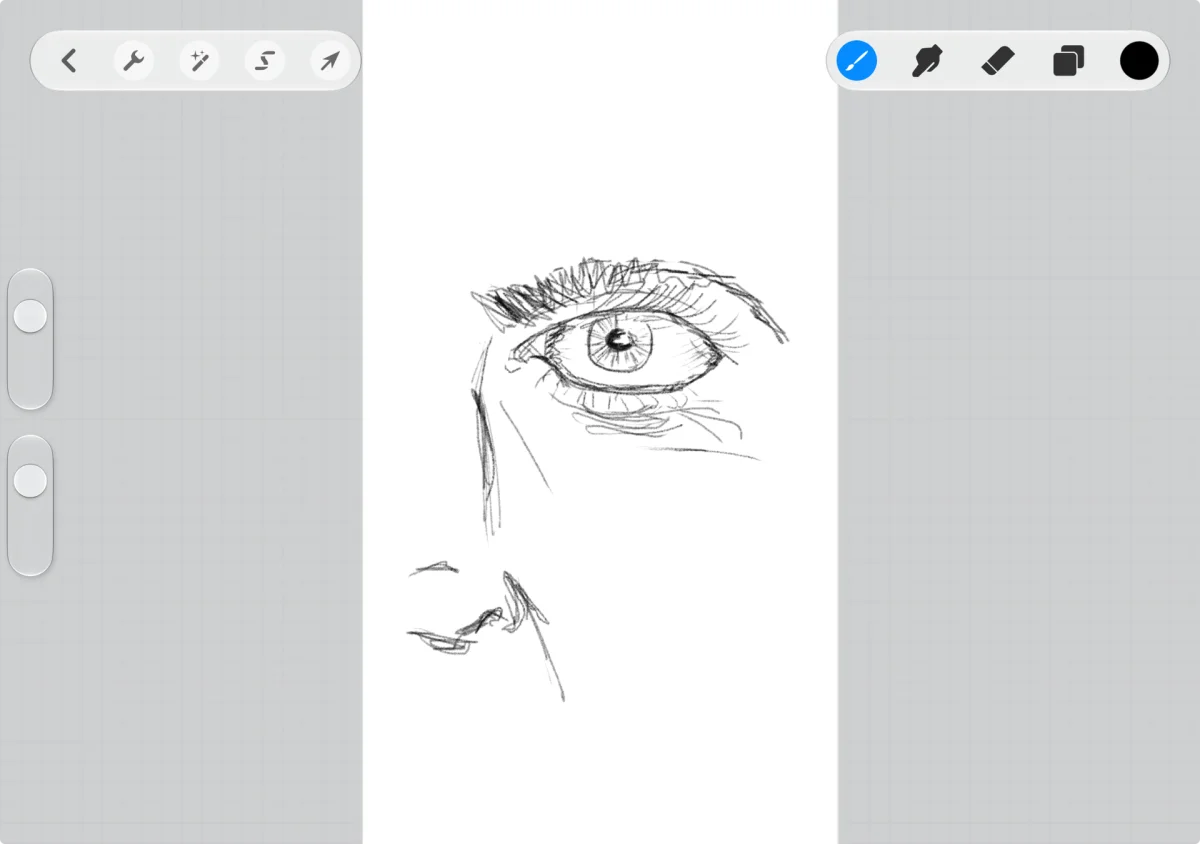
Apple Pencil support could make the inner display more useful for drawing and notes once it arrives. During testing, it wasn’t active. Finger drawing in Procreate Pocket proved difficult for the reviewer, while an analog stylus worked somewhat better.

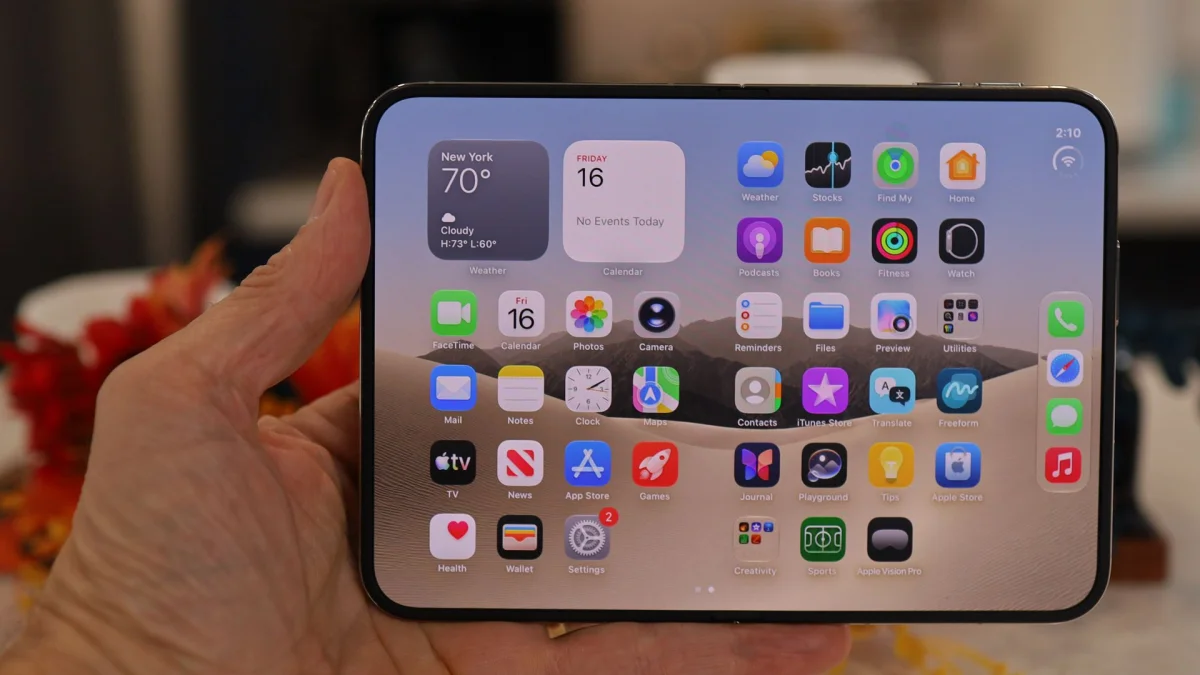
The right-side dock and status area carry over to the inner display, though the dock disappears in some apps such as Safari. Apple could have placed it along the bottom, as on iPad, but its choice gives the Duo a consistent layout across both screens.

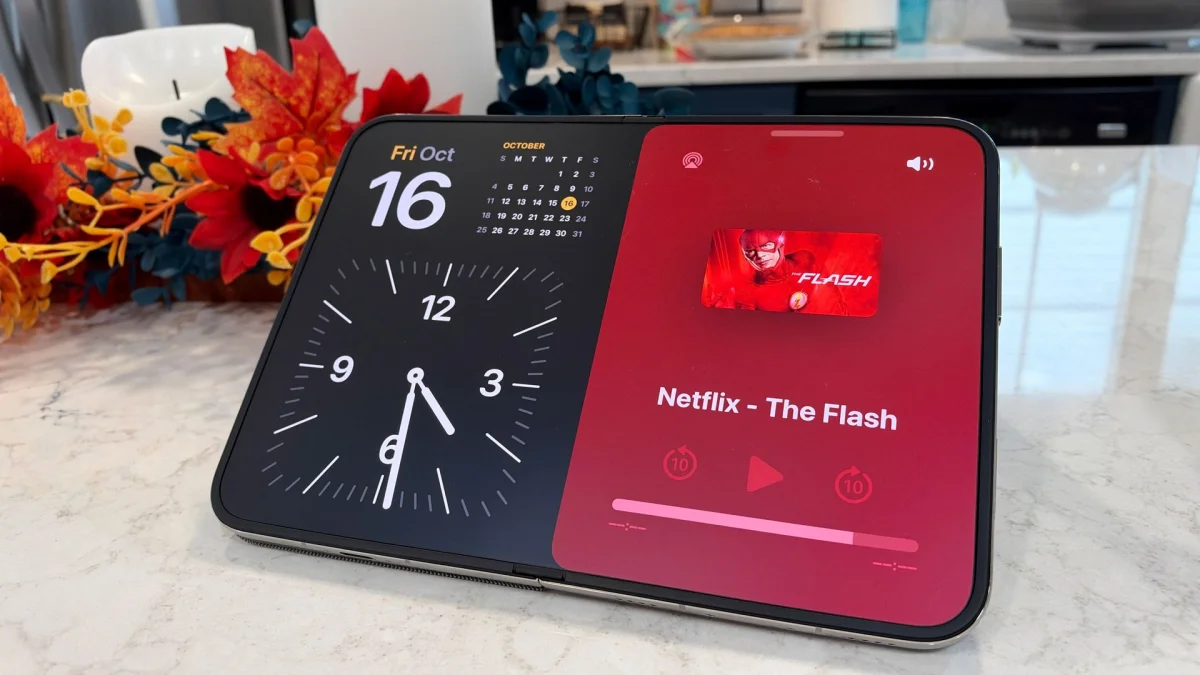
Standby is a more convincing use of the folding design. Prop the Duo up in a tent shape and the clock-style display switches to landscape. Stand it open like a book and Standby moves to the inner screen. The reviewer also used a MagSafe charger to turn it into a bedside clock. These small adaptations make the hinge useful even when the phone isn’t being held.

Cameras: strong main lenses, no optical telephoto
The camera system includes a 48MP f/1.6 main camera, a 48MP f/2.2 ultra-wide, an 11MP f/2.2 Center Stage camera on the cover and a 4MP f/1.8 camera inside. The two rear cameras default to 24MP photos, combining pixel information to balance detail and file size. There’s no dedicated telephoto lens; Apple’s claimed 2x optical-equivalent zoom comes from cropping the main sensor.

In the reviewer’s sample shots, the main camera captured fine detail, including pollen on a marigold, while balancing bright areas and shadows. The wide and ultra-wide cameras also handled a dim social-club setting well, with controlled exposure and limited grain. Motion blur appeared in moving subjects, but the reviewer felt it suited the atmosphere of the scene. Low-light performance and color accuracy were among the strengths across the camera system.

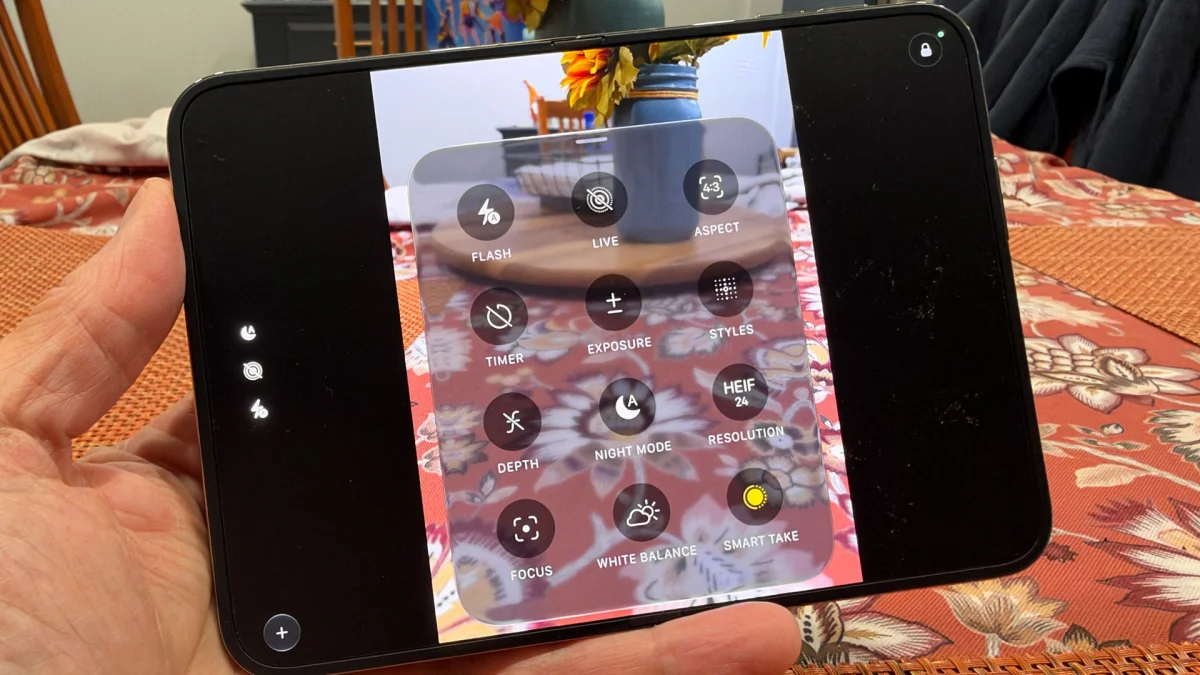






Smart Take is designed for hands-free portraits. Set the Duo folded at a 90-degree angle, start posing, and the camera selects what it considers the best shots. It doesn’t work with the inner 4MP camera, and you can’t watch a preview while it captures images. The reviewer found it useful enough to try, but says positioning the phone on a tripod or shelf near eye level would likely improve the results.

Duo Preview offers a more practical foldable feature: it lets the photographer use a rear camera while the subject sees a preview on the cover display. The outer Center Stage camera also produced strong portrait-mode selfies, with convincing background blur. The inner camera is best reserved for FaceTime and casual calls.

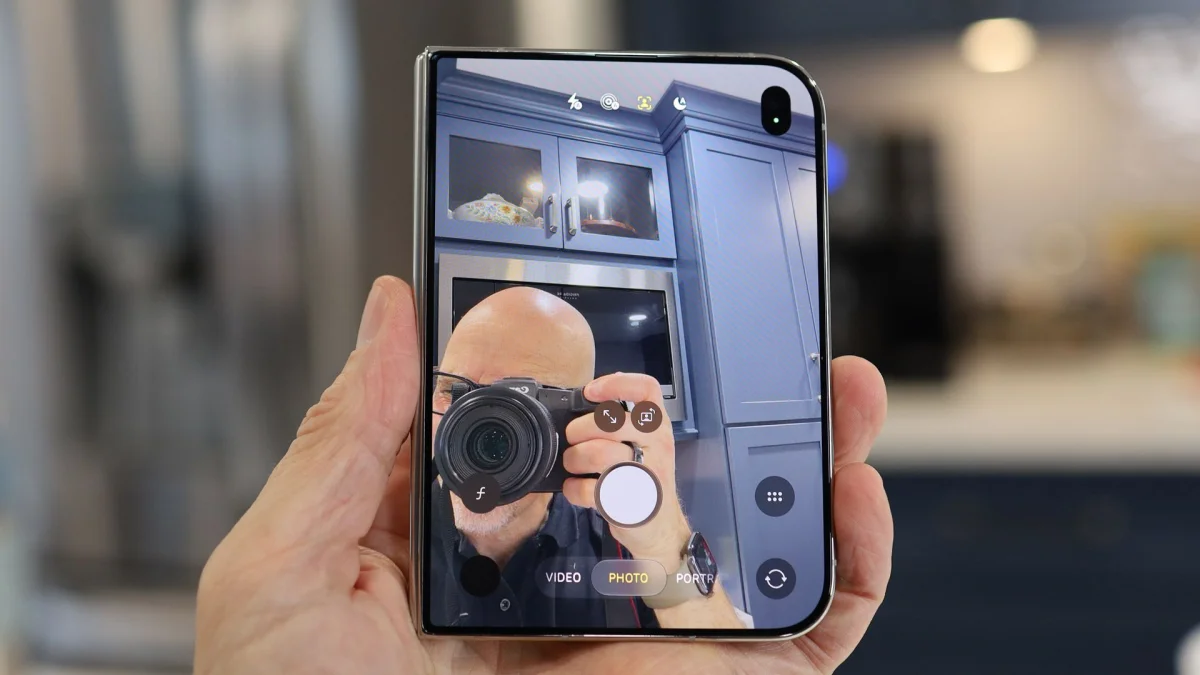






The rear cameras compare well with the Galaxy Z Fold 8’s 50MP pair, which also lacks a telephoto lens. Buyers who regularly photograph distant subjects should look toward a foldable with a dedicated zoom camera, such as the Galaxy Z Fold 8 Ultra listed among the alternatives.

iOS 27 on a folding screen
The Duo runs iOS 27, which adapts to the two display sizes while keeping the device firmly within the iPhone software experience. It doesn’t switch into iPadOS when opened. That choice helps the transition between screens feel familiar, but it also leaves the inner display with some interface decisions that don’t feel designed for a tablet. Apple keeps the dock and status area on the right, and some status information, including battery life, is less prominent.

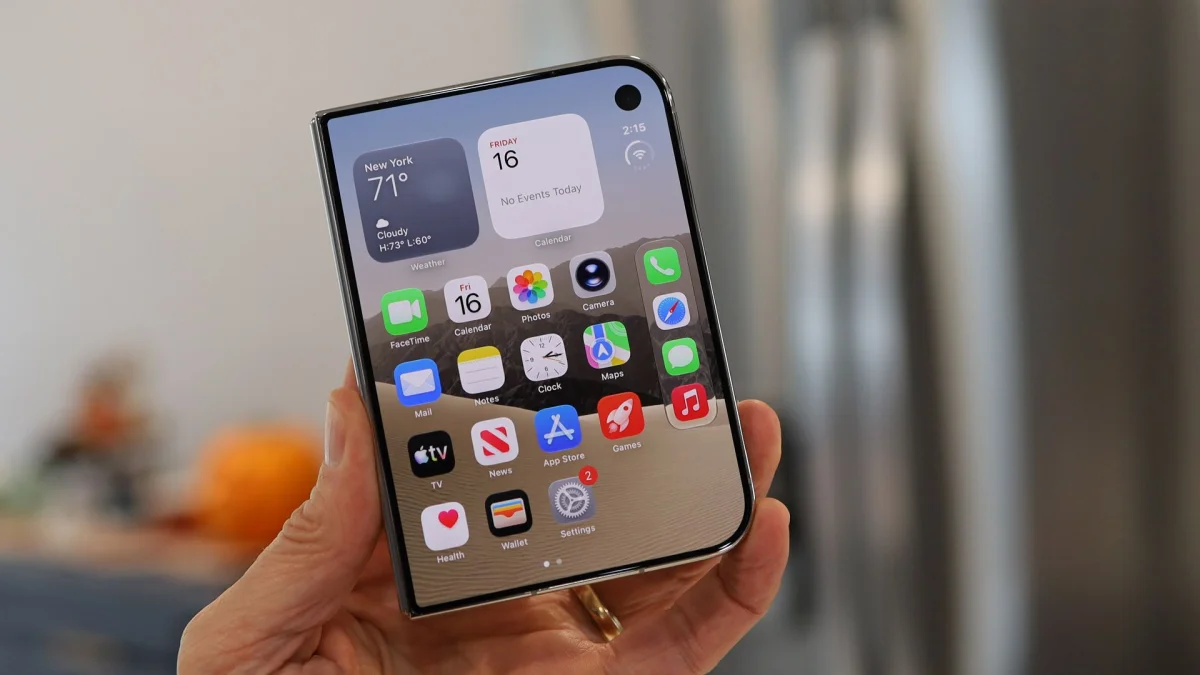
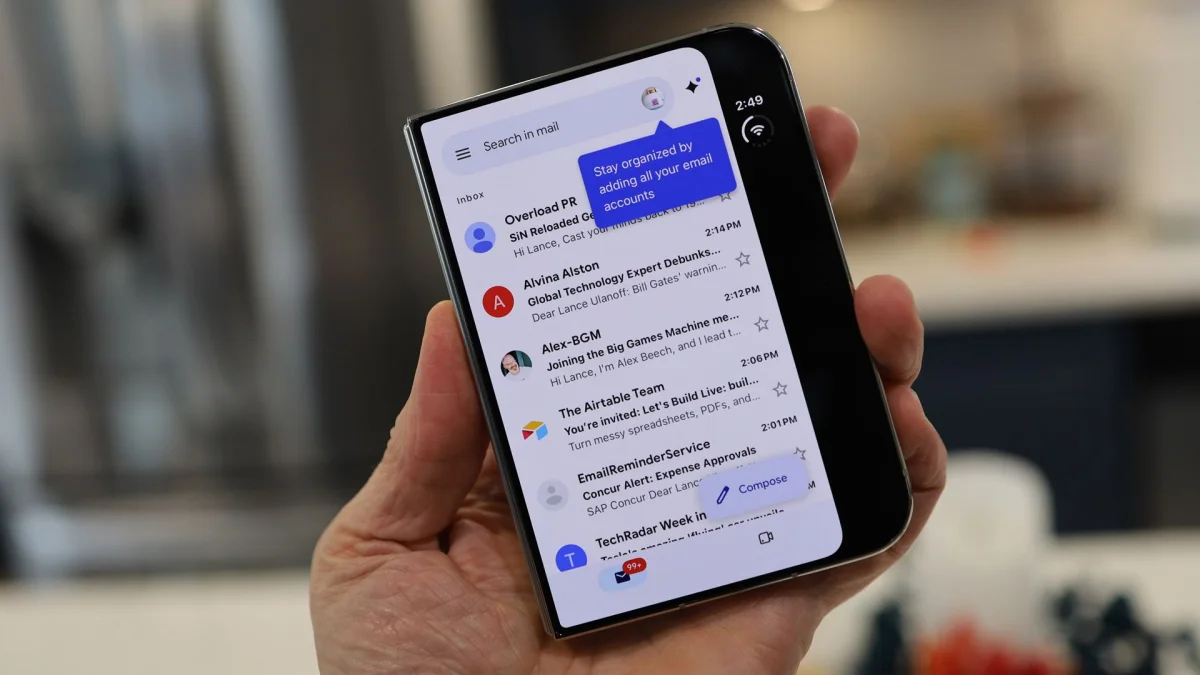
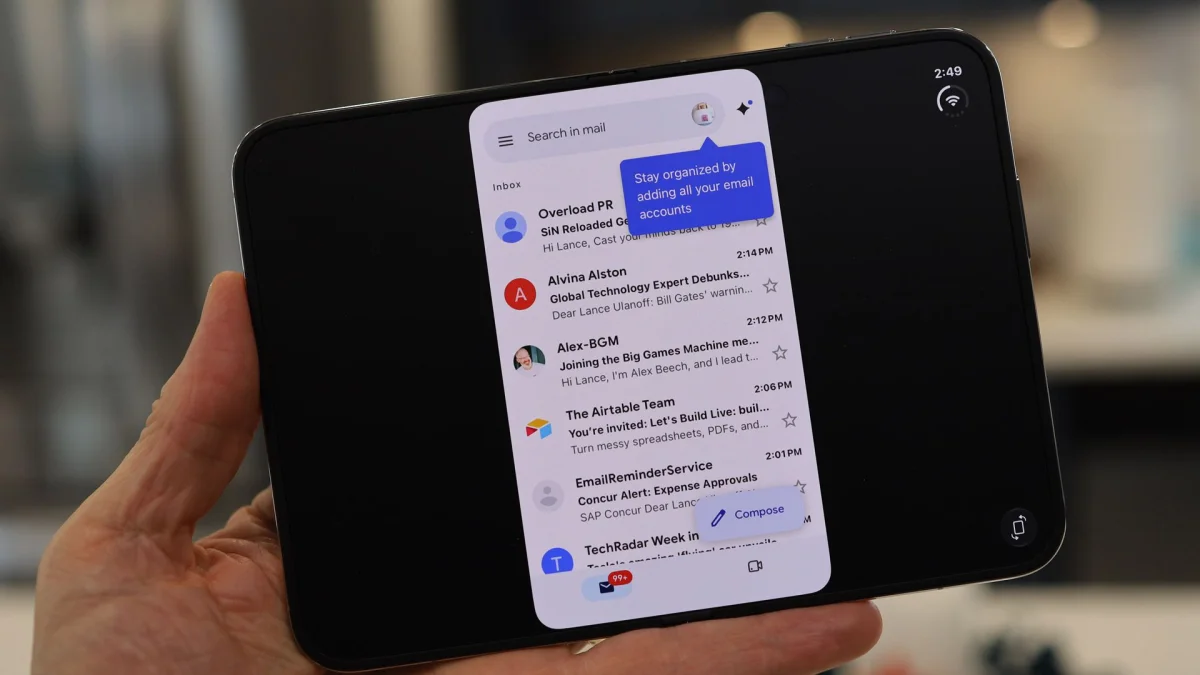
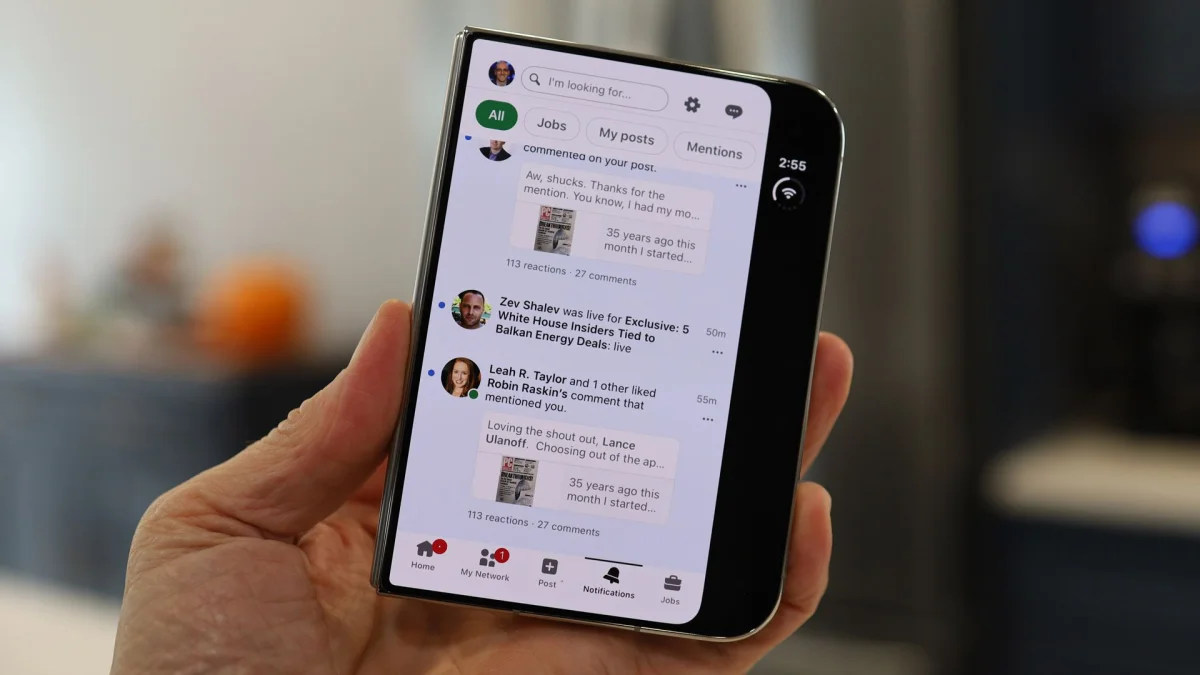
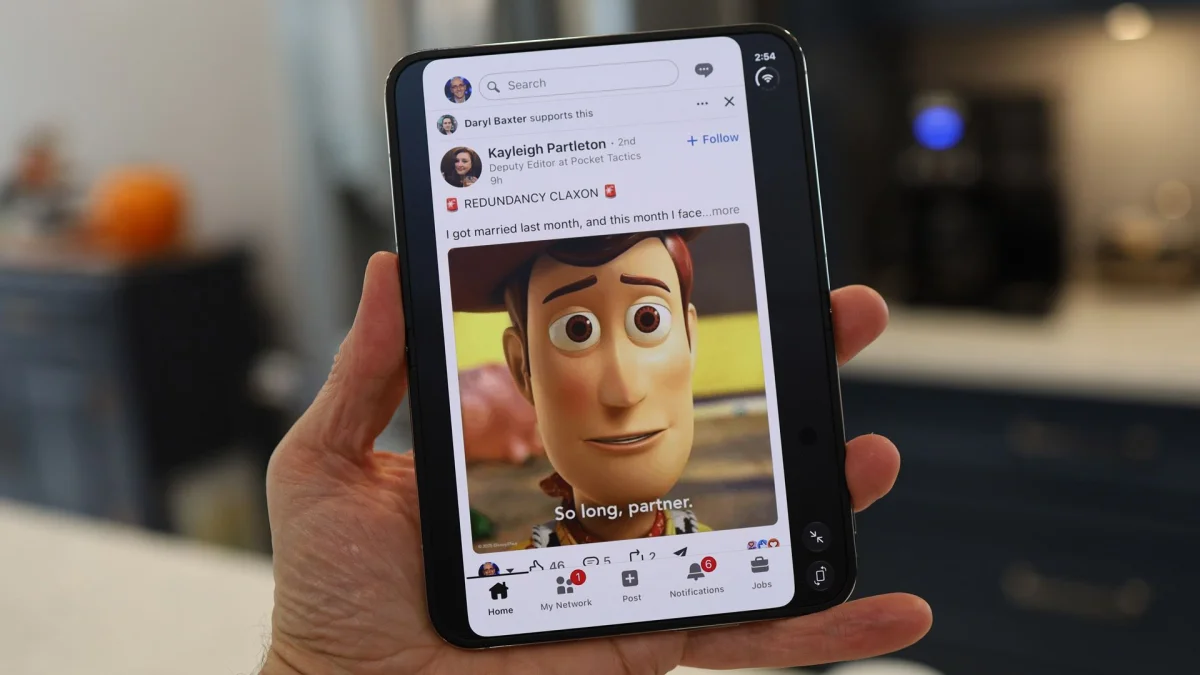
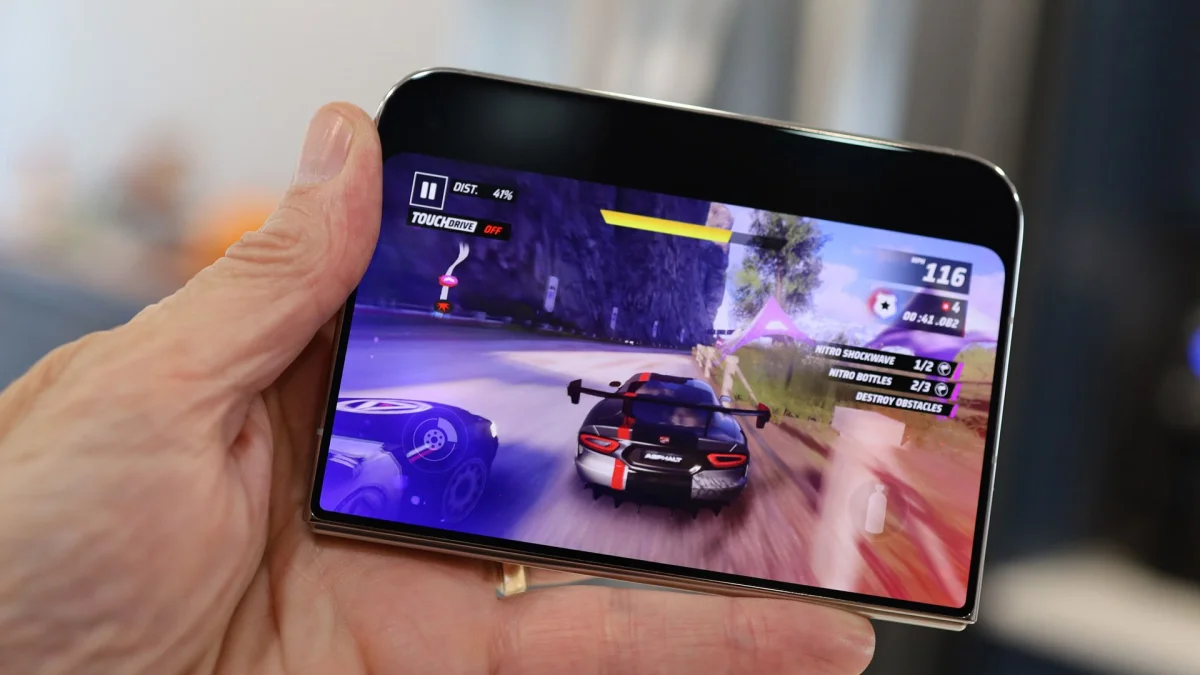
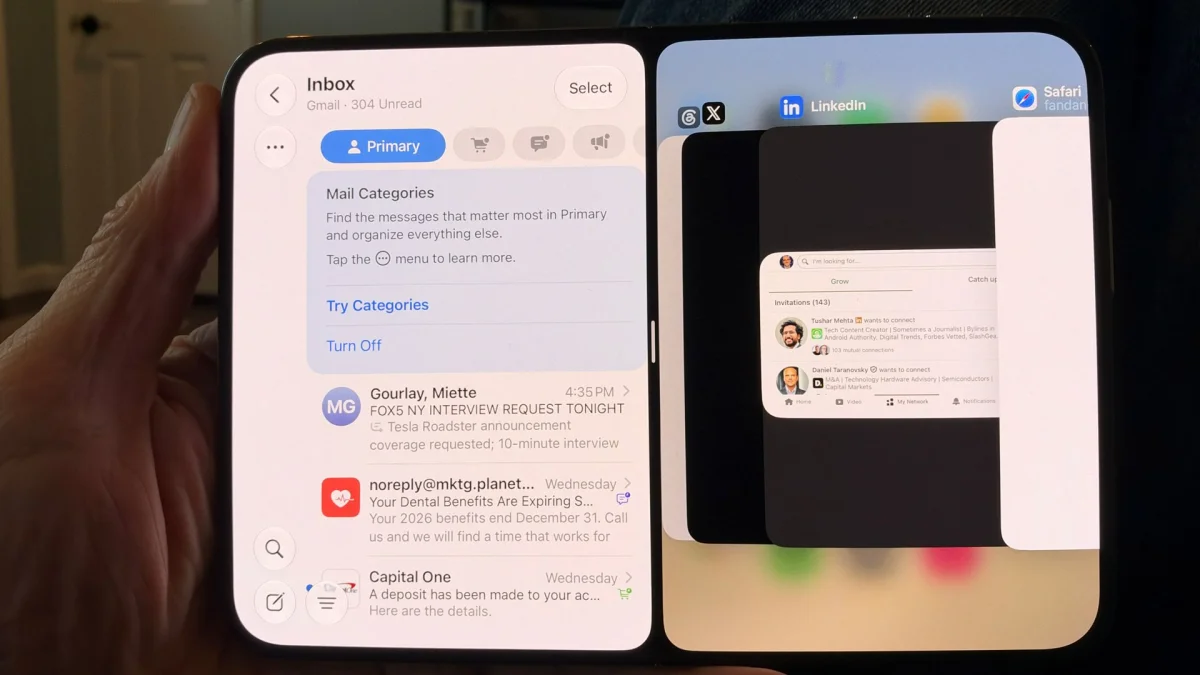
Third-party app support is uneven. Gmail stretches across the screen without filling its full height, while LinkedIn sits in the middle. An option to expand apps to fill more of the display can help, though it doesn’t guarantee every feature works as intended: tilt-to-steer in Asphalt Legends failed on the inner screen but worked on the cover display.

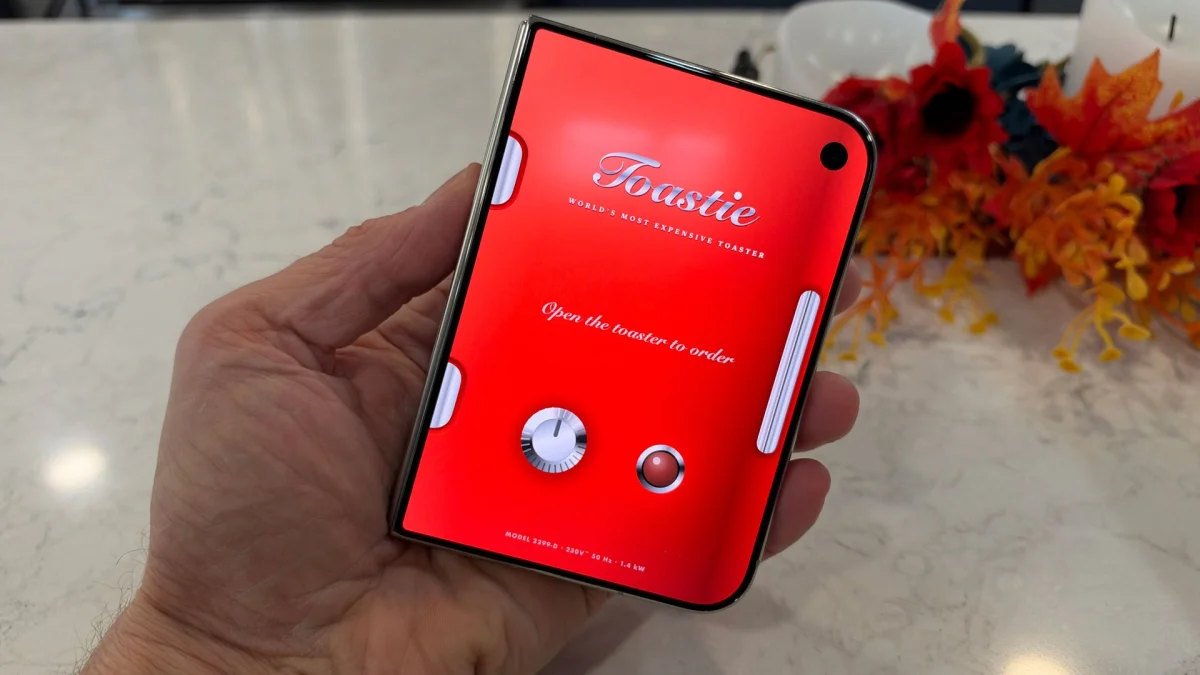
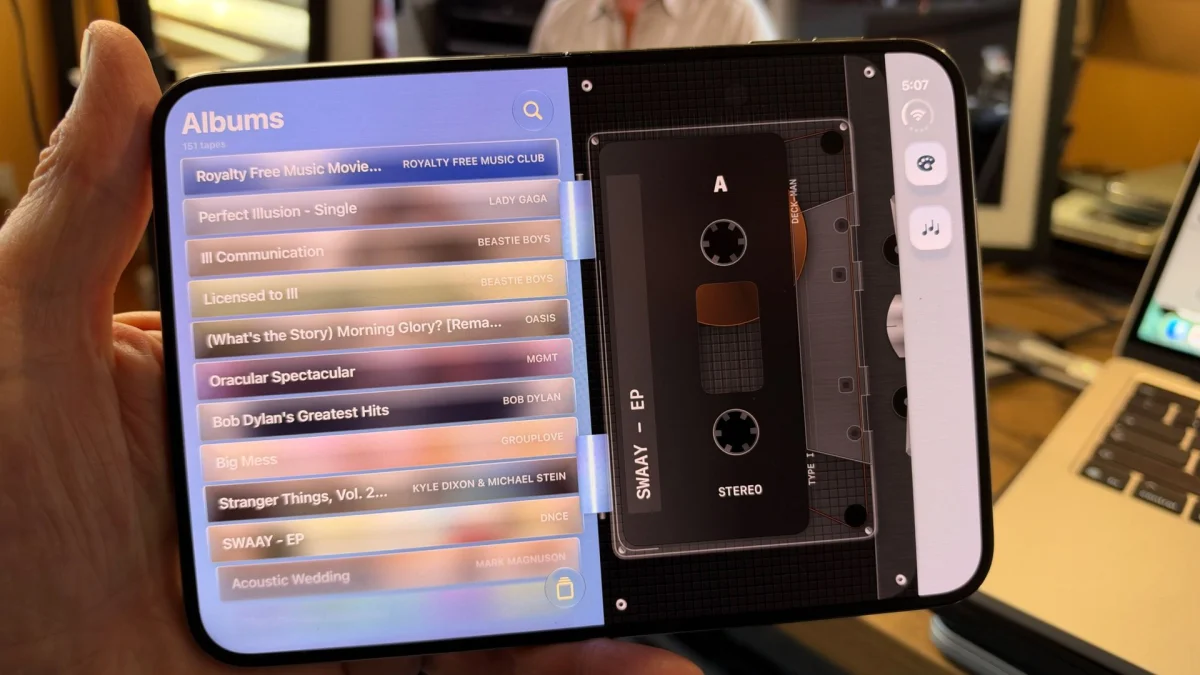
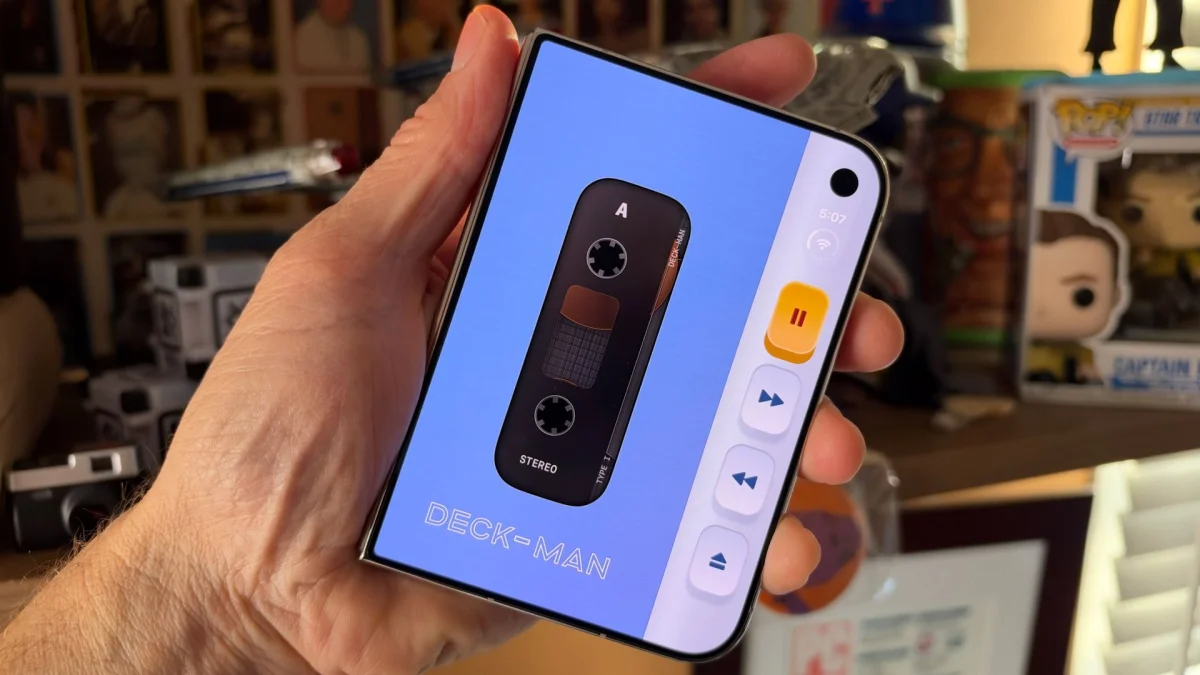
Other apps make good use of the extra room. Safari, Messages and Netflix looked good in testing, and some apps already respond to the two-screen design. The game Toastie has players assemble a grilled cheese on the inner display, fold the phone while it cooks, then open it to check the result. Deck-Man turns the Duo into a cassette player, with a virtual tape deck and controls split across the two states. Battle Fleet, a naval guessing game, works well with the phone propped open at 90 degrees. They’re playful demonstrations of what a foldable can enable, though none emerged as an essential app.

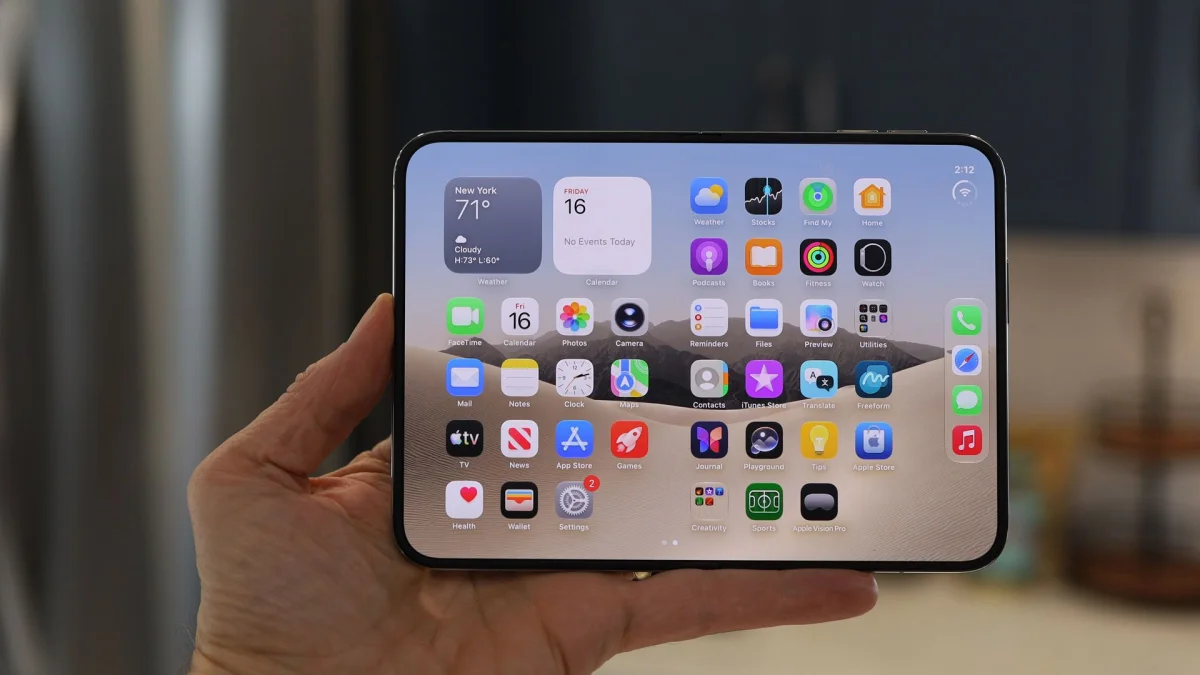

Split-screen multitasking makes the larger panel more useful for work. Swipe up from the bottom and drag an app to one side, then select another app for the remaining pane. The reviewer used Messages alongside Safari, and Procreate alongside a reference image. The Duo supports picture-in-picture video over two apps, but it can’t show three apps side by side as the Galaxy Z Fold 8 can.

Siri AI is more aware of personal context in iOS 27. Asked about important email, it opened Priority Mail and read out a message. It also held on to context between follow-up questions, though results weren’t consistently right: when asked where the reviewer had been the previous day, Siri showed a photo and stated his age instead. The system is still learning to make its access to personal data useful and predictable.

Performance and connectivity
Apple equips the Duo with the 2-nanometer A20 Pro chip and 12GB of RAM, the same processor used in the iPhone 18 Pro and Pro Max. The phone felt fast in daily use, and moving an app from the cover display to the inner screen produced a smooth handoff.

In Future Labs testing, the A20 Pro beat the Galaxy Z Fold 8’s Snapdragon 8 Elite Gen 5 for Galaxy in Geekbench 7 single-core and multi-core results and edged it out in most graphics tests. The reviewer says the margins were modest and unlikely to show up in everyday use.
| Benchmark | iPhone Duo result |
|---|---|
| Geekbench 7.1 single-core | 4,007 |
| Geekbench 7.1 multi-core | 11,363 |
| 3DMark Wild Life Extreme Unlimited | 7,171 |
| 3DMark Wild Life Extreme | 45.3 fps |
| 3DMark Solar Bay Unlimited | 16,496 |
| 3DMark Solar Bay Unlimited | 6.3 fps |
Games and demanding tasks ran smoothly. The rear of the phone became warm near the camera bump during gaming and 4K video recording, but not uncomfortably hot. The reviewer also edited 4K video at 60fps in CyberLink PowerDirector; the phone and app handled the job, though the app didn’t fill the inner screen properly. Photo editing in Cleanup and image creation in Image Playground also ran well locally.



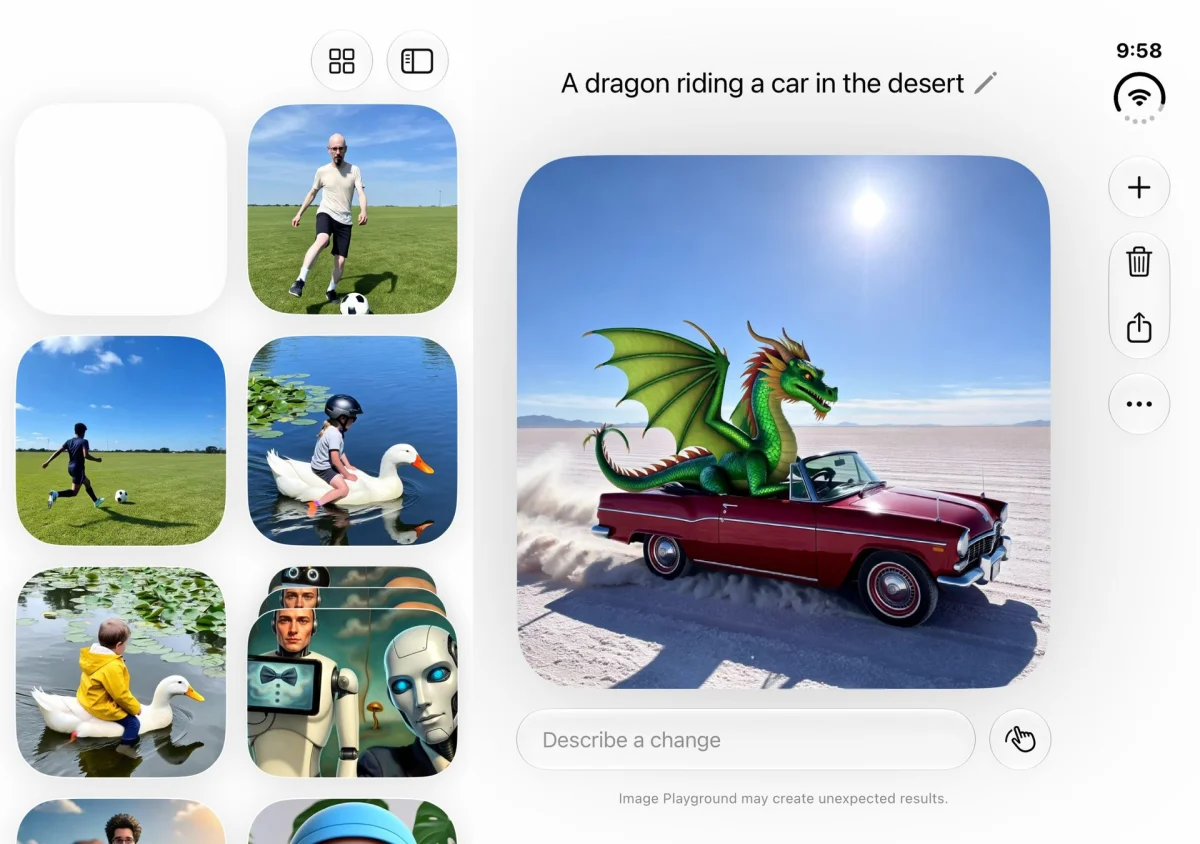
Connectivity includes Apple’s C2 modem for 5G, Wi-Fi 7, Bluetooth 6 and Messages via Satellite. Storage starts at 256GB, with 512GB, 1TB and 2TB options. The base capacity matches the Galaxy Z Fold 8, but at this price the reviewer would have preferred 512GB as standard.
Battery life and charging
The iPhone Duo has an approximately 4,800mAh battery. Apple claims up to 44 hours of video playback, or 31 hours on the larger inner display, under its stated usage conditions. For mixed use, the company promises a full day.
In the reviewer’s real-world use, the phone lasted around 14 hours. Future Labs measured 13 hours in its more demanding test, behind the Galaxy Z Fold 8’s 14 hours and 20 minutes. The Duo still made it through a full day of typical activity without needing a top-up, but it doesn’t lead its closest rival in the lab comparison.
Wired charging reached 60% in 30 minutes with a 45W charger. The specifications list support for up to 60W wired charging and 35W wireless charging, while the reviewer also reports fast wireless charging through MagSafe. A charging adapter isn’t included in the box.
Should you buy the iPhone Duo?
The iPhone Duo is a strong first foldable from Apple. Its hinge feels carefully engineered, its matte inner screen makes the crease far less distracting, and its fast processor, capable rear cameras and dependable day-long battery make the two-screen format useful beyond the first week of novelty. iOS 27 also keeps the device recognizable as an iPhone while adding split-screen work and features that respond to how it’s folded.
The costs are substantial. It’s thicker and heavier than the Galaxy Z Fold 8, its cover screen can squeeze apps, Face ID is missing, and the camera system has no dedicated zoom lens. Third-party app layouts need attention, while the right-edge dock and status area won’t suit everyone. Those limits matter more if you mostly want a conventional phone or already own a tablet.
Consider the Duo if you’ve been waiting for Apple to make a foldable, want a pocketable device that opens into a larger screen, or care about keeping the inner crease out of sight. If you need a lower price, a true telephoto camera or a lighter foldable, compare the alternatives before paying the premium.
Alternatives to consider
Samsung Galaxy Z Fold 8: A similar 7.6-inch foldable with a lighter 201g body and a lower listed starting price of $1,899.99 / £1,699 / AU$2,699. Its main and ultra-wide cameras also lack a dedicated telephoto lens. Read the full Samsung Galaxy Z Fold 8 review.
Motorola Razr Plus 2026: A flip-style foldable that opens to a standard-sized 6.9-inch phone display rather than a tablet-sized panel. The source describes it as a strong option for buyers who value battery life and a lower listed price of $1,099 in the US and £1,000 in the UK. Read the full Motorola Razr Plus 2026 review.
Samsung Galaxy Z Fold 8 Ultra: Its 8-inch inner screen, 200MP main camera and 10MP telephoto offer more space and a dedicated zoom lens. The source says its battery lasts longer, while its larger screen is less suited to video. Listed launch pricing starts at $2,099 / £1,899 / AU$2,999. Read the full Samsung Galaxy Z Fold 8 Ultra review.
How the iPhone Duo was tested
The reviewer used the iPhone Duo for almost a week as a primary phone, covering social media, Slack, email, web browsing, video, games, maps and photography. The testing also included camera use in varied conditions, split-screen tasks, 4K video editing, battery checks and Future Labs benchmarks. The review was first published in October 2026. Read more about how TechRadar tests products.