iPhone 18 Pro Review: Better Cameras and Battery Life Come at a Higher Price
The iPhone 18 Pro adds flexible camera controls, longer battery life and faster performance. Its $1,199 starting price makes the upgrade harder to justify.
The iPhone 18 Pro makes its strongest case for people using an older Pro model who care about photography or battery life. Its variable-aperture main camera adds creative control, and my day-to-day use showed it can last well into the next morning. But at $1,199, it’s also Apple’s most expensive Pro phone so far, and owners of newer iPhones will need to value those upgrades to justify the price.
Apple launched the iPhone 18 Pro in September alongside the iPhone Duo, breaking with its usual pattern of releasing a standard flagship at the same time. There’s no standard iPhone 18 yet; rumors point to a spring 2027 launch. That leaves buyers who typically choose the less expensive model weighing the Pro’s features against a longer wait.
A familiar design with a higher price
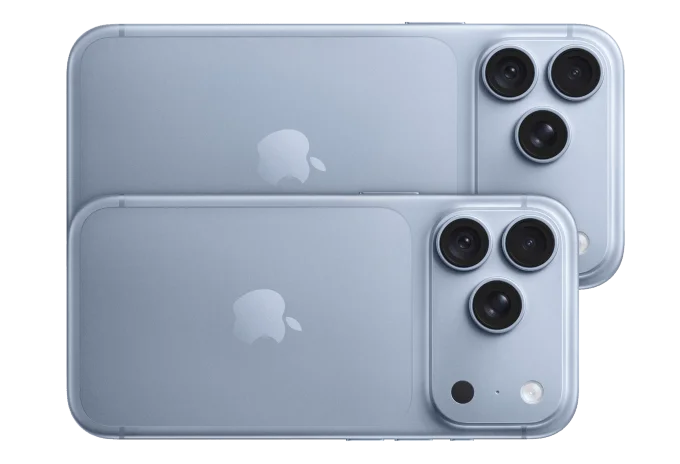
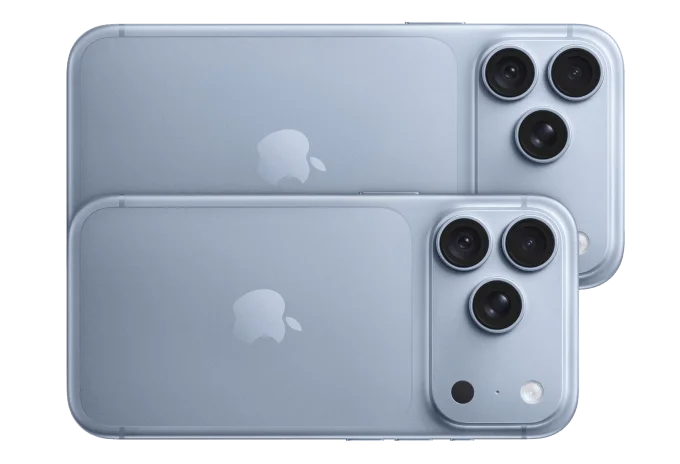
The iPhone 18 Pro keeps the broad camera plateau introduced on the iPhone 17 Pro. That raised section houses the three rear cameras and leaves more room inside for a larger battery. The new model’s colors look more unified to me than the previous generation’s two-tone finish, though the shape still takes some getting used to. Holding the phone sideways to play a game or watch video, I sometimes found my fingers resting against the protruding camera lenses.
Color choices are silver, black, glacier and burgundy. My glacier review unit has a cool blue cast over its silvery finish; it looks polished, though I tend to prefer brighter colors. The design is recognizable, but people moving from a standard iPhone 17 will notice the more pronounced rear camera hardware.
Apple has raised prices by $100 over the iPhone 17 Pro series, after increasing prices for those 2025 models as well. The iPhone 17 Pro’s higher starting price came with 256GB of storage, matching what buyers paid for a similarly sized iPhone 16 Pro. There’s no comparable storage adjustment to explain this year’s increase: the iPhone 18 Pro costs more outright. Apple’s Pro phones now start at $1,199.
Faster under load, with more stamina
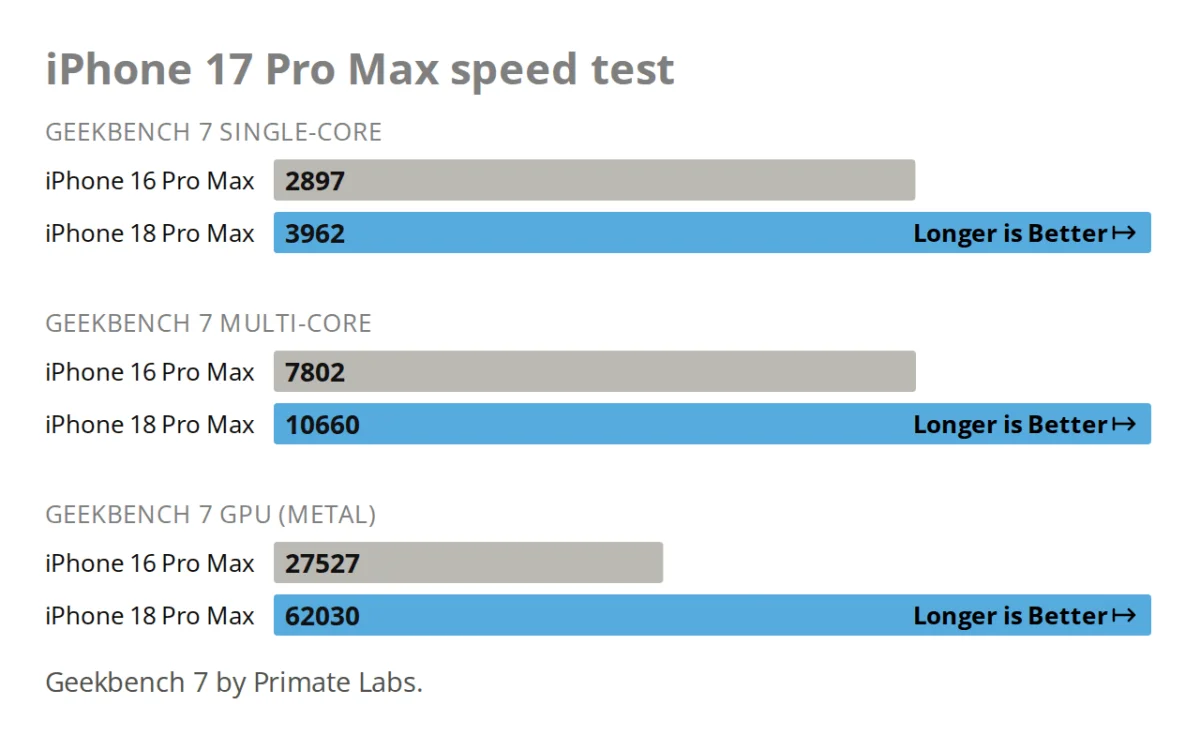
Apple’s A20 Pro chip has a six-core CPU, seven-core GPU and dual 16-core Neural Engine. It follows the A19 Pro in the iPhone 17 Pro, bringing the usual generation-to-generation performance gains and more processing capacity for on-device AI. My Geekbench 7 results were notably higher than those from the A18 Pro-powered iPhone 16 Pro, though the article doesn’t give scores to compare directly.
Apple has also redesigned the phone’s thermal management system to help control heat before it affects performance. That matters most during demanding tasks and over longer sessions. I played PUBG Mobile, a demanding multiplayer game, without running into performance trouble. Outdoors, sunlight obscured some of the game’s finer visual details, but the display remained clear enough to follow the action.
Battery life is a more tangible reason to consider the upgrade. Apple doesn’t publish the battery’s capacity, but the US eSIM-only iPhone 18 Pro has a 4,288 mAh cell, while the version with a physical SIM tray has a 4,056 mAh cell. The eSIM model’s battery is only slightly larger than the iPhone 17 Pro’s 4,252 mAh pack, but well above the iPhone 16 Pro’s 3,582 mAh.
Apple rates the new model for up to 45 hours of video playback, compared with 33 hours for the iPhone 17 Pro. In my own use, I took the fully charged phone out for photography, gaming and video streaming, then left it unplugged overnight. By the following morning, it still had 63% charge. That’s a strong showing for a busy day, though my experience is just one usage pattern.
Variable aperture brings real camera control
The iPhone 18 Pro retains the iPhone 17 Pro’s trio of 48-megapixel rear cameras, then adds a variable aperture to the main lens. You can open it to f/1.48 to let in more light, use the default f/1.8 setting, or stop down to f/4.0 for greater depth of field. An f/2.8 option is also available when you want more detail in the background.
The camera can select an aperture based on the scene, lighting and motion, or you can choose one yourself. Tap the Camera Control button and select Lens Aperture to make the adjustment manually. That turns a feature that could otherwise work quietly in the background into a practical tool for shaping a shot.


In my comparison of Halloween decorations, the f/4 shot kept the trees and background sharper than the photo taken at f/1.8. Neither result is automatically better; the choice depends on whether you want the surroundings in focus or a softer background. The point is that the iPhone 18 Pro gives photographers more say in the final look.


The aperture has visible effects in low light, too. In my nighttime yard shots, f/4 created a starburst around one of the glowing pumpkins; that effect didn’t appear in the f/1.48 image. People who enjoy experimenting with composition may get plenty out of the added flexibility. Casual photographers can leave the camera to make its own choices and may rarely touch the manual setting.

Focus tracking is another useful camera addition. Double-tap a subject and the camera keeps it in focus as it moves in and out of frame, which should help with restless pets and other unpredictable subjects.
For more hands-on adjustments, the camera adds controls for white balance, shutter speed and other settings. With iOS 27, you can pin selected controls at the top of the viewfinder. Photographic Styles 3 adds texture and grain adjustments alongside tone and color. Apple Reference Image provides a way to check a photo’s authenticity, while Cinematic mode can now be applied to video after recording in the Photos app.
iOS 27 brings the broader AI changes
The iPhone 18 Pro arrives with iOS 27, which brings a more context-aware Siri that can draw on information on the device and take more decisive actions. Those software changes aren’t exclusive to this phone: other iPhones that support Apple Intelligence can also benefit. The A20 Pro’s Neural Engine should handle AI tasks faster than older chips, although whether users will feel a major difference in everyday use is harder to say.
Some iOS 27 features do depend on having recent hardware. Dual-capture capabilities in FaceTime require an iPhone 17 or later, while changing Siri’s expressivity and speaking pace requires at least an iPhone 17 Pro. Someone upgrading from an older model to the iPhone 18 Pro gets access to the full set of features described here, but the software alone doesn’t make this model the only route to a smarter Siri.
Which owners should consider upgrading?
For owners of an iPhone 16 Pro or earlier, the iPhone 18 Pro offers a substantial camera change. The iPhone 16 Pro had two 48-megapixel cameras, for the wide and ultrawide views, plus a 12-megapixel telephoto camera. The iPhone 15 Pro had one 48-megapixel camera and 12-megapixel sensors for ultrawide and telephoto shots. The iPhone 18 Pro’s three 48-megapixel rear cameras bring higher resolution across the range, with variable aperture adding another layer of control.
If photography is a major reason you use your phone, those changes make a stronger case for upgrading. If you mostly take casual snapshots, the new camera is still capable, but its more advanced controls may not be worth paying extra for on their own.
Battery life could matter just as much. Apple rates the iPhone 15 Pro for up to 23 hours of video playback, compared with 45 hours for the iPhone 18 Pro. Owners of an iPhone 16 Pro should also see a meaningful improvement based on Apple’s figures and the larger battery in the new model. The A20 Pro, brighter screen and smaller Dynamic Island add to the upgrade, while the 6.3-inch display is larger than the 6.1-inch panel on the iPhone 15 Pro.
Those gains come with a $200 premium over the prices of the earlier Pro models discussed here. That’s a meaningful increase, particularly for someone whose current phone still handles everyday tasks well. The case for upgrading is strongest when the battery, camera or display on an older model has become a real limitation.
Standard iPhone buyers may want to wait
The missing standard iPhone 18 creates a different choice for people who usually buy Apple’s less expensive models. I’ve used standard iPhones for years, including an iPhone 12 before my current iPhone 17, and moving to the iPhone 18 Pro would be a harder decision than upgrading from an older Pro.
The Pro’s best additions are aimed at people who want more from their cameras and performance. Variable aperture can produce striking results, but it may not change much for someone who takes occasional pictures and doesn’t edit or fine-tune them. Paying hundreds more for features that rarely come into play is a tougher sell.
Apple may add more models to the iPhone 18 family in the first few months of 2027, though that timing is not confirmed. A standard iPhone 18 may not include every Pro feature, but it should bring its own updates at a price below the Pro’s $1,199 starting point. For standard iPhone owners whose current device still works well, waiting could make more sense than stepping up to a Pro model for features they may not use.
The iPhone 18 Pro is a convincing upgrade for owners of older Pro phones who want better cameras, stronger performance and longer battery life. Its price makes the decision less clear for everyone else. Standard iPhone buyers now have to decide whether the Pro’s camera tools are worth the extra cost or whether to wait for the rest of the lineup.