Spotify Restored a Literary Podcast After Automated Review, but the Creator Lost Confidence
Spotify removed episodes of a Beverly Cleary podcast over brief quotations, then restored them after an appeal. The incident left its creator wary of automated checks.
Spotify restored episodes of a Beverly Cleary book podcast after its creator appealed their removal. But the incident made the creator question whether a service’s automated checks can tell the difference between an audiobook and a discussion that quotes a book to critique it. For creators, even a mistaken removal can put the reach and revenue of a show at risk while an appeal is pending.
A short quotation triggered removal
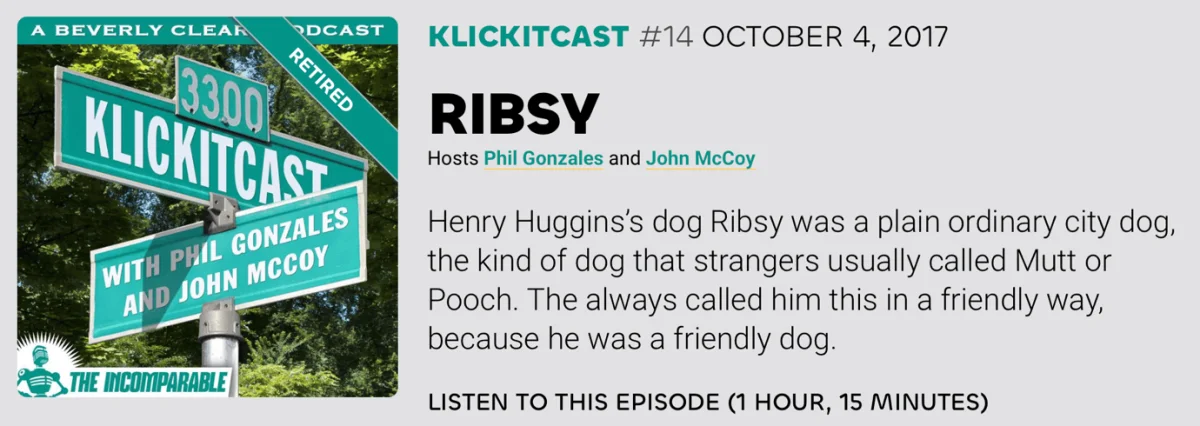
Late last month, the author received several similar emails from Spotify. The service said its automated review had found material that might use a third party’s literary work without permission, and removed an episode titled “14: Ribsy.” It identified the work as Ribsy by Beverly Cleary.
Spotify’s notice said its review process could remove audio or video that appeared to distribute third-party literary material. It invited the creator to appeal if the episode did not violate another party’s rights or qualified for an exception such as fair use. It also warned that repeated strikes could lead to a show’s removal and account termination, while a successful appeal or withdrawn claim would clear the strike.
The affected show, Klickitcast, was hosted by John McCoy and Phil Gonzales. Its premise was to cover every book by Cleary. Episodes typically ran about an hour, opened with the book’s first paragraph, and then turned to the hosts’ discussion. The author measured several episodes and found that they contained an hour or more of commentary alongside roughly 30 to 45 seconds of quoted text.
That balance is central to the creator’s argument: the quotation served as an entry point for criticism and discussion, rather than as a substitute for reading or listening to the book. In the episode about Ribsy, the author says the book’s text accounted for just 0.008 percent of the runtime.
The missing context in automated checks
The author suspects Spotify’s system either compared episode titles with book titles or transcribed the audio and matched spoken words against book text. The company did not explain which method had flagged the episodes. Either way, the creator argues, a match appears to have prompted removal before the system judged how the excerpt was being used or how much of the episode it occupied.
That distinction matters because a text match can identify a quotation without showing its purpose. A podcast that reads a book aloud and a podcast that quotes a passage before analyzing the book may contain the same words, yet serve very different purposes. The author argues that automated checks need to consider that surrounding context before they remove an episode.
The concern extends beyond Spotify. The piece compares the experience with YouTube’s detection systems, which it says can disable accounts, cut off ad revenue, or redirect earnings to someone asserting ownership of material used in a video. For creators, the possibility of an appeal does not remove the immediate uncertainty: content can disappear while a decision is reviewed, and revenue or distribution may be affected.
Spotify did respond to the creator’s appeal the next day, agreed the removal was mistaken, and restored the episodes. That outcome resolved the specific case, but the author says creators still have to rely on the platform to reverse its own decision. The appeal process also comes with a warning that users who abuse it may lose the ability to submit future appeals.
Why the creator is holding back another excerpt
The author describes a separate example involving the upcoming first episode of a new series of Designed in California, which focuses on how the iPod was created. One segment covers the origins of the MP3 format and a story about a pop song used by one of the format’s creators to tune the encoding process.
The creator wanted to include a few seconds of the song to help explain the difficulty of encoding an a capella vocal performance. The account says the father of the MP3 estimated that he listened to the song a thousand times before he was satisfied with the result. Despite that relevance, the creator decided to leave the music out, concerned that automated checks on Spotify or YouTube could disrupt the launch of a five-part series.
That is the chilling effect the author sees in these systems: creators may avoid using short, relevant excerpts because challenging a removal can threaten a new show’s distribution or income. The concern is especially acute for a first episode, when a takedown could interrupt a series before listeners have had a chance to find it.
A break with Spotify
After the removals, the author deleted their Spotify account and ended The Incomparable’s relationship with the service. The network had uploaded its podcasts because some Spotify users asked to listen there, but the author says individual episodes rarely attracted even ten listeners on the platform.
The author also questions Spotify’s place in podcasting. The service ingests podcast files and serves them again, while the piece argues that its approach does not support the wider podcast ecosystem. It points to Spotify’s earlier plan to buy popular shows and restrict their distribution to the service, and sees the company’s expansion into podcasts and audiobooks as part of a broader effort to add more kinds of content.
The timing of the book checks alongside a ramp-up in audiobook offerings, including AI-generated audiobooks, strikes the author as potentially self-serving. They acknowledge that AI-generated books may themselves raise questions about the use of literary material, but argue that this possibility does not excuse a system that removes a critical podcast on the strength of a match alone.
For listeners, the author’s recommendation is to choose another podcast app. Their iPhone includes a free option, and other apps are available. For creators, the episode shows the practical cost of automated moderation: even when an appeal succeeds, the prospect of a takedown can shape what they feel safe publishing.