Apple Music’s Hi-Res Tracks Still Don’t Reach Most Multiroom Speakers
BluOS adds Apple Music, but MusicKit limits playback to 256kbps AAC. Sonos remains the exception for full quality across a multiroom system.
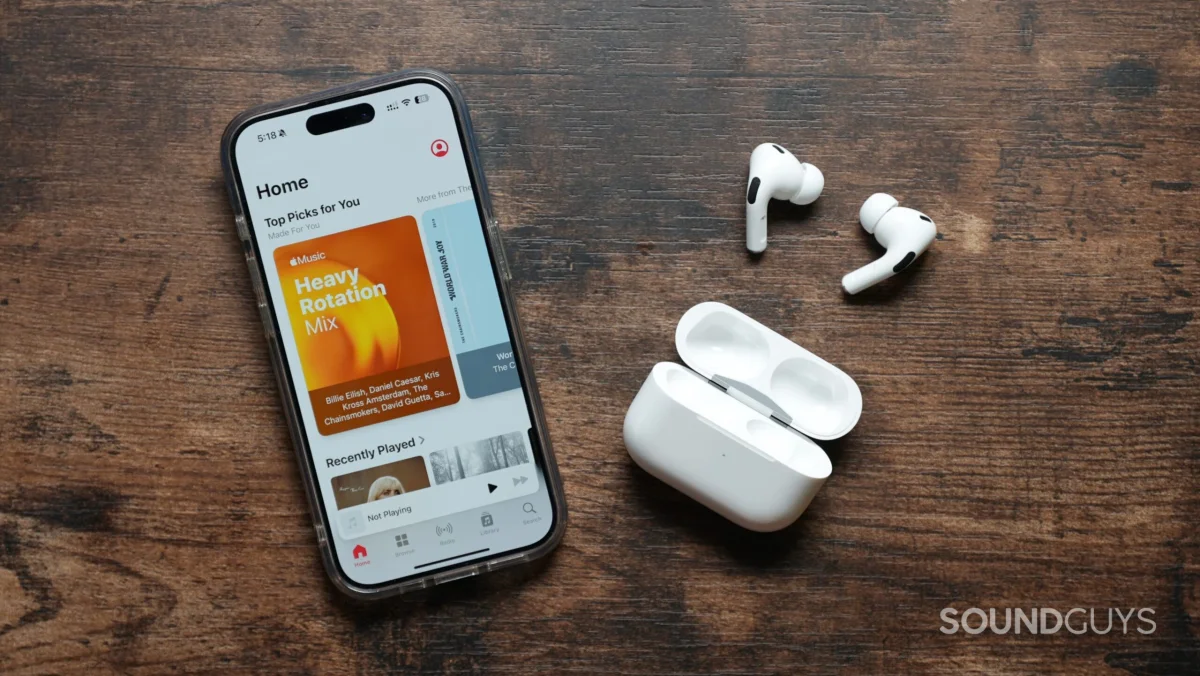
Bluesound’s new Apple Music integration makes it easier to browse and control a subscription through the BluOS app, but it doesn’t bring Apple Music’s best sound quality to BluOS systems. The integration streams tracks at 256kbps AAC, leaving lossless, Hi-Res and Dolby Atmos Music out of reach.
That limitation applies to BluOS-compatible speakers, streamers and AV receivers from Bluesound, NAD, PSB Speakers, DALI Loudspeakers, Cyrus and Monitor Audio. Listeners can manage Apple Music alongside other services without Bluetooth or AirPlay, but the sound quality won’t exceed what those wireless options can deliver. In some cases, it could be worse.
Bluesound announced the integration last week. For owners who chose the system partly for its high-resolution support, the missing formats are a meaningful catch. Bluesound components can decode audio up to 24-bit/192kHz, while Sonos hardware tops out at 24-bit/48kHz. That makes the streaming limit in BluOS particularly conspicuous: the system can handle higher-resolution audio, but Apple’s service interface doesn’t provide it.
There’s a larger difference between a service appearing in a speaker app and that service offering every format it has. Apple Music includes lossless CD-quality audio at 16-bit/44.1kHz, Hi-Res tracks up to 24-bit/192kHz and Dolby Atmos Music. BluOS’s integration offers none of those. The question of whether Hi-Res sounds meaningfully better than CD quality is still open to debate, but a service’s advertised formats matter to buyers who picked a system with high-resolution playback in mind.

USB-C wired listening enables Lossless audio playback.
MusicKit sets the ceiling
The bottleneck is Apple’s MusicKit API, the one supported route the article identifies for third-party apps and websites to access Apple Music. Apple designed it to let subscribed users play and control music within other services. Waze, for example, lets users access their Apple Music from inside the navigation app; TikTok has added a similar listening option.
MusicKit streams lossy AAC, a format that discards some audio data to reduce file size. Apple’s apparent reasoning is practical: compressed audio can sound good enough when someone is driving, gaming or watching short videos, and streaming larger files on a phone can use more data. For casual listening, that trade-off may be perfectly acceptable. For a home hi-fi streamer, it undercuts the point of having high-resolution playback support.
This helps explain why Bose, Sony, Denon’s HEOS platform and WiiM haven’t added Apple Music through MusicKit. If a listener can already stream 256kbps AAC over Bluetooth or AirPlay, a native link may not justify the engineering work. Integration does bring useful conveniences, including shared search and playlists, and lets someone start playback without using a personal phone as the source. Those benefits haven’t been enough to make the audio limit attractive to most whole-home systems.
Bluesound built the pipe. Apple decides what flows through it.
Why Sonos is different
Sonos has a fuller Apple Music integration, without the MusicKit resolution limit, although playback remains subject to Sonos hardware capabilities. The timing helps explain its position. Apple Music launched in 2015, when Sonos was already well established and AirPlay wasn’t yet widely adopted. Sonos built the service into its own audio system before Apple introduced MusicKit in 2017. AirPlay 2 arrived in 2018 and later brought support to a much wider range of speakers.

The Sonos Era 100 SL features a clean, minimalist design that fits easily into most home setups.
As far as the source reports, Apple hasn’t made that arrangement available to other companies. Eversolo offers a workaround on some standalone streamers: users can install the Android Apple Music app, which can play lossless and Hi-Res tracks up to 24-bit/192kHz. But that doesn’t send those formats to other wireless speakers around the home. John Darko reports that Eversolo’s own native, multiroom Apple Music integration uses MusicKit too, so it shares BluOS’s quality limit.
Lossy is fine for doom-scrolling. Not for a hi-fi streamer.
What listeners can do now
Apple could change the situation by opening MusicKit to the formats and quality levels available in its catalog. The article suggests the company may prefer subscribers to listen through its own app, much as Spotify, Tidal and Qobuz keep users within their own playback experiences. That’s a possible explanation, not a confirmed reason for the restriction.
A service-wide playback feature comparable to Spotify Connect could eventually let listeners send higher-quality Apple Music streams to compatible devices. It could work like AirPlay while supporting lossless, Hi-Res and Atmos playback across iOS and Android. Apple has used the name “Apple Music Connect” for two different products before; a compatibility label such as “Made for Apple Music” is one possible approach, but there’s no such feature announced in the source.
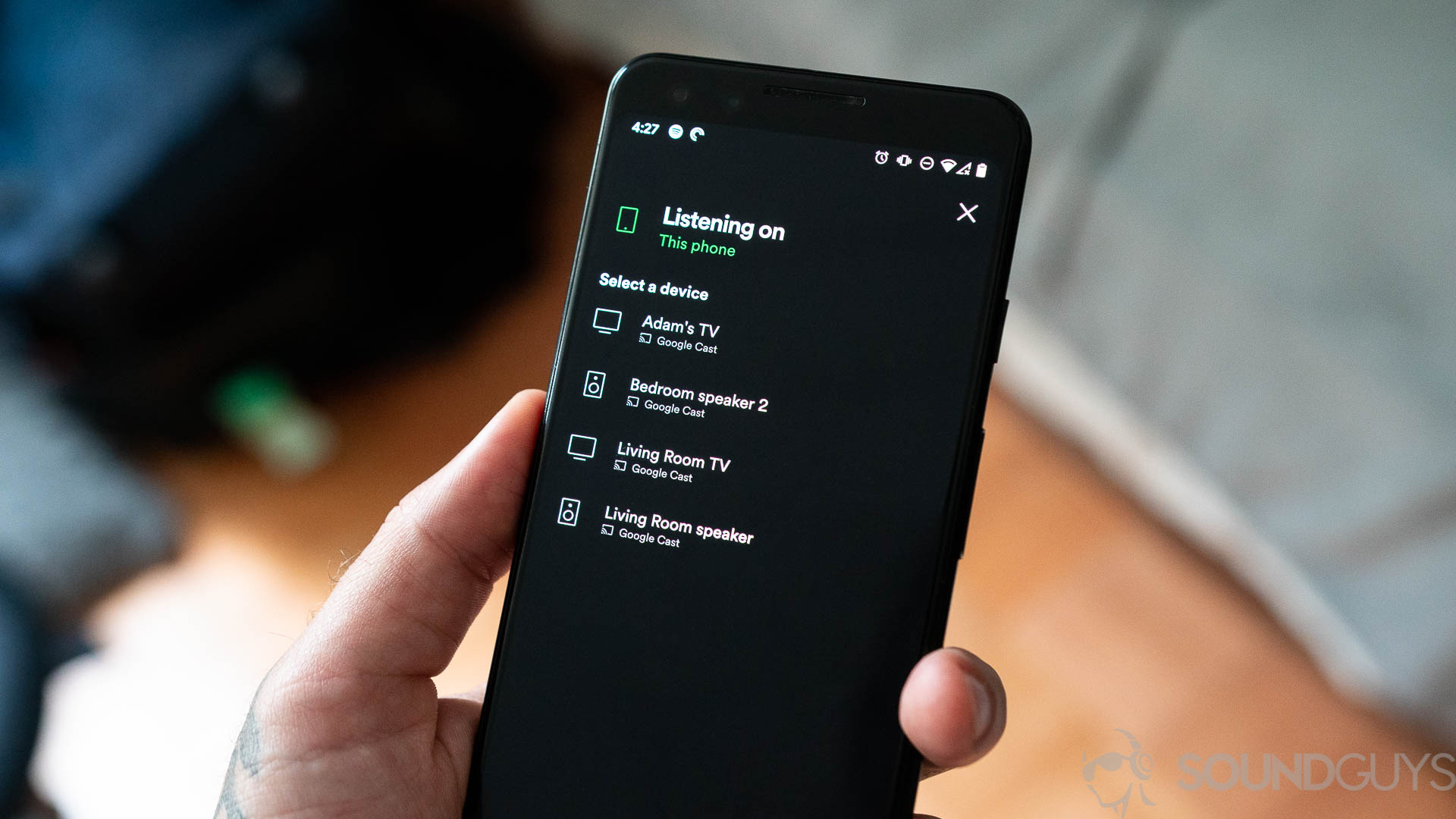
Spotify and YouTube Music both have the option to cast, but they’re not compatible with everything.
For now, listeners who want Apple Music’s highest-quality playback have two options, neither of which fits neatly into a multiroom setup. One is to use the Apple Music app on an iPhone or Android device connected to a capable DAC/amp and headphones. The device can receive a bit-perfect stream up to 24-bit/192kHz. Dolby Atmos is rendered binaurally in the app, though the Atmos stream itself uses lossy Dolby Digital Plus.
The other option is an Apple TV 4K, second generation or newer, connected to an AV receiver and running tvOS 27, which added Hi-Res lossless support. A soundbar can also work, but a television in the audio path might downsample playback to 48kHz.
Both routes keep the best version of Apple Music in a single room. Until Apple expands what third-party apps can access, BluOS owners get convenient service control, while Sonos remains the notable multiroom exception for higher-quality Apple Music playback.