ESGAMING ZERO MAX Case Uses an Angled Bottom Intake to Feed GPU Airflow
The ZERO MAX pairs an angled GPU intake with panoramic glass, room for ten fans and a 360mm roof radiator. Price and thermal results are still unknown.
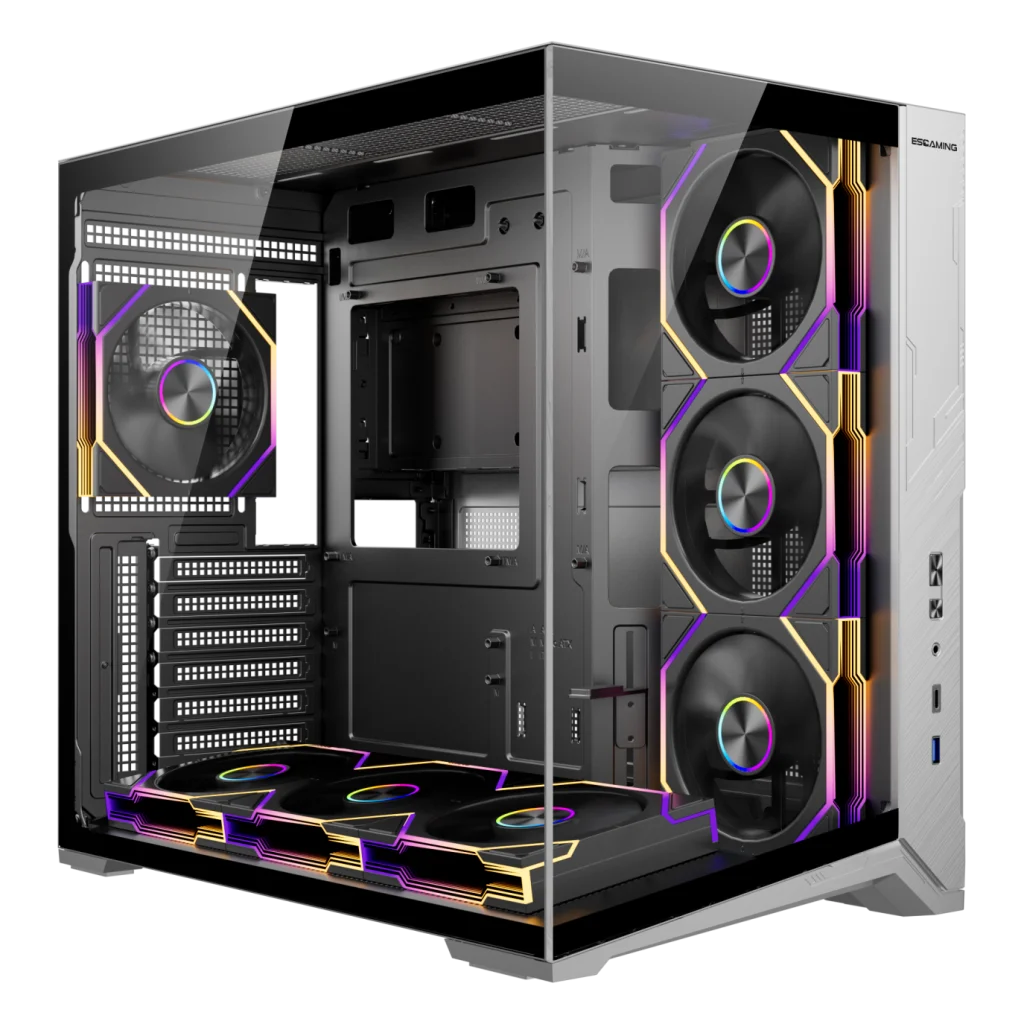
ESGAMING’s ZERO MAX puts its graphics card cooling path at the center of the design. Three fan mounts sit below the hardware, beneath a bottom duct tilted by eight degrees to steer incoming air towards the GPU. The case also makes room for long graphics cards and several cooling layouts, but there are no temperature or noise results yet to show how much the angled intake helps in practice.
That missing evidence matters because a duct’s shape alone can’t establish whether a graphics card will run cooler or quieter. The result depends on the fans installed, their speed, the card’s own cooler and how air moves through the finished build. For now, ESGAMING’s description sets out the intended airflow path; buyers will need independent testing to learn how it performs under load.

Room for large components, with a cooler height limit
The chassis supports ATX, Micro-ATX and Mini-ITX motherboards, giving builders flexibility over board size. Graphics cards can be up to 415mm long, a generous allowance for selecting a large card. CPU cooler clearance is capped at 160mm, however, so anyone planning an air-cooled processor build should check the cooler’s height before buying. A tall tower cooler can exceed that limit even when the graphics card fits comfortably.
Cooling options extend across the case, with up to ten 120mm fan positions and support for a 360mm radiator in the roof. That gives builders scope to choose between an all-in-one liquid cooler and a fan-based setup, or to combine fans across the chassis. ESGAMING hasn’t specified which fans come installed, so the maximum supported count doesn’t tell buyers what they’ll have available straight out of the box.
The included fan setup will shape both the initial cost of completing a build and the airflow buyers can expect without adding parts. The case’s roof radiator support also needs to be considered alongside the rest of the component layout. Before settling on a configuration, builders will want to confirm how their chosen radiator, fans, motherboard and memory fit together in the upper section.
Panoramic glass and practical details
Front and left glass panels create a broad view into the system, which ESGAMING describes as a 270-degree panorama. The left panel is made from 4mm tempered glass. Black and white finishes give buyers two options for matching the case to the rest of a setup, though the design’s visual appeal will depend on how neatly components and cables are arranged behind the panels.
Dust filters cover the top and bottom openings. The bottom filter is particularly relevant to the intake design: air enters below the hardware, so keeping that area clear and the filter clean will be part of maintaining airflow over time. Front connections include USB 3.0, USB Type-C rated at 20Gbps and HD audio, providing a mix of everyday ports and a higher-speed USB connection.


Storage provision consists of mounts for two 3.5-inch hard drives and one 2.5-inch SSD. That’s a straightforward mix for a build using hard drives for bulk storage alongside an SSD. The power supply mounts vertically on the right side, a layout that buyers should factor into their cable routing and component planning.
Testing and availability details remain open
ESGAMING says it has two decades of experience in the PC industry, making cases, power supplies and cooling hardware. The company reports that ZERO MAX sales have reached 200,000 units since launch, with exports concentrated in South America, the Middle East and Southeast Asia. Those figures describe the company’s reported sales and distribution; they don’t answer the questions buyers still have about the case’s price, supplied fans or performance in a real build.
Founder Jack Meng said the design combines the tilted bottom structure with panoramic tempered glass and broad component compatibility. He framed the case as an effort to direct cool air more precisely towards the GPU while retaining room for high-performance hardware. That’s the design goal; independent thermal and noise measurements would show how well it holds up across different fan configurations.
The ZERO MAX has a clear pitch for builders who want to display a system and have room to install a large graphics card, multiple fans or a roof-mounted 360mm radiator. Its most distinctive feature is also the one that needs the closest examination: whether the angled intake improves GPU cooling at a useful noise level. Price, included fans, build quality and hands-on testing will determine how compelling the design is once those details are available.