Apple’s MacBook Pro PROLED XDR Adds Tandem OLED, Touch and M5 Pro or M5 Max
The new MacBook Pro pairs a tandem OLED touchscreen with M5 Pro or M5 Max chips. Pre-orders are open ahead of November 6 availability; pricing is still missing.
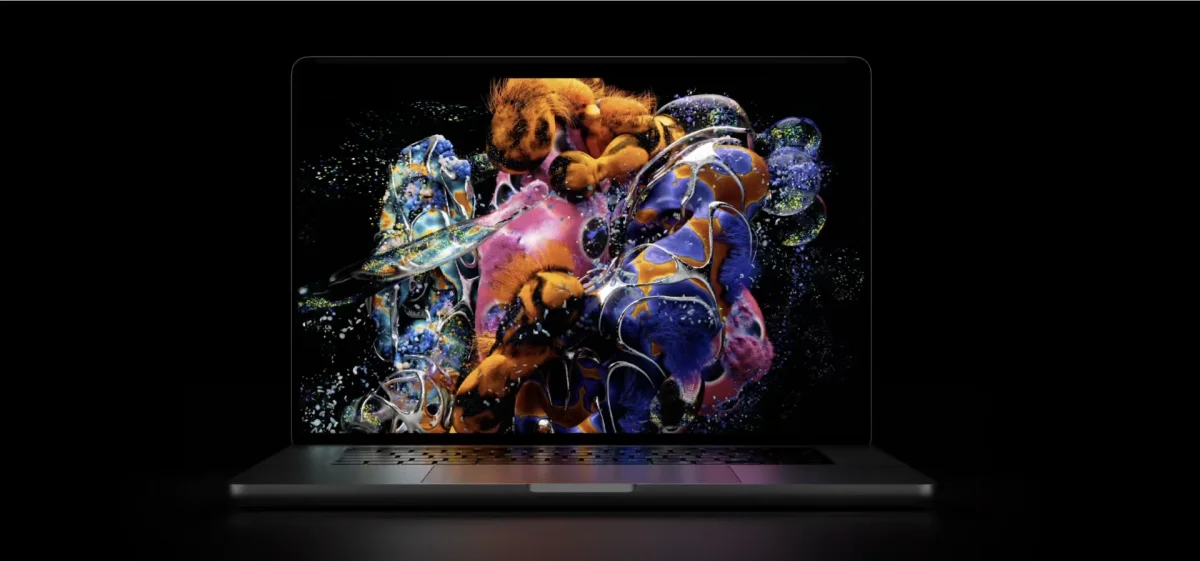
The new MacBook Pro with PROLED XDR Display changes two things buyers interact with most: the screen and, for the first time on a Mac, touch input. Apple has opened pre-orders, with availability starting November 6. The model sits above the existing lineup, but its starting price hasn’t been published, leaving the biggest question for prospective buyers unanswered.
A display built for bright highlights and deep blacks
The main technical change is a tandem OLED panel, which uses two layers of self-illuminating pixels. Because each pixel can switch on and off independently, the panel can show deep blacks beside bright highlights. Apple rates its contrast at 10,000,000:1, compared with 1,000,000:1 for the Liquid Retina XDR display in the standard MacBook Pro.
Brightness is another step up. PROLED XDR is rated for 1,000 nits sustained across the full screen and peaks at 2,000 nits for both HDR and SDR content. The standard model also reaches 1,000 nits sustained, but its peak is 1,600 nits for HDR. The SDR figure is the more unusual distinction: it means Apple’s brighter peak applies to ordinary web pages and documents as well as HDR video.
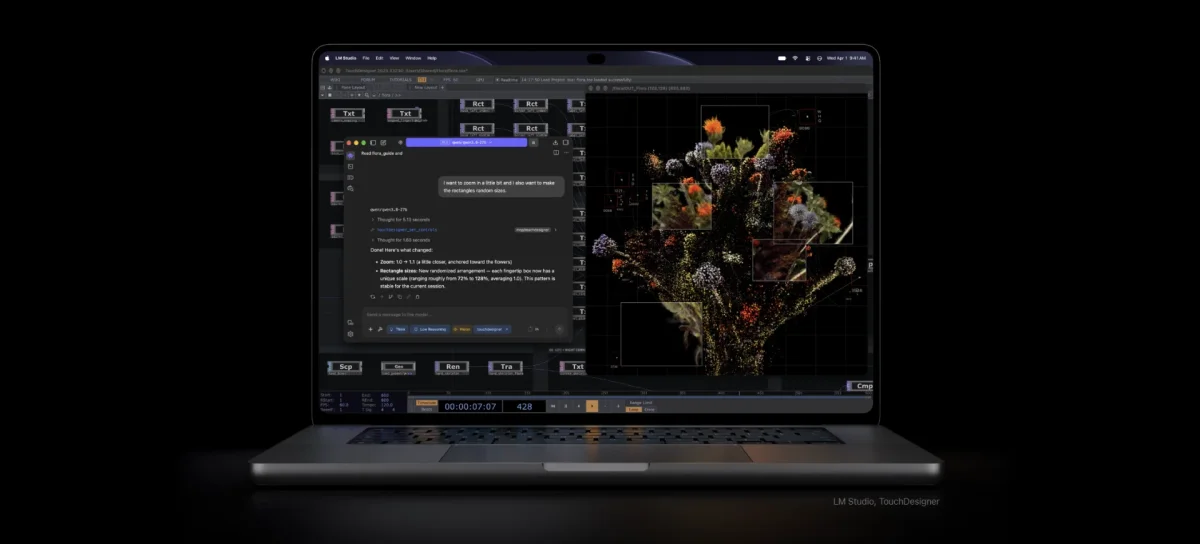
Color support now spans both P3 and Adobe RGB. P3 covers HDR video and grading work, while Adobe RGB can matter for photographers and designers preparing images for print. The standard MacBook Pro covers P3 alone. The new model also has adaptive ProMotion refresh rates from 10 to 120Hz, True Tone, an antireflective coating and an optional nano-texture finish.
Apple says a display engine adjusts color and brightness for individual pixels in less than a millisecond, taking content, pixel use, temperature and the surrounding environment into account. Those specifications position the panel for demanding creative work, though the value of the upgrade will depend on the price and how it performs in use.
Touch joins the Mac’s trackpad and keyboard
The display also supports multitouch, with the sensor built into the panel rather than placed on top. Apple says this design preserves image quality. Supported interactions include scrolling, pinch to zoom and drawing.
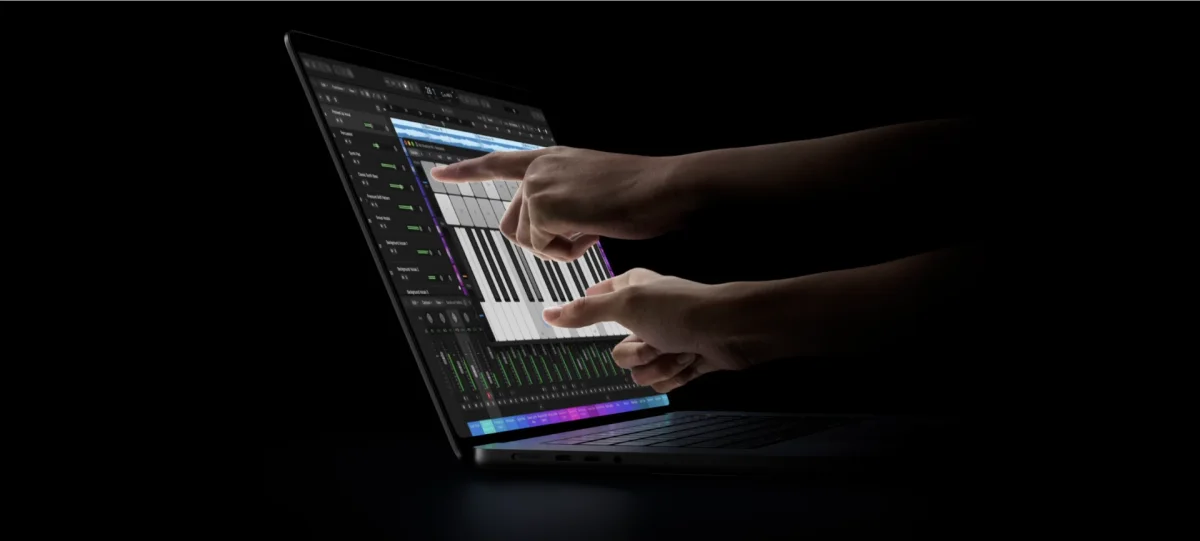
Some uses are aimed at specialist workflows: a product designer can manipulate a 3D prototype, a developer can try touch behavior in an iOS app, and a music producer can adjust faders with a finger. Everyday tasks include scrolling through documents, zooming into photos, moving slides between two Keynote decks and double-tapping a window to fill the screen.
For Mac buyers, the practical question is how often touch will feel useful alongside the trackpad. Apple has kept the keyboard and trackpad, making touch an additional way to interact with the computer. It’s the first touchscreen Mac after years in which Apple argued against that approach, and the experience will need hands-on evaluation to show whether it changes daily use.
Dynamic Island replaces the notch
The notch has been replaced by a Dynamic Island that brings over a familiar iPhone feature. Apple says it can display Spotlight and Live Activities, including search, clipboard history, incoming calls, AirDrop requests, delivery tracking and music controls. Siri AI also appears there; Apple says it’s available in English and that usage limits may apply.
M5 Pro and M5 Max set the performance tiers
Buyers can choose between two chips. M5 Pro has up to an 18-core CPU, a 20-core GPU and up to 64GB of unified memory. M5 Max keeps the 18-core CPU, increases the GPU to 40 cores and supports up to 128GB of unified memory. Storage scales to 16TB.
Apple claims M5 Pro is up to 10.9 times faster than M1 Pro, while M5 Max is up to 12 times faster than M1 Max. Against the M4 generation, Apple cites roughly 2.7 times faster time to first token for LLM prompting, 2.1 times faster text-to-image generation, 3.6 times faster Redshift renders and 3.3 times faster performance in DaVinci Resolve. These are company comparisons; the article provides no independent test results.
A redesigned thermal architecture supports Apple’s performance claims. Battery life is rated at up to 24 hours. The combination of chip, memory and storage options gives the PROLED model a high ceiling for demanding work, but the display remains its defining change.
Audio, camera and connections
The six-speaker system has been redesigned, with Apple describing its bass as 50 percent deeper. A three-mic array is described as studio quality. The front-facing 12MP Center Stage camera keeps a person framed as they move, while Desk View shares the workspace and advanced stabilization supports video calls.

Connections include three Thunderbolt 5 ports, HDMI, MagSafe 3, an SDXC card slot and a headphone jack. Wireless support covers Wi-Fi 7 and Bluetooth 6.
Size, price and the rest of the MacBook Pro lineup
The 14-inch version weighs 3.0 pounds; the 16-inch weighs 4.0 pounds. Apple says both are lighter than the standard MacBook Pro at the same screen size. The finishes are Space Black and Silver.
Apple hasn’t listed a starting price for the PROLED XDR model. Pre-orders are open, and availability begins November 6. For comparison, the standard MacBook Pro starts at $1,999, and the PROLED tier sits above it. Local pricing remains unknown.
Apple also announced a 14-inch MacBook Pro with M6, which retains the Liquid Retina XDR display and starts at $1,999. Its M6 chip has a 12-core CPU and 12-core GPU, with Neural Accelerators in each core, plus a dual 16-core Neural Engine. It supports up to 32GB of unified memory at up to 170GB/s of bandwidth. Apple claims up to 30 percent faster graphics and up to 25 percent faster AI workloads than M5. Battery life is rated at up to 24 hours. Pre-orders begin October 28, with availability on November 6.
That puts the lineup in three tiers: the M6 model with a mini-LED display at the entry point; M5 Pro and M5 Max models with Liquid Retina XDR in the middle; and PROLED XDR at the top. Apple’s comparison page lists the display differences. Our experience with Apple silicon laptops includes a long-term MacBook Neo review, but the PROLED panel’s brightness and touch controls need real use before their benefits are clear. The missing price will decide whether this first touchscreen Mac is a compelling upgrade for its intended buyers.